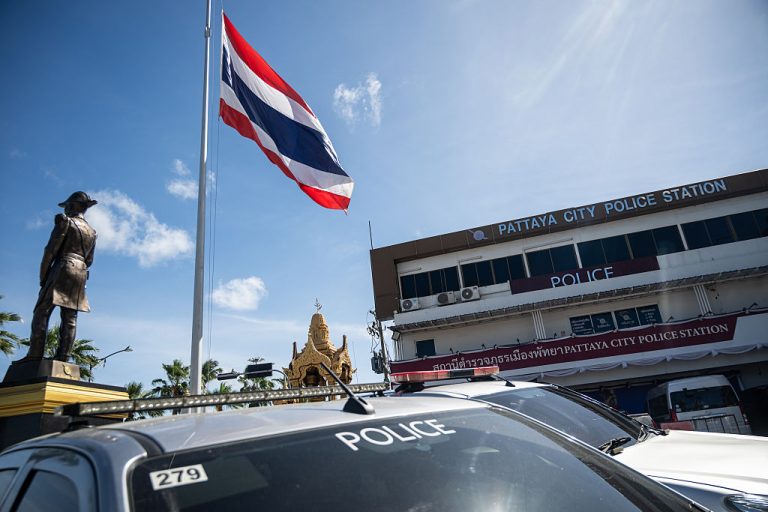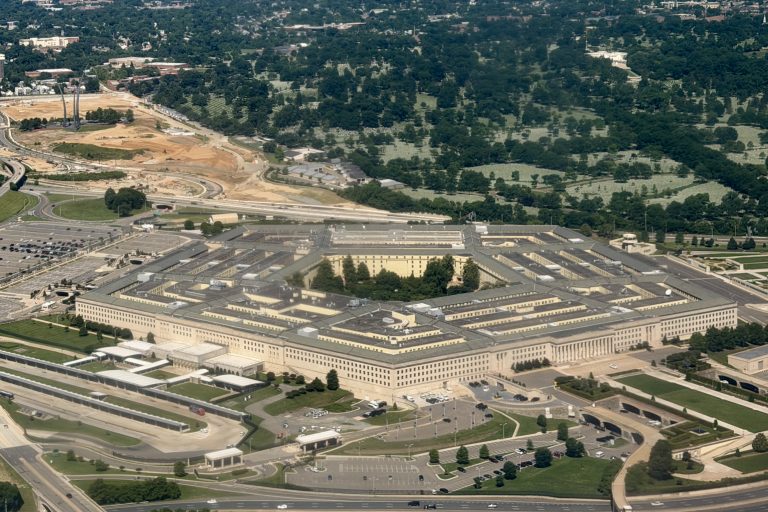
In the latest saga of escalating tensions between Beijing and Washington, the Chinese Communist Party (CCP) has imposed sanctions on 13 U.S. military firms in retaliation for recent arms sales to Taiwan. The announcement, made by China’s foreign ministry on Dec. 5, highlights a growing rift over Taiwan, which Beijing considers a breakaway province that must be reclaimed by any means necessary.
The sanctions come in the wake of the U.S. government authorizing a $385-million arms deal with Taiwan, which includes spare parts and support for F-16 fighter jets, as well as electronic radar systems and other advanced tech.
The move, the CCP claims, undermines its sovereignty and territorial integrity. “China firmly opposes any arms sales to Taiwan, which is an inalienable part of China,” the foreign ministry said during a daily briefing.

Taiwan at the heart of the tensions
At the core of the dispute lies Taiwan, a self-governed island that China claims as its own territory. The U.S. has consistently supported Taiwan through arms sales and diplomatic engagements, much to Beijing’s displeasure. Taiwan’s newly-elected president Lai Ching-te, who China views as a “separatist,” has also drawn Beijing’s ire with his high-profile engagements both in Taiwan and abroad.
Taiwan, a democratically-governed island known formally as the Republic of China (ROC), has long been a focal point of Beijing’s. Despite preserving its own sovereignty and de-facto governance, the CCP has vowed to use any means necessary to reclaim the island.

Success
You are now signed up for our newsletter
Success
Check your email to complete sign up
RELATED: Simmering Tensions: China Sanctions 5 US Defense Firms Over Arms Sales to Taiwan
In recent years, the CCP has increased its military activities in the Taiwan Strait, including frequent incursions into Taiwan’s Air Defense Identification Zone (ADIZ) and naval exercises. This, coupled with Taiwan’s 1971 expulsion from the United Nations (UN) in recognition of Beijing as the “only legitimate government China” has increased the island’s isolation from the international community.
Who’s on the sanction list?
China’s sanctions target a range of U.S. defense and technology firms, effectively barring them from doing business within the country. The list includes prominent companies such as:
- Teledyne Brown Engineering Inc.
- BRINC Drones Inc.
- Shield AI Inc.
- Kratos Unmanned Aerial Systems Inc.
- Cyberlux Corporation.
In addition, firms like Rapid Flight LLC, SYNEXXUS Inc., and Red Six Solutions were also named. These companies have been linked to the manufacturing and development of critical defense technology sold to Taiwan.
The penalties also extend beyond the companies themselves. China has frozen the assets of six executives from major firms like Raytheon, BAE Systems, and United Technologies and has barred their entry into the country. Chinese organizations and individuals are also prohibited from engaging in any business dealings with the aforementioned entities.
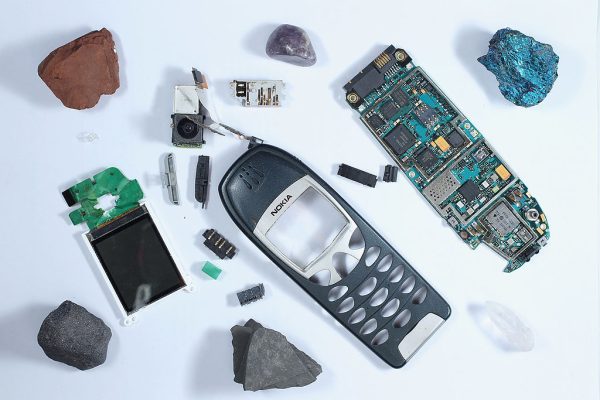
The sanctions also come on the heels of China’s leader Xi Jinping announcing that his country would stop exporting rare minerals needed for the production of computer chips to the U.S. Seen as a calculated strike at industries heavily reliant on Chinese resources, the decision is expected to further the economic battle between the two nations.
RELATED: China’s Export Controls on Gallium and Germanium Escalate Semiconductor Trade War
By targeting both U.S. military firms and global supply chains, Beijing is reinforcing its willingness to use its economic leverage to counteract American policies it perceives as coercion or interference of its domestic affairs, particularly in regards to Taiwan.
Implications for Sino-US relations
The sanctions are also seen as part of China’s broader strategy to counter what it views as growing U.S. interference in its affairs. Beijing’s message is clear: it will not tolerate actions it perceives as threats to its sovereignty.

This step is significant not only for its economic implications but also for the signal it sends about China’s willingness to retaliate in a high-stakes geopolitical environment, experts note. “The United States should understand that every action has consequences,” said a Chinese foreign ministry spokesperson, reinforcing the gravity of Beijing’s stance.
RELATED: Taiwan Considering $15 Billion Purchase of US Weapons From 2nd Trump Administration: Sources
While China’s opposition to foreign interactions with Taiwan’s leaders is long-standing, its decision to sanction U.S. firms as retaliation for meddling in its “internal affairs” marks a new phase in its measures.
Now, experts say the sanctions are likely to strain U.S.-China relations further, which are already fraught due to factors like trade disputes, tech developments, and China’s controversial human rights record.