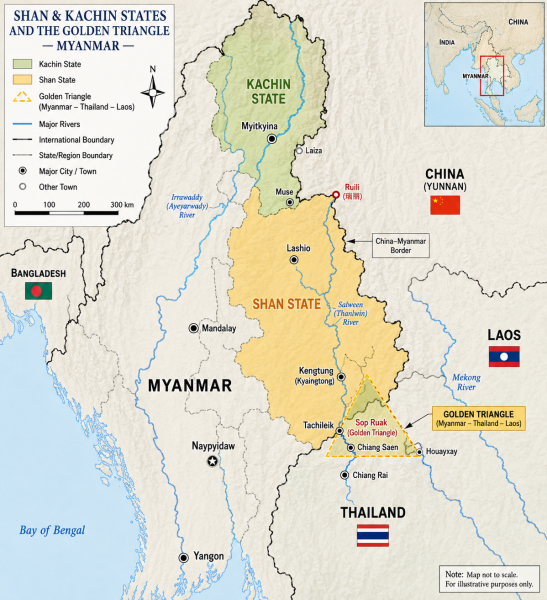
For decades, Myanmar’s Shan State has occupied a strategic but troubled position along the borders of China, Laos, and Thailand in Southeast Asia.
As part of the Golden Triangle — a transnational region spanning Myanmar, Laos, and Thailand that has long been associated with drug cartels and illicit cultivation and trade of opium — Shan State became known primarily for its role in the global narcotics supply. The Mekong and Ruak rivers, which form parts of the region’s borders, have made the area geographically porous, facilitating both legitimate commerce and illicit cross-border activity.
Now, the region’s geopolitical importance is expanding beyond narcotics.
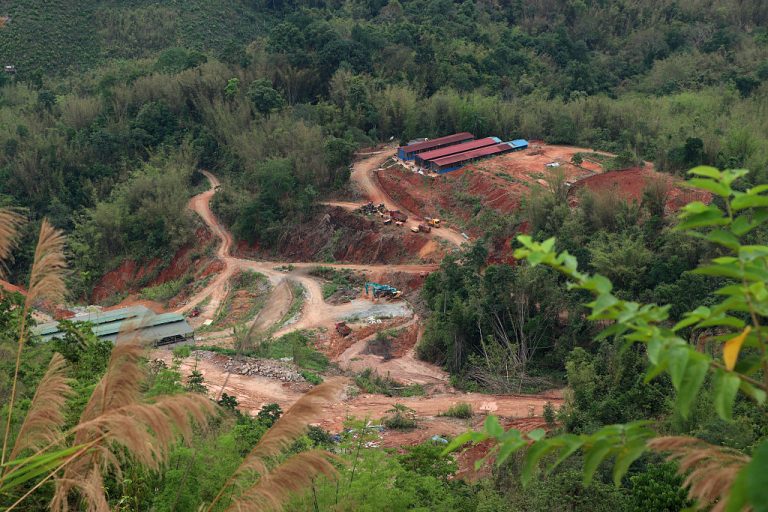
As Myanmar’s long-running civil conflict continues, a rapid expansion of rare earth mining—driven largely by Chinese demand—has transformed the Golden Triangle into a critical source of strategic minerals. The growing involvement of China, alongside rising interest from India and the United States, has added a new geo-economic dimension to an already volatile region. At the same time, extensive mining has fueled concerns over deforestation and water pollution.
Rare earth production is concentrated primarily in Myanmar’s Kachin and Shan states, making the country one of the world’s top three producers after China and the United States. Most of Myanmar’s rare earth output is exported to China. According to the South China Morning Post, mining operations in Shan State operate under the influence of Myanmar’s military junta, powerful ethnic armed groups, and local warlords, all of whom exercise varying degrees of territorial control.
Rare earths under competing armed groups
Success
You are now signed up for our newsletter
Success
Check your email to complete sign up
Rare earth mining expanded rapidly in Myanmar’s border states following the military coup in 2021, although developments in Kachin and Shan states have followed different trajectories, further complicating the politics of the country’s conflict-ridden borderlands.
The Kachin Independence Army (KIA), one of Myanmar’s most powerful ethnic armed groups, seized control of major rare earth mining areas in Kachin State. Meanwhile, the United Wa State Army (UWSA)—Myanmar’s largest and best-equipped ethnic armed organization—has strengthened its control over critical mineral production in Shan State.
Although both groups oppose Myanmar’s military junta, they pursue different territorial, political, and economic objectives. China remains a key economic partner for both organizations. Reuters described the UWSA in a June 2025 report as a “Chinese-backed militia.”
RECENT COVERAGE
- Russia Begins Production of Su-35S Fighter Jets for Iran, Report Says
- Courting Beijing, Bangladesh Backs Xi’s ‘Community With a Shared Future’ Slogan
- US Removes Four Indian Companies From Russia-Related Sanctions List as Trade Deal Nears
China’s involvement in cross-border rare earth mining grew significantly after 2010, when Beijing tightened restrictions on domestic mining while encouraging extraction across the border in Myanmar, where labor costs were lower and environmental regulations were comparatively weak, according to a report published last November by Yale Environment 360, a magazine of the Yale School of the Environment.
The KIA now controls rare earth mines around Panwa, Chipwi, and Momauk in Kachin State, where production expanded rapidly between 2017 and 2024. Those mines account for an estimated 80 to 90 percent of Myanmar’s rare earth production. UWSA-controlled mines around Mong Bawk and Mong Yawn in Shan State account for the remaining 10 to 20 percent.
For years, Kachin’s mines were China’s primary source of Myanmar’s heavy rare earths. However, after the KIA seized control of the mining areas in late 2024, Shan State emerged as an increasingly important alternative supply corridor, according to multiple media reports.
These Kachin mines produce nearly half of the global supply of heavy rare earths, all of which was processed in China, according to Reuters. When the KIA took over, it got into a unique position for negotiations with the Chinese — pushing prices of one key element up sharply.
A few months later, China’s imports of rare earth oxides and compounds from Myanmar fell dramatically. Reuters reported that imports dropped to 311 metric tons in February 2025, an 89 percent decline compared with the same month a year earlier.
The KIA subsequently imposed a 20 percent tax on mining operations in Kachin State, forcing Chinese companies to renegotiate access. During that disruption, the mines in Shan State became an increasingly important alternative supply route.
Reuters used commercial satellite imagery from Planet Labs and Maxar Technologies in a June 2025 investigation to identify and analyze mining sites in Shan State. The report estimated that about 100 workers were operating around the clock to extract rare earth minerals from the Golden Triangle region.
Against this backdrop of armed conflict, cross-border mining, and competing ethnic armed groups, Myanmar’s rare earth industry has increasingly become part of a broader geopolitical contest. According to New Security Beat, published by the Stimson Center’s Environmental Security Program, the country’s critical minerals have transformed local insurgencies into a resource-driven geopolitical issue involving not only China but also Russia, India, and the United States.

Chinese state-backed firms behind expanded mines in Shan state
The expanded rare earth mines in Myanmar’s Shan State are operated by China Investment Mining Company (CIMC), a state-backed firm, according to the Shan Human Rights Foundation (SHRF), a community-based organization that documents human rights issues and the environmental impact of natural resource extraction in the state.
In a special report released Oct. 26, 2025, SHRF said it analyzed satellite imagery taken on October 14 showing expanding rare earth and gold mines along the Kok River in Mong Yawn, southern Mong Hsat Township. The organization also cited information from what it described as “inside sources,” alleging that the operations are run by CIMC.
According to SHRF, CIMC is 90 percent owned by Shanghai Chijin Xiawu Metal Resources Co. Ltd., a consortium involving the state-backed Xiamen Tungsten Corporation and Chifeng Gold, China’s largest privately owned gold producer. The consortium has been involved in developing rare earth resources in neighboring Laos. Xiamen Tungsten is one of China’s leading rare earth companies.
According to Reuters, the new CIMC-operated rare earth mines are located in the upper watershed of the Kok River. The river originates in the Daen Lao mountain range in Shan State and flows through territory jointly controlled by the United Wa State Army (UWSA) and Myanmar-aligned militia forces before entering northern Thailand and eventually joining the Mekong River, which continues into Vietnam.
SHRF documented the expansion of three rare earth mines in the area. It also cited an earlier report, published on May 15, 2025, identifying two mines—one east and one west of the Kok River—that use the environmentally damaging in-situ leaching method.
READ MORE
- Deep Beneath the Pacific, Japan Hunts for a New Source of Rare Earth Metals
- US Unveils High-tech Manufacturing Zone in Philippines Under Pax Silica to Secure AI Supply Chains
- Purges in China’s Guangxi Hint at Rare Earths Smuggling, Factional Struggle (2025)
Yale Environment 360 describes in-situ leaching as a process in which acidic solutions are injected into mountainsides to dissolve rare earth elements. The resulting solution is collected in pools, where heavy rare earth elements such as dysprosium and terbium settle before the remaining sediment is further processed into rare earth oxides.
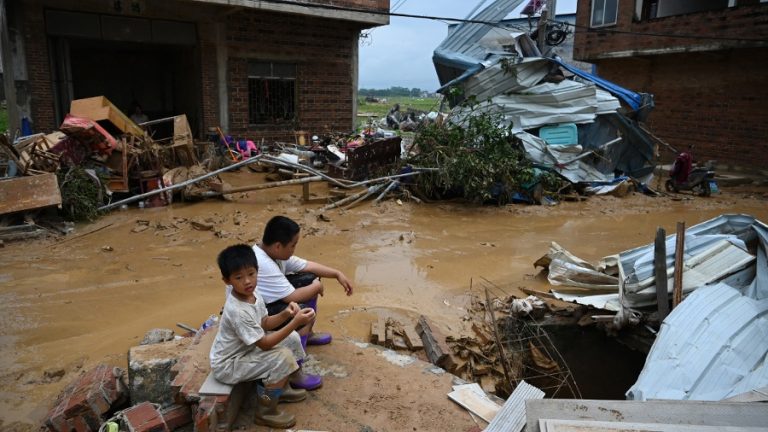
According to SHRF, the rapid expansion of the three mining sites has contaminated the Kok River and affected communities on both sides of the border. The organization said the pollution poses risks to roughly 1 million people living along the river in Thailand’s Chiang Mai and Chiang Rai provinces.
“The toxic effects of rare-earth mining are devastating, with poisoned rivers, contaminated soil, sickness, and displacement,” Jasnea Sarma, an ethnographer and political geographer at the University of Zurich, told Yale Environment 360.
The SHRF report also cited a journalist speaking on condition of anominity who visited the mining area and said pollution from the operations was contributing to respiratory illnesses, skin conditions, and headaches among nearby residents, with children and older people particularly affected.
In a separate report, SHRF said the widespread use of in-situ leaching has also contributed to large-scale deforestation and land subsidence, increasing sedimentation in local rivers and raising the risk of flooding.
Allegations of trafficked labor
A report published by the Shan Human Rights Foundation on May 18 alleges that trafficked Burmese nationals previously forced to work in online scam compounds have also been used as slave laborers at Chinese-operated rare earth mines in Shan State.
The report is based on testimony from a survivor identified as “Ko Thet,” who said he was trafficked from a Chinese-run cyber scam operation in the Yaung Ni Oo compound, controlled by the United Wa State Army in Tachileik, in April 2025.
According to SHRF, Ko Thet and two colleagues were accused by their Chinese accounting supervisor of embezzlement and punished by being forced to work as unpaid scam callers.
Three months later, the report says, the men were transported by car to Mong Yawn in southern Mong Hsat Township by a Myanmar police officer and handed over to UWSA soldiers. They were then taken to a rare earth mine east of the Kok River, about eight kilometers from the Thai border, that SHRF alleges was operated by a Chinese company.
“The three men were kept detained with about thirty UWSA convicts, some shackled, at the mining site, and together with these prisoners were forced to do hard labour jobs, such as digging earth and carrying loads – sometimes at another rare earth mine operated by the same Chinese company on the west of the Kok River,” the report said.
According to SHRF, the forced laborers were housed separately from about 100 regular mine workers recruited from across Myanmar. The organization said the site employed around 50 Chinese personnel and was guarded by approximately 50 UWSA soldiers.
“One of Ko Thet’s colleagues tried to escape one night, but was captured and beaten, transferred to a UWSA detention centre elsewhere, then moved to another rare earth mine operated by the same Chinese company in Mong Bawk, in the northern UWSA area near the Chinese border,” the report said.
According to SHRF, Ko Thet escaped after spending two months at the Mong Yawn mining site.
Rare earths add a new geopolitical dimension to the Golden Triangle
The Golden Triangle’s already complex geopolitical landscape is being reshaped by the rapid expansion of rare earth mining in Myanmar’s border states. Although Kachin State does not lie within the Golden Triangle itself, its conflict economy — and the livelihoods of many communities — has long been intertwined with the illicit trade networks that have defined the region for decades.
In the broader contest over strategic resources, Kachin and Shan states have given Myanmar’s ethnic armed groups new geopolitical leverage. Their importance has grown further amid intensifying global competition over rare earth supply chains, particularly between China and the United States.
Beijing’s export controls on heavy rare earths have disrupted U.S. defense and manufacturing supply chains. Against that backdrop, the rapid expansion of mining in Shan State underscores how the Golden Triangle is evolving from a narcotics hub into an increasingly important corridor for critical minerals. A CNN report published late last year highlighted that transformation.
“The country has long been a mining hub for jade, rubies, gold, copper, amber and other minerals, and the mining centers concentrated in the north and east are already renowned for being havens of dangerous, illicit and corrupt activity, where methamphetamine addiction, sex work, human trafficking and other abuses are driven by rampant poverty, dangerous working conditions and exploitation,” the report said.
For years, revenues from mining and other illicit activities helped finance Myanmar’s military and allied militias in their conflicts with ethnic armed organizations. As control over major rare earth deposits has shifted toward groups such as the Kachin Independence Army (KIA) and the United Wa State Army (UWSA), those dynamics have begun to change.
“Rare earth extraction in Myanmar has rapidly grown in Kachin and Shan states since the coup and ensuing civil war, which has thrown the country into chaos, and deepened already entrenched poverty and violence,” the CNN report said, adding that competition increasingly centers on which group can control and expand mining operations.
QUAD countries eye Myanmar’s rare earth potential
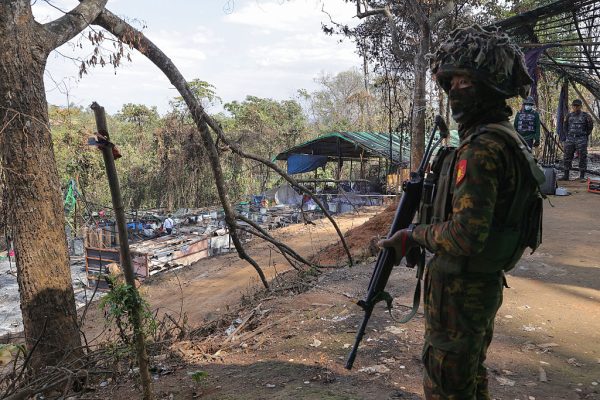
While Chinese companies remain deeply embedded in Myanmar’s conflict economy, growing global competition for critical minerals has also drawn interest from the other members of the Quad — India, the United States, Japan, and Australia.
Among the four countries, India occupies a particularly important position because it shares a roughly 1,020-mile border with Myanmar, stretching across Chin State, Sagaing Region, Kachin State, and a small section near Rakhine State. Combined with India’s rising demand for rare earth minerals and China’s restrictions on exports, that geography has heightened New Delhi’s strategic interest in Myanmar’s mineral resources.
In a paper published on July 15, Kalpit A. Mankikar, a fellow with the Observer Research Foundation’s Strategic Studies Programme, and Amit Ranjan Alok, a research intern at the organization, compared China’s dominance of global rare earth supply chains with the United States’ longstanding influence over international finance through the U.S. dollar.
The analysts said that the way US created a “chokepoint through its currency,” and that China is involved in the “weaponisation of the supply of rare earths through strategic chokepoints.”
That broader competition provides the backdrop to India’s efforts to diversify its access to rare earth supplies from Myanmar. Reuters reported in September 2025, citing four people familiar with the matter, that India had sought assistance from Myanmar’s rebel groups in obtaining rare earth samples.
According to Reuters, India’s Ministry of Mines authorized state-owned and private companies to explore acquiring and transporting rare earth samples from mining areas in northeastern Myanmar controlled by the KIA.
“The ministry made the request – signalling a rare instance of Delhi engaging with a non-state actor – at an online meeting in July,” Reuters reported, citing two of the people familiar with the discussions. The news agency added that a KIA source said the group was collecting samples for Indian analysis.
Dan Seng Lawn, executive director of the Kachinland Research Centre, which studies political and social developments in Kachin State, told Reuters in a subsequent report that India was “willing to pay higher prices than China.”
Lawn said India faces greater challenges than China, which processes about 90 percent of the world’s rare earths. However, he added that if Beijing failed to recognize the “changing power dynamics,” the KIA would need to explore “alternative options.”
Myanmar’s rare earth sector has also emerged as what one policy paper described as “an unlikely pivot” for the United States in the global competition over critical minerals. A policy brief published by the Honolulu-based Pacific Forum in November 2025 argued that Washington is increasingly weighing how to engage with Myanmar’s rare earth industry.
“The Trump administration is weighing two options to access Myanmar’s rare earths: strike a deal with the military junta or bypass Naypyidaw and negotiate directly with the Kachin Independence Army (KIA), which controls most of the mining areas,” wrote authors Cchavi Vasisht and Aung Thura Ko Ko.
The authors argued that because India lacks significant rare earth processing capacity, New Delhi could partner with the United States and Japan to build a more diversified supply chain centered on Myanmar’s mineral resources.
“Pilot projects could include small-scale modular refining facilities in India, with Japanese or South Korean partners, that could process limited volumes once secure transport links are established. With the US, New Delhi can start building a more diversified supply chain in pursuit of long-term investments,” Vasisht and Ko Ko wrote, adding that such cooperation could support sustainable economic development in sensitive border regions while helping reduce illicit mining and environmental degradation.