By Yang Hao, Vision Times
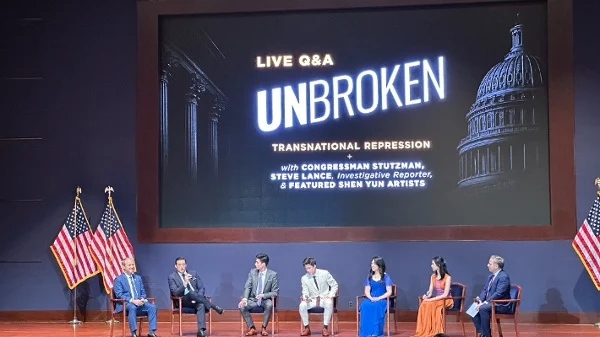
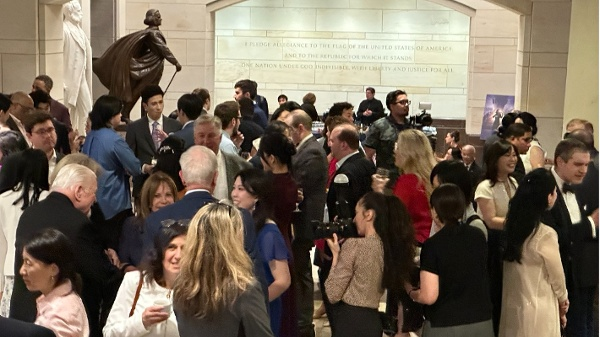
WASHINGTON D.C. — On July 22, more than 300 guests, including lawmakers, congressional staff, human rights advocates, and community leaders convened at the U.S. Capitol for a special screening of Unbroken: The Untold Story of Shen Yun, a documentary that explores the Chinese Communist Party’s (CCP) decades-long campaign to silence Shen Yun Performing Arts through intimidation efforts, influence operations, and escalating transnational repression.
Hosted inside the Capitol, the screening was followed by a reception and panel discussion featuring members of Shen Yun, investigative journalist Steve Lance, and Rep. Marlin Stutzman (R-Ind.), who said the documentary illustrates why Americans must remain vigilant in defending religious liberty and freedom of speech, while recognizing foreign authoritarian influence within the United States.
RELATED: US Congressional Forum Urges Global Action Against Forced Organ Harvesting
Founded in 2006, Shen Yun is a New York-based performing arts company dedicated to reviving traditional Chinese culture and art through classical Chinese dance and music.
Success
You are now signed up for our newsletter
Success
Check your email to complete sign up
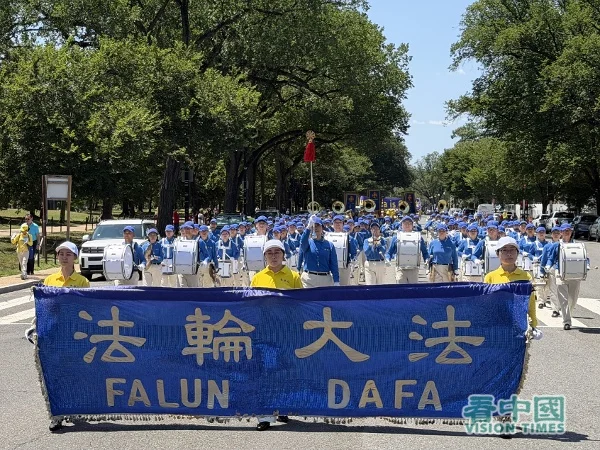
Many of Shen Yun’s performers and staff are practitioners of Falun Gong, a traditional Chinese spiritual discipline also known as Falun Dafa. Rooted in the principles of Truthfulness, Compassion, and Forbearance, the faith was immensely popular in China prior to being banned and subject to severe persecution by the CCP starting in 1999. Because of the persecution, Shen Yun is not currently able to perform in mainland China.

Religious freedom is a cornerstone of liberty
Opening the evening, Stutzman said he had watched the documentary with his family days earlier and was deeply moved by its message. “I’ve always believed religious freedom is one of the most important freedoms we must vigorously defend,” he said. “Because once religious freedom is lost, many of the other freedoms we cherish become much harder to preserve.”
Raised in a deeply religious family in northern Indiana, Stutzman recalled visiting Russia as a young man, where he witnessed firsthand the effects of life under communism.
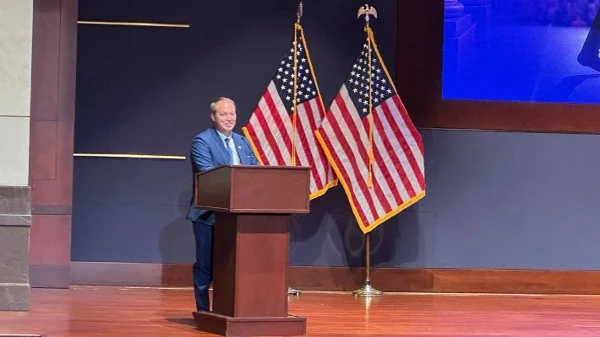
He said immigrants come to the United States seeking freedom from persecution, yet Shen Yun artists, many of whom fled religious persecution in China, continue to face harassment after arriving in America. “They thought they had finally found freedom,” he said, adding, “But the Chinese Communist Party has continued to pursue, harass, and pressure them across national borders.”
Stutzman warned that many Americans remain unaware of the CCP’s influence operations inside the United States. “We need to understand that the Chinese Communist Party has infiltrated many of our institutions right under our noses,” he said. “We see its propaganda on social media. We see its ideology entering educational institutions. These are realities Americans need to understand.”
He added that the documentary serves as a reminder that threats to freedom did not disappear with history. “Sometimes we take freedom for granted,” he said. “This film reminds us that the forces threatening freedom still exist, and we must continue protecting it.”
Beijing’s influence operations
Before the screening, executive producer Steve Lance, an investigative reporter and host of NTD’s Capital Report, said the film’s Washington premiere carried particular significance because many of the influence operations it documents are unfolding in the nation’s capital.
“The CCP is actively operating on Capitol Hill,” Lance said. “They’re lobbying, applying pressure to American institutions, sending letters to newsrooms, and engaging in many other activities. What you’ll see in this film isn’t a distant threat; it’s happening around us.”
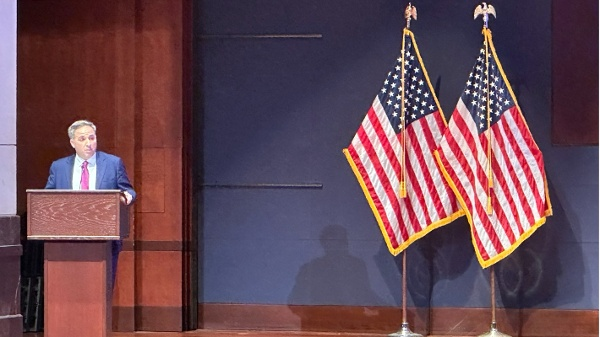
Lance said the documentary was accompanied by an investigative briefing examining how Beijing exploits American institutions, including courts, media organizations, and government agencies, to target critics abroad. “Our investigation found something deeply alarming,” he said, adding, “Today, the Chinese Communist Party no longer needs to send its own agents. It uses America’s own institutions, our courts, media, and government agencies, to silence those it wants to suppress.”
He emphasized that the tactics documented are neither hypothetical nor conspiratorial. “This strategy is explicitly described in the CCP’s own military doctrine, and it has also been confirmed by U.S. government agencies,” he said.
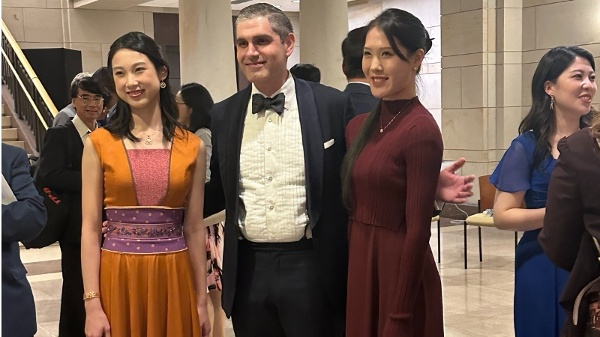
Lance cited examples ranging from the prosecution of an overseas Chinese police station in New York to coordinated online influence campaigns and internal CCP documents directing what he described as “precise strikes” against Shen Yun. “The real test of this foreign influence campaign isn’t just about art,” he said. “It is a test of the freedom of every American.”
A culture erased by communism
Following the screening, lawmakers and audience members participated in a discussion with Shen Yun performers about the company’s mission and the challenges it faces. When asked what impressed him most about Shen Yun’s perseverance after nearly two decades of pressure from Beijing, Stutzman said the performers’ commitment extends far beyond the stage.
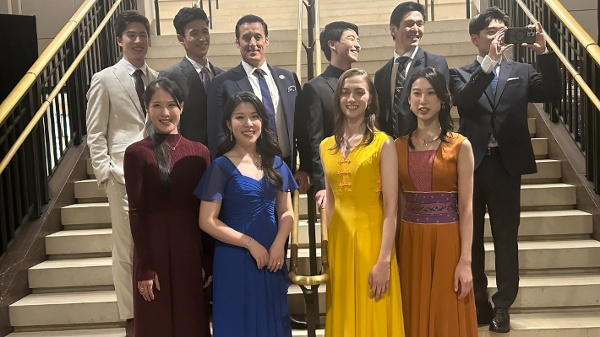
“Many young people join Broadway or theater productions simply to perform,” he said. “What Shen Yun is doing is serving a mission. It is much more than entertainment.” He added that the evening transformed an abstract geopolitical issue into a deeply personal one. “It reminds us that while we go about our daily lives, people in China continue to suffer severe persecution,” he said. “Sharing these stories is one of the most important ways to help lawmakers understand what’s happening.”
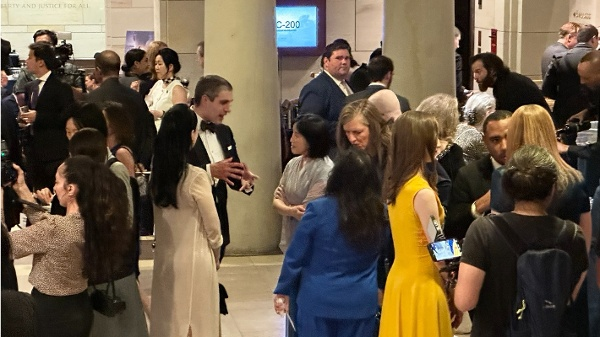
Responding to questions about why the CCP views Shen Yun as a threat, emcee Leeshai Lemish said understanding the company’s mission requires understanding modern Chinese history.
Far-reaching implications
After the CCP seized power in 1949, he said, it systematically dismantled China’s traditional spiritual beliefs and cultural heritage in favor of Marxist-Leninist ideology and militant atheism. “The values we present, faith, morality, compassion, loyalty, courage, are not unique to China,” Lemish said. “They are universal human values.”
He explained that Shen Yun has two goals: To expose the persecution of Falun Gong and revive the traditional Chinese culture that the CCP spent decades attempting to eradicate. Today, the company performs to sold-out audiences around the world but remains banned in China.
“We constantly receive messages from people in mainland China asking, ‘When will you perform here?'” Lemish said. “Our dream is that one day we can bring this performance back to China, a China free from communism.” He also noted that roughly 90 Shen Yun artists and staff members have immediate family members who have been persecuted by Chinese authorities.
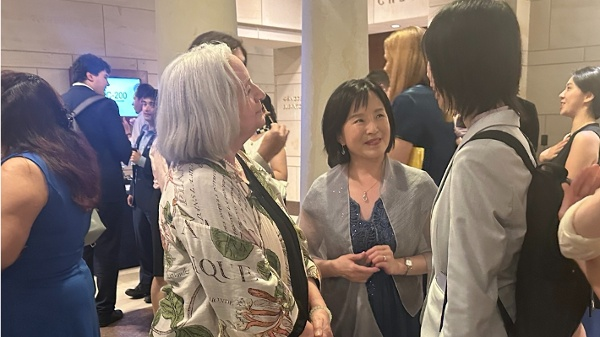
Shen Yun musician Rachel Cheny shared an encounter during a performance in the Netherlands that underscored the personal nature of the company’s work. During intermission, a Chinese woman approached a fellow Shen Yun performer. Curious about the interaction, Cheny asked who she was. “She replied, ‘We were once in the same labor camp together.'”
Cheny said the encounter served as a powerful reminder that, for many members of Shen Yun, the stories portrayed on stage reflect experiences that have touched their own families and communities.
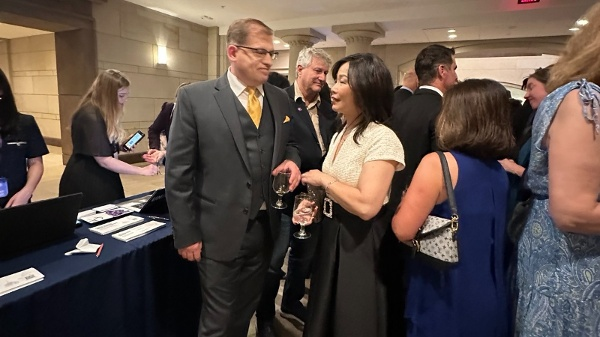
The evening concluded with a reception where lawmakers, policy experts, community leaders, and Shen Yun performers continued discussing religious freedom, human rights, and the growing challenge posed by the CCP’s transnational repression. Several attendees thanked the artists for preserving China’s traditional culture while raising international awareness of ongoing persecution, describing the documentary as both an artistic achievement and a timely warning about the global reach of authoritarian influence.