By Xiao Ran, Vision Times
In response to recent false reports and allegations about Shen Yun Performing Arts, Taihong, now a young teacher at the Shen Yun Art Examination Center, shared his experience at Feitian Academy of the Arts to set the record straight.
Founded in 2006 and based in New York, Shen Yun is the world’s premier classical Chinese dance and music company. Featuring eight equally-sized troupes that tour and perform around the world simultaneously, Shen Yun aims to showcase 5,000 years of traditional Chinese culture and heritage prior to the ravages of communism.
Through his experience, Taihong offers a firsthand perspective on Feitian School and Shen Yun Performing Arts. In 2016, at just 14 years old, he left his home country of Canada to join Feitian Academy of the Arts. His first impression of the school was both awe-inspiring and life-changing.

A life-changing opportunity
“It was a beautiful place. I was stunned the first time I went there. The campus is nestled by mountains and water, with willow branches swaying by the lake, temples, and ancient pagodas — like a scene from a poem,” he recalls.
Success
You are now signed up for our newsletter
Success
Check your email to complete sign up
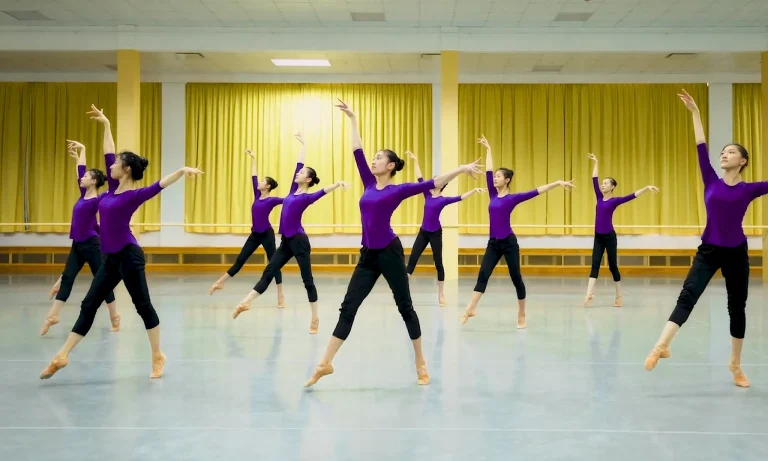
Life at Feitian was both enriching and disciplined. Weekdays were filled with academic courses such as English, math, science, Chinese, and Chinese history. Mastering Chinese classical dance required studying not just dynastic characteristics but also Western history, including Greece and Rome. Afternoons were dedicated to dance training, evenings to tumbling and folk dance, followed by self-study. Extracurricular activities like basketball and ping-pong rounded out student life.
“As students, our main task was to learn and improve our dance skills,” he reflects, adding, “Every day at Feitian felt meaningful.”
The Rigorous Training Behind the Art
“A minute on stage takes ten years off stage,” Taihong says, echoing an age-old truth in the performing arts. Despite being physically strong, he initially struggled with flexibility training, particularly leg stretches.
“Anyone who dances — ballet, jazz, or other styles — knows it involves hardship, sweat, tears, and injuries. Only through tough training can you achieve results,” he explains.
Taihong vividly remembers those early struggles. “Teachers had us stretch for ten minutes daily, intensifying every two minutes. At first, I couldn’t bear it — tears streamed from the pain. But seeing classmates persist, I didn’t want to lag, so I gritted my teeth. After months, my flexibility improved, and I could easily do backbends and splits.”
Chinese classical dance demands exceptional stamina, particularly in jumps, spins, flips, and tumbling. To prepare, students engaged in rigorous pre-training routines, including long runs and core-strengthening exercises.
Discovering the depth of traditional culture
For Taihong, Feitian’s emphasis on history and culture was as transformative as the dance training itself.
“Learning Chinese history helped us portray characters through classical dance. A scholar’s moves are soft yet firm, showing elegance and confidence; a soldier shows vigor and loyalty—playing Yue Fei meant capturing his devotion to the nation.”
His love for traditional wisdom deepened when he studied the “Tao Te Ching.” “A teacher explained ‘the highest good is like water,’ which deeply inspired me. I learned humility in life and to be gentle and tolerant with others.”
Beyond dance, Feitian instilled the values of “benevolence, righteousness, propriety, wisdom, and trust.” These teachings, he says, shaped his character.
“These virtues taught me how to treat others. In dance, I understood benevolence and righteousness mean helping classmates, not competing or envying. Propriety taught respect for teachers and seniors; wisdom and trust gave me responsibility and perseverance.”
He also integrated the principles of “Truthfulness, Compassion, Tolerance” into his daily life: “When facing difficulties, I remind myself to endure; in conflicts, I choose kindness; in all things, I stay sincere.”
Faith and growth through Falun Dafa
Taihong’s understanding of Falun Gong deepened at Feitian, influenced by both his upbringing and personal experiences.
“I used to think cultivation was just daily exercises and study, but facing real challenges, I realized Falun Dafa’s principles are invaluable guides,” he says. Physical limitations and mental stress became opportunities to refine his character and cultivate inner strength.
Practicing Falun Dafa helped him let go of attachments to fame and personal gain. “Many chase fame and profit, but I’ve learned not to cling to them. I focus on doing things well, not for recognition.”
“Whether performing, practicing, or handling daily tasks, I give my all — not for others’ approval,” he says. Free from the pressures of external validation, he finds that maintaining peace and kindness often leads to natural success.
A brotherhood of artists
During his time interning with Shen Yun, Taihong discovered an environment of camaraderie and teamwork. “At Shen Yun, we’re like brothers, caring for each other. Before shows, we check costumes and props for perfection. We train, set up stages, backdrops, and manage props together.”
Offstage, the troupe bonded over cultural experiences. “During tours, we visit local sights on off days, experiencing diverse cultures.”
Teaching the next generation
Now a university student in Canada studying graphic design, Taihong also teaches dance at the Shen Yun Art Examination Center. His time at Feitian shaped him in profound ways.
“The hardships of dance training mean nothing feels tough now. I learned time management, discipline, and focus — great foundations for my future.”
Looking forward, he hopes to inspire the next generation of dancers. “Let kids play freely. If they love it, let them dance and pursue it boldly,” he says. But in the meantime, his dedication to Chinese classical dance is unwavering. “No matter the challenge, I’ll stick to this path. It’s not just art — it’s a mission.”