Commentary by Christian, Vision Times
History offers a warning to leaders who stake their reputations on reclaiming a contested piece of territory. After retreating to Taiwan in 1949, Chiang Kai-shek spent the final 25 years of his life insisting that a return to mainland China remained possible. He repeatedly vowed that a counteroffensive was within reach. But when he died in Taipei in 1975, he never set foot on the mainland again. The promise he had made to his government, his supporters, and himself ultimately went unfulfilled.
Taiwan has a way of becoming more than a geopolitical issue, as it can evolve into a personal mission that blurs the line between political necessity and strategic reality. Once that happens, the gap between ambition and capability can become perilous. Xi may now find himself navigating that very gap.
Since its establishment, Taiwan has operated as a de facto independent polity, with its own democratically-elected government, military, and foreign relations. Beijing, however, claims the self-ruling island as a breakaway province and rightful part of the People’s Republic of China (PRC). As such, it has repeatedly stated that it seeks eventual “reunification,” as an end goal, reserving the option of using force if necessary.
A declaration with little room for retreat
Over the past decade, Xi has elevated the Taiwan issue to a central component of what he calls the “great rejuvenation of the Chinese nation.”
Success
You are now signed up for our newsletter
Success
Check your email to complete sign up
At the Chinese Communist Party’s (CCP) 20th National Congress in 2022, Xi declared that resolving the Taiwan question and achieving “complete reunification of the motherland” was an essential requirement of national rejuvenation. While previous Chinese leaders maintained reunification as a long-term objective, Xi has tied it more explicitly to the broader narrative of China’s national destiny.
In his New Year addresses and other public remarks, he has repeatedly described reunification as an inevitable historical trend. Such rhetoric carries political consequences. The more unification becomes framed not simply as a policy preference but as a historic mission, the more difficult it becomes to explain why it has not been achieved. That creates the first constraint.
The two walls of Xi’s Taiwan dilemma
The first wall is domestic nationalism. Years of official messaging have embedded Taiwan into China’s broader story of national revival. Reunification has increasingly been portrayed as correcting a historical injustice and completing the nation’s rise. Leaders who repeatedly promise that an outcome is both inevitable and necessary may eventually face growing pressure if they fail to deliver it.
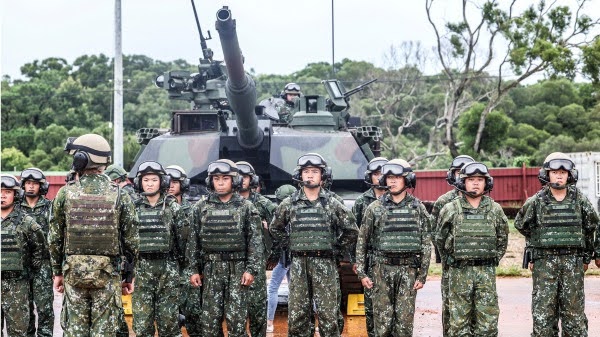
The second wall is strategic reality. An amphibious invasion across the Taiwan Strait would rank among the most complex military operations in modern history. It would involve transporting large numbers of troops across roughly 180 kilometers of water, sustaining them under fire, overcoming Taiwan’s defenses, and potentially confronting outside intervention.
Analysts across the political spectrum have warned that even a successful operation could impose enormous military, economic, and diplomatic costs. Having military options, therefore, is not the same as being able to exercise them without consequence.
The danger of miscalculation
The greatest risk may not lie in a fixed timetable for conflict, but in the political logic that can drive leaders toward increasingly narrow choices.
In their book Danger Zone, scholars Hal Brands and Michael Beckley argue that Taiwan occupies an unusually important place in Beijing’s strategic thinking. Bringing Taiwan under Beijing’s control would eliminate what Chinese leaders view as a lingering challenge to Communist Party legitimacy, expand China’s strategic position in the western Pacific, and cement Xi’s place in history.
That combination can be powerful. The danger is not necessarily that leaders become irrational. Rather, it is that they become trapped by the political narratives they themselves helped create.
Foreign policy analysts have also warned that uncertainty surrounding U.S. commitments can heighten the possibility of miscalculation. If Beijing underestimates Washington’s willingness to respond, or overestimates its own ability to control escalation, the risks could increase substantially.
The ongoing war in Ukraine has demonstrated that leaders may proceed with military action despite significant economic and strategic costs if they believe national destiny, historical grievance, and political legitimacy are at stake.
Taiwan and Ukraine are distinct cases, shaped by different histories and circumstances. But the broader lesson remains relevant: once leaders publicly bind their legitimacy to territorial objectives, they may find it increasingly difficult to reverse course.
History’s warning
Chiang Kai-shek spent decades waiting for a return that never came. Xi Jinping faces a different predicament. If reunification has become inseparable from his political legacy, failing to achieve it could carry domestic costs. Yet forcing the issue through military means could trigger consequences that reshape China’s economy, regional security, and global standing for generations.
In that sense, Xi faces a dilemma of his own making. He may find Taiwan difficult to abandon. But he may also discover that attempting to seize it carries costs too high to bear.
The most dangerous space in the Taiwan Strait today may lie between those two realities, a narrowing gap between political necessity and strategic restraint. And history suggests that when leaders become trapped inside such spaces, the consequences can extend far beyond their own legacies.
Editorial note: Views expressed in this article are the opinions of the author and do not necessarily reflect the views of Vision Times.