By Babak Baniasadi, Vision Times contributor
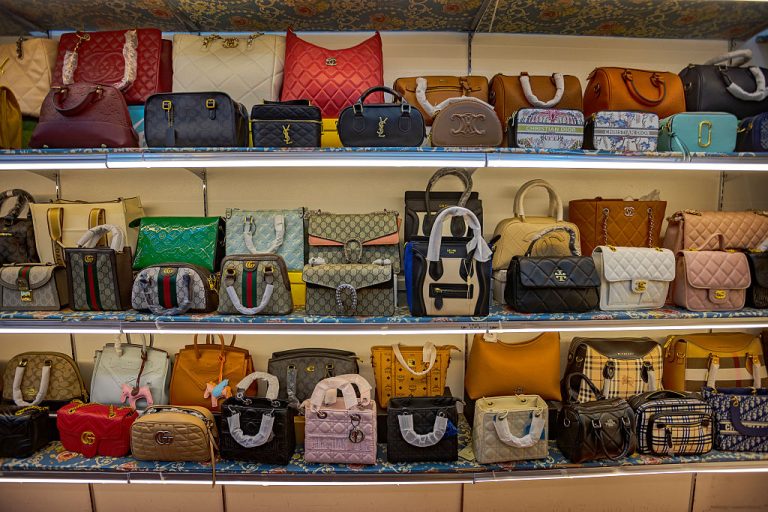
In countless TikTok videos, viewers are encouraged to buy “high-end” handbags, clothing, and accessories directly from Chinese factories — at a fraction of the usual cost. These videos often look slick and professional, showcasing assembly lines, neat sewing stations, and glossy production floors.
At first glance, it feels like a dream come true for fashion lovers: Why pay top dollar for brands like Louis Vuitton, Lululemon, Hermès, Birkenstock, or Chanel when you can get similar styles for less? But behind these polished promos lies a more troubling truth — one that exposes the Chinese Communist Party’s (CCP) broader, multi-pronged assault on both American consumers and companies.
For years, U.S. brands tried to forge stronger ties with China by shifting manufacturing overseas, hoping shared economic interests would lead the CCP to adopt fairer practices. Instead, the CCP exploited the arrangement to fortify its power while exposing vulnerabilities in Western business models. “Never make a deal with the devil,” the saying goes. And indeed, the moment an agreement stops serving the CCP’s interests, it is discarded. Now, as geopolitical tensions rise, Americans are paying the price, literally.
RELATED: Threadbare Promises: Why Consumers Are Demanding a Return to Durable Clothing
How we got here
Success
You are now signed up for our newsletter
Success
Check your email to complete sign up
For decades, American companies benefitted from the low costs of Chinese manufacturing. Initially, this seemed like a win-win: U.S. firms would cut production expenses, and China would modernize its economy. This was based on the belief that integrating China into the global market — particularly after granting it Permanent Normal Trade Relations status in 2000 — would push the CCP toward international trade norms and market reforms. But that didn’t happen.
According to the U.S.-China Economic and Security Review Commission, the CCP continued to engage in unfair trade practices, including economic coercion and widespread intellectual property theft. American firms were forced to hand over proprietary technologies in exchange for market access, and even then, found themselves blocked or retaliated against. The basic business safeguards taken for granted in the West — such as contracts, IP rights, and labor standards — hold little weight in China when they run counter to the CCP’s strategic goals.
This month, the U.S. imposed tariffs of up to 145 percent on Chinese goods to address these longstanding imbalances. The CCP responded with targeted attacks on American companies across multiple industries, particularly fashion and electronics.
According to “The Epoch Times” the Chinese regime even removed intellectual property protections, effectively endorsing counterfeiting and theft. It openly gave counterfeiters its blessing to act with impunity — like a mob boss green-lighting an all-out gang war, noted the report. This was done in hopes of sowing division in the U.S. by pressuring these brands into once again aligning with the CCP.
A multi-pronged war
This is not just a trade spat — it’s an orchestrated campaign. As the report explains, the CCP deploys a range of tactics against the U.S., including manipulating social media algorithms to promote Chinese “factory-direct” goods that undercut American brands. TikTok influencers, knowingly or not, are being used to mislead consumers.
But that’s just the surface. The CCP has reportedly embedded law enforcement agents within the U.S., planted operatives at various government levels, acquired strategic land, and invested in key sectors to expand its influence.
RELATED: Heaven in the Hem: Unraveling the Divine Origins of Traditional Clothing and Culture
Meanwhile, it pressures U.S. businesses in China to oppose American tariffs — under threat of market exclusion or worse. The constant stream of social media posts glamorizing Chinese manufacturing is just another prong in this broader war: confuse the consumer, destabilize the brand, and profit from the chaos.
Of course, not every Chinese factory is criminal — but for every legitimate supplier, there are countless others pushing knock-offs and low-quality goods. China’s vast income disparity breeds desperation, and many factory brokers are eager to exploit Western demand. The result? Social media flooded with too-good-to-be-true posts, poor-quality goods, and no accountability. Every time an American consumer buys one of these products, they are unknowingly funding the very machinery that sustains the CCP’s grip on power.
Where the money really goes
What makes this even more disturbing is how the CCP uses that money. Instead of uplifting its citizens, the regime channels resources into surveillance and repression. One of its most brutal campaigns targets Falun Gong, a peaceful spiritual discipline based on the principles of truthfulness, compassion, and tolerance. Because these values challenge the authoritarian mindset of the CCP, Falun Gong practitioners have faced relentless persecution for decades.
As noted by the Falun Dafa Information Center, CCP funds are used to maintain a sprawling propaganda machine, organize nationwide petitions to demonize practitioners, and conduct overseas intimidation campaigns. “A ridiculous nightmare” is how some have described it — but it’s financed, in part, by the money Westerners spend on knock-off bags and cheap gadgets.
RELATED: Sustainable Fashion: Breaking the Cycle of China’s Environmental Devastation
Slave and forced labor is another part of the equation. Reports continue to emerge of horrific conditions in Chinese factories — overcrowded dorms, unsanitary workspaces, long hours, and little pay. These aren’t just figures on a chart. They represent real people working in conditions unimaginable to most in the West. And it’s these realities that make the ultra-low prices possible.
A losing game
The viral videos flooding TikTok omit one essential fact: producing high-quality products is expensive. Brands must invest in R&D, prototypes, QC processes, marketing, logistics, customer service, and more. Buying an ad in Times Square or on network TV can cost hundreds of thousands of dollars — expenses that add value and trust to a brand.
RELATED: Dressing the Masses: How Fashion Has Been Used as a Tool of Control
Meanwhile, many of the factories featured online bypass all of this by stealing designs, copying logos, and pretending to offer the same quality. They aren’t transparent about hidden costs or brand responsibilities, and they certainly don’t explain the long-term damage done by enabling IP theft and market destabilization.
Ultimately, the CCP’s deceptive strategies are a loss for everyone. American consumers end up with subpar goods and rising prices. Trusted brands are robbed of their creativity and viability. Even the CCP gains little — squandering its nation’s wealth on internal control, not prosperity.
What we’re seeing isn’t just economic competition — it’s a calculated campaign to undermine America’s economy, mislead its people, and export authoritarian influence. And for now, the only winners are those who profit from the chaos — until, eventually, they don’t.