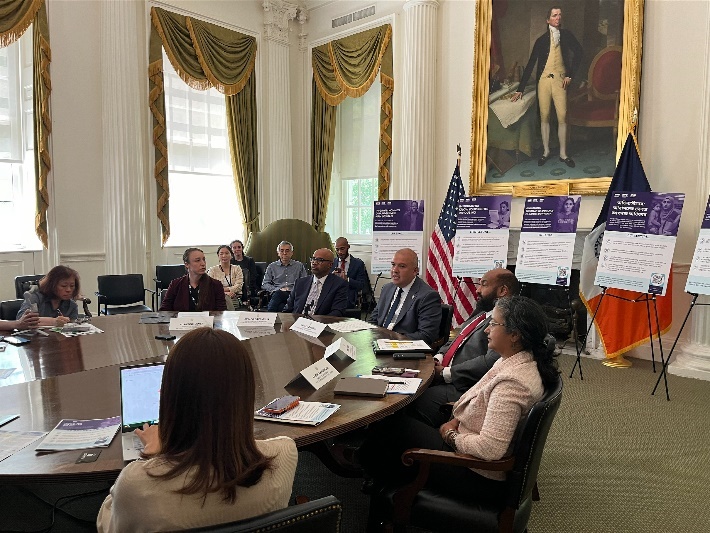
NEW YORK, New York — On May 20, officials in New York City held an ethnic media roundtable and Q&A session designed to empower immigrant communities with vital knowledge and information about their housing rights and protections under city law. The event brought together leaders from multiple city agencies, including the Department of Housing Preservation and Development (HPD), the Mayor’s Office of Immigrant Affairs (MOIA), the Mayor’s Public Engagement Unit (PEU), and the New York City Commission on Human Rights (CCHR).
The gathering also aimed to bridge gaps in housing access and education, especially among immigrant New Yorkers facing language, legal, or social and cultural barriers.
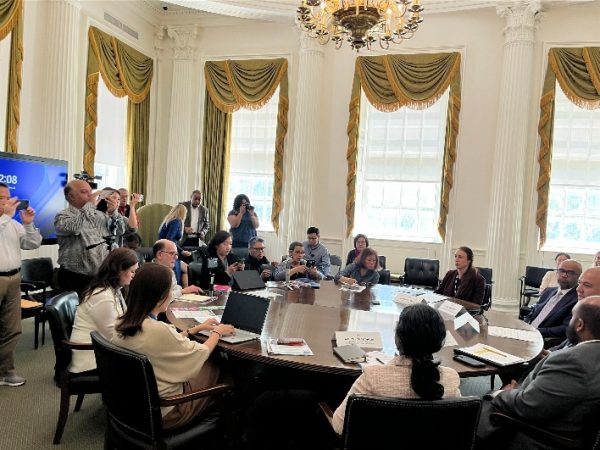
The roundtable, led by Deputy Mayor for Housing, Economic Development, and Workforce Adolfo Carrión, Jr., served as both a briefing and a community-building effort. City officials underscored the message that housing discrimination has no place in New York, and that all tenants — regardless of immigration status — have the right to safe, stable, and dignified living conditions.
RELATED: Citing Mismanagement by NYC, Federal Judge Places Rikers Island Prison Under Independent Control
A focus on language accessibility
“Having served this city as a planner, community board manager, council member and borough president, representing largely immigrant communities, I know the host of housing issues that immigrants face — whether that is discrimination in securing housing opportunities or ensuring that people live in safe, quality housing,” said Carrión, adding, “I look forward to today’s roundtable discussion and am grateful for the interagency partnership working to ensure that immigrants in our city are empowered with clear information on their housing rights and the ability to make the best choices for themselves and their families.”
Success
You are now signed up for our newsletter
Success
Check your email to complete sign up
A major focus of the event was ensuring that language does not become a barrier for immigrants in the state. To combat the language barriers, officials announced the rollout of multilingual resources, including flyers, how-to videos, guides, and visual tools, all of which are now available online in Arabic, Bengali, Simplified Chinese, French, Haitian Creole, Korean, Polish, Russian, Spanish, and Urdu.
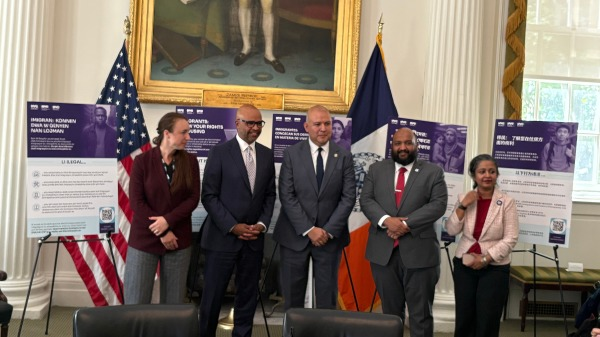
These materials aim to help immigrant New Yorkers better understand their housing rights, recognize when those rights are violated, and take action with confidence, noted Carrion.
“Every New Yorker deserves to live in a safe, stable home — no matter where they were born or what their immigration status is,” said Adrienne Lever, Executive Director of the Mayor’s Public Engagement Unit. “We’re proud to stand with our agency partners to ensure immigrant communities understand their tenant rights and know how to access help.”
Event highlights
At the roundtable, officials shared insights into what constitutes housing discrimination, such as being denied an apartment based on national origin or immigration status, and how tenants can assert their rights under the New York City Human Rights Law — one of the most comprehensive civil rights laws in the country.
“Immigrants are an essential part of the fabric of New York City, and the New York City Human Rights Law guarantees that they cannot be denied housing because of their citizenship status or national origin,” said Kajori Chaudhuri, Deputy Commissioner at CCHR. “The Commission on Human Rights is dedicated to working with our partners across the City to educating and empowering all New Yorkers about their rights and responsibilities, ensuring no one is excluded or mistreated because of who they are.”
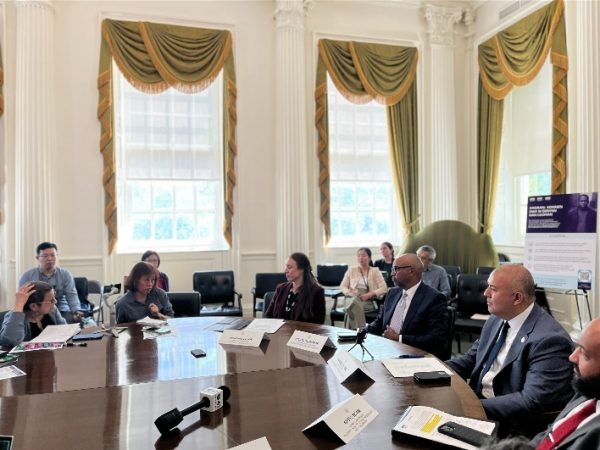
HPD Acting Commissioner Ahmed Tigani echoed this commitment to enforcement and equity. “New Yorkers need to know when one of our inspectors arrive at their home, the thing that matters first to HPD is to uphold everyone’s right to a safe and dignified home,” he said, adding, “Through our dedicated enforcement unit — and in coordination with other city agencies — we hold property owners accountable to the city’s housing regulations. Tenants are encouraged to report violations without fear, regardless of their immigration status.”
Programs and services offered
Attendees also learned about the wide range of services and programs available to help tenants, including:
- 311 Hotline: Tenants experiencing housing maintenance issues or landlord harassment are encouraged to call 311 or file a complaint online.
- Good cause eviction: This newly enacted law strengthens tenant protections by requiring landlords to provide valid reasons for evictions.
- The ABCs of housing: A comprehensive guide published by HPD outlining the rights and responsibilities of both tenants and landlords.
- NYC housing connect: An affordable housing lottery system helping residents apply for low-cost rental units citywide.
- Rent and down payment assistance: Programs such as HomeFirst, SCRIE/DRIE, and Section 8 offer financial aid to qualifying individuals and families.
- HPD online tools: Tenants can search for information about landlords and buildings to stay informed and empowered.
- Homeowner help desk: A service helping small property owners navigate housing challenges while maintaining fair practices.
- Partners in preservation: A city initiative that educates tenants on their rights and connects them with local organizers to build stronger communities.
Continued outreach
This week’s roundtable is only the beginning, the officials noted. The Public Engagement Unit’s Tenant Support Unit launched a “Day of Action” on May 20 by distributing the new multilingual resources in high-traffic areas throughout the five boroughs. Teams also engaged directly with community members to answer questions and connect them with available services.
Looking ahead, PEU and its partners will continue proactive outreach throughout the summer by targeting neighborhoods with large immigrant populations, said Tigani. These efforts are designed not only to inform, but to build trust and encourage residents to exercise their rights without fear of retaliation or discrimination.
“Interagency partnerships with our colleagues at HPD, CCHR, and PEU allow us to highlight the vital public services community members can utilize to maintain the quality of life that they deserve,” said Manuel Castro, Commissioner of MOIA. “From the inclusion of tenant rights in our Know Your Rights outreach to providing issue-specific language access in services related to housing, we continue to serve as a key foundation for our Newest New Yorkers and long-time residents.”
For more information on the programs and services mentioned, please visit the official websites of the NYC Department of Housing Preservation and Development (HPD) and the Mayor’s Office of Immigrant Affairs (MOIA).