A senior figure linked to the Cambodia-based Prince Group has been arrested in Japan, drawing new attention to one of Southeast Asia’s most notorious cyber-scam and money laundering operations.
Japanese police announced on June 22 that they had arrested Hu Xiaowei, a 44-year-old Chinese-born Cyprus national also known as Hu Shi, on suspicion of submitting false address-change documents. Investigators say Hu is a key figure linked to Prince Group, the Cambodia-based conglomerate founded by Chen Zhi. Chen was arrested in Cambodia and extradited to China in January 2026.
Chen, who built Prince Group into a sprawling business empire spanning real estate, finance, hospitality, and online gambling, has been identified by U.S. authorities as the main leader of the network. The group operated a vast transnational criminal network involved in online fraud, money laundering, and other illicit activities. Hu’s arrest came as the U.S. Treasury Department announced new sanctions targeting Prince Group-linked figures and entities, including senior executives, investors, and shell companies.
US expands sanctions
On June 23, the U.S. Treasury Department announced sanctions against nine individuals and 26 entities tied to Prince Group. The targets included senior group personnel, alleged scam center investors, and companies accused of supporting the network’s operations, dubbed the Prince Group Transnational Criminal Organization (Prince Group TCO), by the Department.
RELATED: Chinese Firm Used Crypto Networks to Move Funds, Chemicals Through Japan
Success
You are now signed up for our newsletter
Success
Check your email to complete sign up
The latest action followed earlier U.S. and U.K. measures that designated Prince Group as a transnational criminal organization and sanctioned more than 140 related individuals and entities. Authorities also moved to seize approximately 127,000 bitcoins, valued at roughly $15 billion at the time.

According to the Treasury Department, Hu Xiaowei acted on behalf of Prince Group in several areas, including overseeing subsidiaries outside Cambodia, conducting aviation-related business, participating in the group’s international real estate operations, engaging in illegal gambling activities, and holding companies on behalf of Chen. As such, Hu was considered a leader and key target of the group.
Hu Xiaowei, also known by aliases including Hu Shi and Chen Xiaoer, has emerged as one of the most closely-watched figures in the case. Japanese investigators said the arrested man had multiple identities and served as a representative director of a company in Tokyo. Police reportedly tracked his movements through surveillance footage at luxury hotels in Osaka before arresting him.
Scam compounds and forced labor
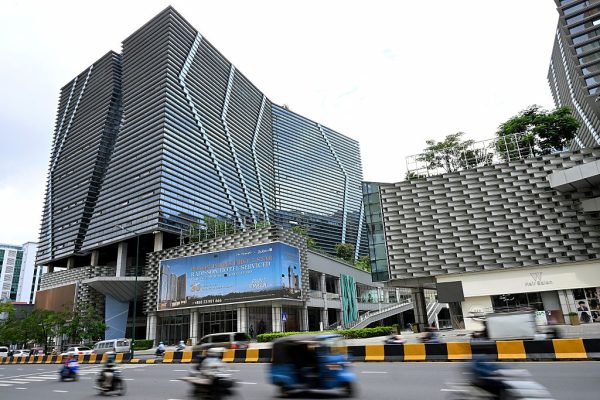
Prince Group, founded by Chen Zhi and headquartered in Phnom Penh, has publicly presented itself as a business empire involved in real estate, finance, and hospitality. U.S. authorities, however, allege that parts of the network were used to support online fraud operations and scam compounds.
These operations are commonly associated with “pig butchering” scams, in which victims are manipulated through fake romantic or investment relationships before being persuaded to transfer money into fraudulent platforms, with little or no recourse for recovery.
Workers inside such scam compounds are often recruited through deceptive job advertisements promising high salaries in customer service or technology roles. Once they arrive, victims may have their passports confiscated and be held in guarded compounds, where they are forced to participate in online fraud.
According to U.S. authorities, Americans lost at least $10 billion to Southeast Asia-based scam operations in 2024. Human rights groups and law enforcement agencies have also documented abuse inside some scam compounds, including beatings, confinement, and other forms of coercion.
A network of bribes
A U.S. federal indictment filed in the Eastern District of New York in October 2025 provides further details on how Prince Group allegedly protected its operations.
According to the indictment, senior group personnel used political influence in multiple countries to shield the organization from law enforcement scrutiny. Prosecutors allege that the group paid bribes to public officials in exchange for advance warnings about raids and investigations. The indictment describes a dedicated “risk control” function within the organization that allegedly monitored law enforcement activity and facilitated corrupt dealings with officials.

In one instance, Prince Group personnel received advance notice of planned police action, allowing them to move people and destroy evidence before authorities arrived. In another case, a group representative allegedly discussed with a Chinese public security official how Prince Group personnel could be helped to “get out” of trouble, while offering benefits to the official’s son in return.
The indictment also alleges that corrupt relationships extended beyond warnings and protection. Prosecutors described an incident in which a group representative directed a law enforcement contact to take action against a rival operation, suggesting that state power could be used to advance the group’s business interests.
The filing further states that Chen Zhi maintained records of payments to public officials, including reimbursements worth hundreds of millions of dollars. In one case, prosecutors alleged that the group purchased a yacht worth more than $3 million for a foreign official and luxury watches worth millions of dollars for another.
The U.S. allegations suggest Prince Group’s survival depended not only on offshore business structures and cryptocurrency transfers, but also on a broader system of bribery, political access, and protection.