Time flies, and the days pass swiftly. In the blink of an eye, I have been in the United States for 21 years. For me, the city that has helped me the most in understanding and comprehending American history is Philadelphia, known as the “Cradle of America.” It is also the birthplace of the famous Declaration of Independence.
Whenever I stroll and explore the old districts of this famous city and learn about its history, I am drawn to the tranquil, inclusive, and traditionally cultured atmosphere of the city… As an immigrant from China, these ancient buildings, though different in cultural connotation, evoke a kind of inner resonance—perhaps this is the divinity shared by all humanity!
Philadelphia, located on the Delaware River in eastern Pennsylvania, between Washington and New York, has a history of over 300 years. It is one of the oldest and most historically significant cities in the United States. Philadelphia is the sixth largest city in the U.S. and the largest in Pennsylvania. As America’s first historical capital, understanding its history is tantamount to understanding the foundational culture and spirit of the entire United States. Philadelphia is not only a “City of Brotherly Love,” but also a city that records the birth of “America.” During the American Revolutionary War, many historically significant events took place in Philadelphia… It was the site of the two Continental Congresses, the signing of the famous Declaration of Independence, and the drafting of the first U.S. Constitution in 1787. From 1790 to 1800, Philadelphia even served as the nation’s capital, where the first president, George Washington, was inaugurated.
In November 2015, Philadelphia was listed as a World Heritage City, becoming the first American city to receive this designation.
Philadelphia was planned and established by Quaker William Penn. The English name “Philadelphia” comes from the Greek word meaning “City of Brotherly Love.” Penn hoped that the immigrant city he founded would develop under the principles of freedom and religious tolerance, becoming a model city. The Old City Historic District of Philadelphia is not only the birthplace of America but also preserves the early community style, including: Independence National Historical Park (listed in the National Register of Historic Places in 1972), the famous Independence Hall and Liberty Bell, Elfreth’s Alley, Carpenters’ Hall, the Betsy Ross House, the Benjamin Franklin Post Office, and many other historical sites.
Success
You are now signed up for our newsletter
Success
Check your email to complete sign up
Elfreth’s Alley is the oldest continuously inhabited residential street in American history. It is located at the north end of 2nd Street, near Race Street. The alley is famous because it is a residential area and is considered the oldest residential district in the United States. Every household has flowers and plants at the door, decorating each ancient home. This understated, simple, and natural folk style is full of tradition, history, and cultural heritage, making it the most attractive aspect of Philadelphia. Every door, brick, and tile here has its own fascinating historical story… This allows the metropolis of 1.6 million people to retain picturesque, classical small streets and alleys everywhere, with architectural styles that reflect the meaning of the “City of Brotherly Love.”
Independence Hall, located in the National Independence Historical Park, is its core and is listed as a World Heritage Site. It is one of the most important buildings in American history. Built between 1732 and 1753 in the Georgian style, it was originally used as the Pennsylvania State House. Independence Hall is famous for its key role in American independence history—it is the site where the Declaration of Independence and the U.S. Constitution were drafted and signed.
The exterior of the hall is simple and solemn, with a tall bell tower at the front, which once housed the now world-renowned Liberty Bell (now displayed at the nearby Liberty Bell Center). The interior of Independence Hall is well preserved, and visitors can tour the meeting room where the Declaration of Independence was signed, feeling the weight and depth of history. It also contains the earliest forms of the U.S. Congress and courtrooms.
Independence Hall is part of the Independence National Historical Park and attracts visitors and history enthusiasts from all over the world. The guides here provide in-depth historical background. The Declaration of Independence contains the basic ideas of many founding fathers, some of which were later incorporated into the U.S. Constitution. The fourth founding principle of America emphasizes the importance of religion; religious faith is a founding principle, and the government guarantees religious freedom.
This has combined religious faith with America’s system of liberty. In fact, the founders accepted five truths that we now define as “religion” and built a complete constitutional framework upon them. In 1787, the year the Constitution was drafted and approved by Congress, the famous Northwest Ordinance was also passed. In this ordinance, they emphasized the necessity of teaching religion and virtue in schools.
The cobblestone alleys, red brick houses, and red brick tiles of Philadelphia often evoke a sense of homesickness in me… However, in China, those beautiful childhood memories of red bricks, pavilions, and courtyards have long been destroyed by the Chinese Communist Party. The elementary school I attended was once the residence of a wealthy person before the Communist regime, centered around a traditional Chinese blue-brick temple (Chinese people were very religious then), with a history of several hundred years. The surroundings were beautiful, and my grandparents and I lived in the owner’s house. The Communists labeled him a landlord, executed him for being wealthy, and took over his property. The vacant houses were up for grabs, and the area was at least twice the size of Philadelphia’s Old City Historic District. Later, the government rebuilt the area, and residents were forced to relocate—everything from the past was gone. The middle school I attended was a beautiful Japanese-style building (Japanese architecture originated from China’s Tang Dynasty), but it too is now gone. The remaining European and Japanese-style houses are all dilapidated…
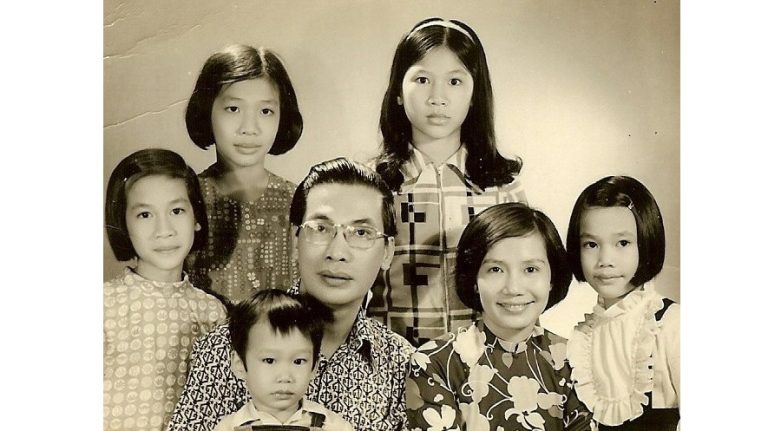
The greater cultural destruction was not just of artifacts and buildings, but also of spirit and body. When I was in kindergarten, my father was a government police officer. Because he was naturally fair-skinned, our family was labeled as capitalists or landlords, and he was sent to the countryside. When my mother visited him, his hair had all fallen out overnight at the age of 30. My grandparents had to take care of my sister, so I spent most of my time in a boarding kindergarten. At night, if I played with friends, I was punished by being made to stand and not allowed to sleep, and threatened with being sent to the room of a capitalist employee who was persecuted (accused of stealing all the children’s handkerchiefs while doing laundry, forced to stand in the yard with a string of handkerchiefs around his neck and be publicly criticized). During the day, I often saw and heard military vehicles and drills outside the kindergarten, with talk that Americans and Taiwanese were coming to attack us. The teachers drew scary pictures of Americans, so many of us were frightened whenever we heard the alarm. My childhood was spent in this environment of psychological torment. I am grateful to have come to Canada and the United States, and to have visited many countries, where I found that many people are kind, and I never saw that only people in China and North Korea have freedom…
Today, I am very fortunate to be here, which makes me cherish and feel grateful for the land of freedom created by America’s founding fathers. I am grateful to the American government and people for protecting their culture and the foundation of the nation. I hope that this is not limited to Philadelphia—the birthplace of America (since every day, visitors from America and around the world, especially from mainland China, come here)—but that the spirit of freedom and democracy will spread throughout the United States, the world, and even all of China.
By Julie Wang