On July 22, U.S. President Donald Trump announced a “massive” trade agreement with Japan, featuring a $550 billion Japanese investment in the United States and a uniform 15 percent tariff on all Japanese imports.
In addition, according to a post by Trump on his social media platform Truth Social, part of the deal involves Japan opening up its economy to American goods, including cars, trucks, rice and certain agricultural products.
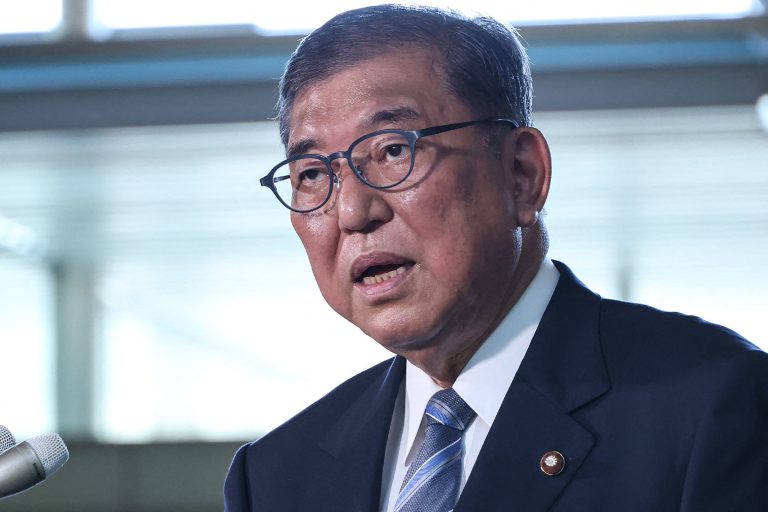
Japan’s Prime Minister Shigeru Ishiba applauded the announcement, saying that it was “the lowest figure to date among countries with trade surpluses with the U.S..”
At a White House event on Tuesday, July 22, Trump said, “I just signed the largest trade deal in history, I think maybe the largest in history with Japan.”
“They had their top people here, and we worked on it long and hard. And it’s a great deal for everybody. I always say it has to be great for everybody. It’s a great deal,” Trump added.
Success
You are now signed up for our newsletter
Success
Check your email to complete sign up
On Wednesday, Ishiba said the agreement would see tariffs on vehicles and parts slashed from 25 percent down to 15 percent.
“A quarter of Japan’s US exports are from its critical automotive sector, which accounts for almost 3 percent of its economy,” the BBC reported.
Ishiba added, “The agreement does not include any reduction of tariffs on the Japanese side.”
READ MORE:
- Epstein Case Under Scrutiny as Majority Believe Key Details Are Hidden, Reuters/Ipsos Poll Reveals
- Power and Propaganda: Observable Indications About Whether Xi Has Lost Control
America’s automotive industry reacts
American car-makers voiced frustration with the deal which saw tariffs cut on imports from Japan while tariffs on vehicles and parts from their plants in Canada and Mexico remain at 25 percent.
Matt Blunt, president of the American Automotive Policy Council (AAPC) called Trump’s agreement with Japan “a bad deal.”
“American automakers still need to review the details of the US-Japan agreement, but any deal that charges a lower tariff for Japanese imports with virtually no US content than the tariff imposed on North American built vehicles with high US content is a bad deal for US industry and US auto workers,” Blunt said according to CNN.
Blunt said that American automakers have shared their concerns with the agreement with the Trump administration. “We said then, we didn’t want that to become the precedent for other trade deals.”
Trade negotiations between the U.S. and both Canada and Mexico are ongoing.
Last year, Japan exported around 1.3 million vehicles to the United States, or about eight percent of the American market, according to data from S&P Global Mobility.
That is about half the amount imported from Mexico, 2.5 million, and a little higher than Canada’s 1.1 million.
However, the majority of Japanese vehicles that are imported into the U.S. every year are built in North America.