The Trump administration has proposed new tariffs on imports from 60 trading partners, arguing that those countries’ and areas’ failure to prohibit or effectively enforce bans on goods made with forced labor places U.S. companies and workers at a competitive disadvantage.
The Office of the U.S. Trade Representative (USTR) announced June 2 that it had concluded 60 Section 301 investigations launched on March 12 and determined that each of the targeted countries had failed to adequately address imports linked to forced labor.
Under the proposal, imports from economies that have adopted full or partial forced-labor import prohibitions would face an additional 10 percent tariff, while goods from all other targeted economies would be subject to a 12.5 percent duty. The measures have not yet taken effect and are subject to a public comment period and hearings scheduled for July.
“The failure of our most important trading partners to address the importation of goods made with forced labor is unacceptable. This creates a dynamic where American workers are forced to compete globally on an unlevel playing field,” U.S. Trade Representative Jamieson Greer said in the USTR statement. “We will no longer tolerate this disparity.”
Largest trade partners, US allies would be affected
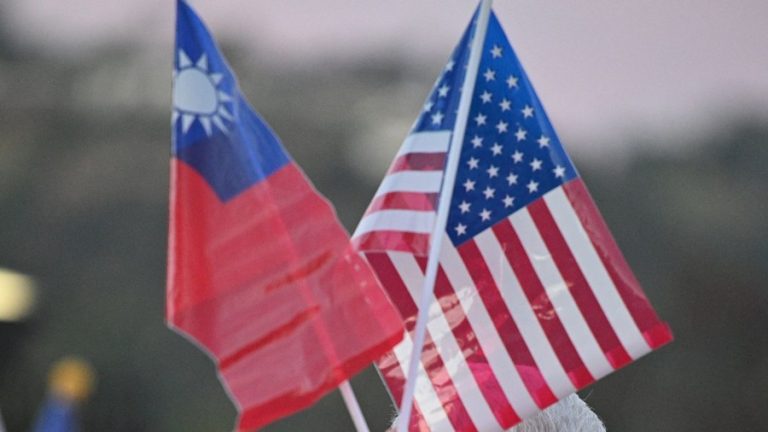
The proposal would affect many of the United States’ largest trading partners, including China, the European Union, Japan, India, the United Kingdom, South Korea, Taiwan, Vietnam, and Brazil.
Success
You are now signed up for our newsletter
Success
Check your email to complete sign up
According to USTR, 54 economies were found to have failed both to impose and enforce prohibitions on imports made with forced labor, while six others — including Canada, Mexico, Indonesia, Pakistan, Ecuador and the European Union — were found to have failed to effectively enforce existing restrictions.
- US Revokes Xinhua Reporter’s Visa in Rebuke to CCP Propaganda Network
- Quad Signals Renewed Momentum at New Delhi Meeting Amid Growing Competition With China
The agency argues that such shortcomings “burden or restrict U.S. commerce” by allowing goods produced with forced labor to enter international markets at lower costs, creating unfair competition for producers that comply with labor standards.
Alongside the proposed tariffs, USTR announced a separate textile mechanism that would permit a limited volume of apparel and textile imports from certain countries to enter the United States at reduced tariff rates.
The move marks one of the administration’s most significant trade actions since the U.S. Supreme Court earlier this year struck down many of President Donald Trump’s so-called “Liberation Day” tariffs. Since that ruling, the administration has increasingly relied on Section 301 of the Trade Act of 1974, which authorizes the United States to respond to foreign trade practices deemed unreasonable or discriminatory.
International pushback
A representative for the European Commission said the bloc considers tariffs imposed on those grounds to be “unjustified,” while emphasizing that the EU remains committed to implementing a trade deal it reached with the U.S. in 2025.
The United Kingdom also defended its record, with a British government representative as saying: “We’re tackling forced labour in the UK and in global supply chains to ensure UK businesses are not complicit in forced labour and human rights violations.”
- Taiwan Stock Market Overtakes India as AI Draws Capital, Wars Hurt Import-Dependent Economies: Experts
- Beijing’s New Investment Rules Spark Fears of Tighter Capital and Exit Controls
Nicolas Forissier, French junior trade minister, said on Wednesday, June 3 on the sidelines of the Organisation for Economic Co-operation and Development (OECD) meeting in Paris that the USTR’s concerns do “not apply” to his country or the EU.
“If I understand correctly, it relates to investigations linked to potential suspicions of forced labour. As you know, this isn’t the case for France or the European Union, which has always been at the forefront of this issue,” he said in comments reported by Reuters.
The People’s Republic of China (PRC) rejected the human rights allegations underpinning the proposal. Beijing’s foreign ministry spokeswoman Mao Ning said: “There is no so-called forced labor in China, and we oppose using this as an excuse for political manipulation.”
Human rights organizations, however, have argued that forced labor remains widespread in China and other countries. At the same time, some advocates questioned whether tariffs alone are an effective remedy.
“Trade measures can play a role in addressing forced labour risks, but they are not a substitute for effective enforcement, corporate accountability and mandatory human rights due diligence,” Peter Frankental, Amnesty International’s business and human rights director, told the BBC.
The proposal is now in a public consultation phase. Requests to testify at USTR hearings are due June 22, written comments are due July 6, and public hearings are scheduled for July 7. Any final tariff rates could be modified before implementation.