“I decided that ending barriers to participation and inclusion was the most important thing I could try to do, because it could have the most effect on allowing more and more people to contribute to the whole.” — Michael Sussman
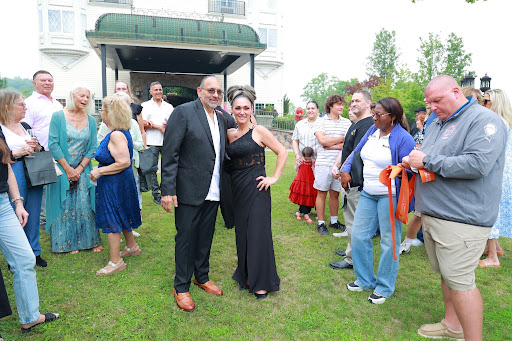
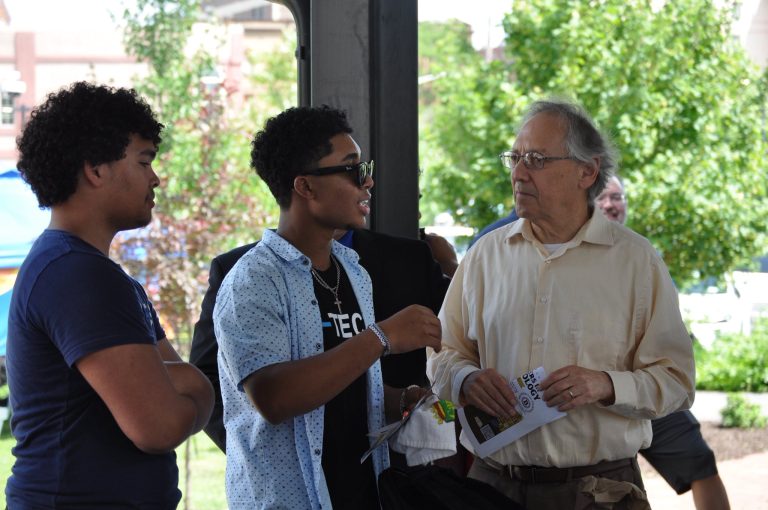
For nearly half a century, Michael Sussman, a longtime Orange County resident and civil rights attorney, has championed equality and social justice. Now running for County Executive, he draws on his immigrant roots and activism to offer a vision of transparency, economic equity, and environmental sustainability. In an exclusive interview with Vision Times, Sussman shared his personal story, professional journey, and his plans to lead Orange County toward a more inclusive future.
From Brooklyn roots to civil rights champion
“So I grew up in Brooklyn. My family came from Russia. Three of my grandparents came from Russia. As Jews in Russia, they were facing a good deal of religious discrimination, and there came a time around 1910 when the Cossacks were in Russia, and they were taking the property in factories that were owned by Jewish people,” Sussman recounted. His grandmother, Yetta, and her sisters became labor organizers for the International Ladies’ Garment Workers’ Union after the 1911 Triangle Shirtwaist Factory fire, where “one went up in fire, and hundreds of people were killed. Women were killed, and they began organizing a union.”
His father worked in the garment industry, and “he was one of the first people to give African Americans a chance to work other than as sweepers in those years, in the 1950s and 60s in the south, where my father often worked, in those factories, black people were only allowed to sweep. They weren’t allowed to really work on the equipment and learn how to do more skilled work. My father opposed that and wanted them to have every opportunity.”
Encouraged by his parents, Sussman started “reading the New York Times when I was five years old in 1958.” He excelled in Long Island’s Hewlett-Woodmere schools, serving as president of the Student Council, a championship debater, and editor of the newspaper. At the University of Chicago and Amherst College, he studied economics, philosophy, and Slavic studies, and during college, “I smuggled into the Soviet Union. I was a smuggler… I went to the Soviet Union with Medicine and Bibles for people in the Soviet Union who needed medicine and wanted to be able to have Bibles… and I brought back PhD theses written by scholars who wanted to come to the United States.”
Success
You are now signed up for our newsletter
Success
Check your email to complete sign up
At Harvard Law School, he worked with future Supreme Court Justice Stephen Breyer and constitutional scholar Laurence Tribe. Sussman’s career took him to the U.S. Department of Justice’s Civil Rights Division, focusing on “issues of housing segregation, school segregation, voting rights, economic opportunity, the treatment of institutionalized and disabled people,” and then to the NAACP, where he litigated major civil rights cases.
In 1985, Sussman moved to Orange County, where he has lived for 40 years, raising seven children with his wife, a Vassar College graduate and pioneering lighting designer who “was the first or second woman who worked as a lighting designer for major rock and roll bands all in the United States. She’s a master electrician and lighting designer, so she’s also been a union president for 30 years in an almost all male dominated industry.”
Key Cases and Leadership Lessons
Reflecting on his drive, Sussman explained, “As I grew up, I came to observe and understand that all of us are harmed by artificial barriers, because you can’t be as much as you could be, I can’t be as much as I can be, someone can’t be as much as they can be. And that doesn’t allow people to contribute what they can to the whole.”
Sussman highlighted two pivotal cases. In Yonkers, “Over a 40 year history, the city of Yonkers limited opportunities for people of color and kept those people living in certain areas of the city, and there were many barriers to their moving to other areas of the city… Their school patterns were highly segregated. Because their housing patterns were highly segregated, they were not allowed to have representation because the city council gerrymandered them… This case reinforced for me a principle. That principle is called simultaneity. Simultaneity means that the same consciousness expresses itself over all the spheres of social life that we create.”
In another case, “about 25 years ago a group of people came to me because they were trying to get promotions as state employees, and the state was giving a test which had nothing to do with qualifications… I challenged that test on behalf of 4700 people and got them $45 million but the point isn’t the amount of money. The point is that in governing, you don’t want to set up barriers to entry that keep people who can participate from making a contribution. You don’t want artificial barrier.”
Locally, “In the years I’ve been in Orange County, I’ve worked on many of the important issues in the county, trying to ensure that the development of the county meets the needs of the people in the county, and that the rights of all people in the county are respected.” His achievements include preventing the landfill expansion threatening the Wallkill River, saving Valley View nursing home from closure, preserving the Government Center, and fighting for disabled children’s services through a lawsuit against Orange County.
This is Part 1 of our interview series with Michael Sussman. Next week, we’ll explore his plans to combat corruption, boost the local economy, protect the environment, and foster community engagement.
Learn more at www.sussmanfororange.com or follow “Elect Sussman County Executive” on Facebook.