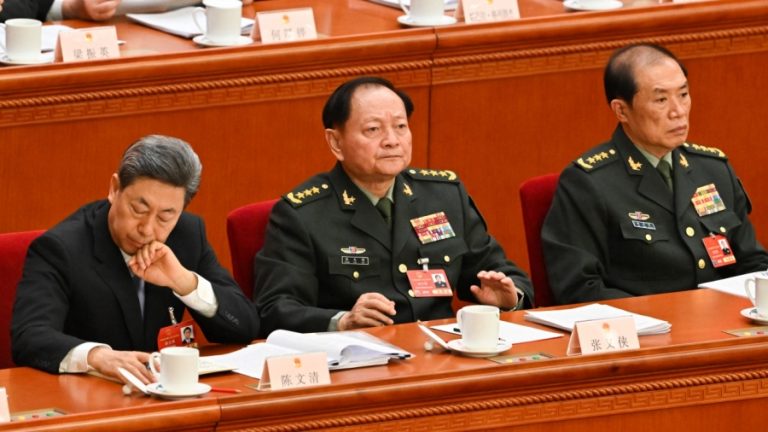
With the CCP’s Fourth Plenum just over ten days away, power struggles at the highest levels are intensifying. In recent days, yet another batch of Xi Jinping’s loyalists — the so-called “Xi’s Army” — has been purged. Speculation has mounted over whether Xi will be forced to step down at the Plenum, or whether he will attempt to secure yet another term. Some analysts believe Xi has already lost control of the military and may be compelled to resign as Chairman of the Central Military Commission. However, since he still holds firm control over the Party, they argue he is likely to cling to power until the very last moment. History shows that power transitions in the CCP have never taken place without the deterrent of “the gun.” If Zhang Youxia truly intends to act militarily, analysts warn, he would have to succeed in one strike.
Xi holds on to party power — Determined to the end
Yao Cheng, a former Navy staff colonel, commented on social media that the situation is growing increasingly tense with just days remaining before the Fourth Plenum. “There’s a lot of speculation online about whether Xi will step down,” Yao noted, “but I personally don’t see any signs of it. The Plenum is a Party meeting, and Party power is firmly in Xi’s hands. The majority of the Politburo Standing Committee are Xi’s people, so it’s hard to imagine them forcing him out. And Xi himself will never resign voluntarily. He knows exactly what fate awaits him once he loses power.”
Over his 13 years in power, Xi Jinping has already purged rival factions, filling the Party and government system nationwide with his loyalists.
Will Zhang Youxia act, or is he bound by party control?
Yao further observed that Xi is “struggling and clinging to power with all his might.” He explained: “The Plenum plays to Xi’s advantage because he still holds Party power. If Xi were to be forcibly removed, it would have to come from the military. But I haven’t seen Zhang Youxia show the courage or initiative to act — he remains bound by Party leadership.” Yao added that no matter how fierce the struggle becomes, both sides view the CCP’s “red dynasty” as their shared interest. Thus, unless backed by central Party approval, Zhang acting alone to launch a coup remains highly unlikely.
According to Yao, most CCP generals are opportunists who bend with the political winds. “If Xi doesn’t step down, the generals won’t dare make a move,” he said. “The CCP military is divided into two pillars: the Party apparatus and the armed forces. On the military side, many are aligned with Zhang Youxia. But in the PLA, politics takes precedence — the political commissar outranks the commander. The political cadre largely side with Xi. Recently, Xi has been rallying political officers within the military, and right now, they hold the upper hand, because in the CCP, the Party leads everything.”
Success
You are now signed up for our newsletter
Success
Check your email to complete sign up
He explained that this is precisely why no coup has ever occurred within the PLA: “Generals can be purged overnight, and political officers keep the military side tightly monitored. Politics always comes first, the military second. Political commissars watch over the commanders, and anything unusual is immediately reported upwards.”
Xi may step down as chairman of the central military commission
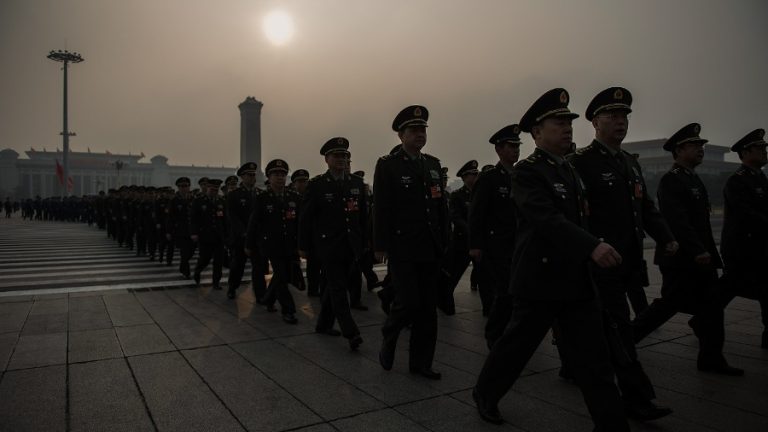
At present, arrests within the military continue, with both the Eastern and Western Theater Commanders taken down. Xi Jinping now has no loyal base left in the armed forces. Yao Cheng speculated: “At the Fourth Plenum, at most Xi might resign as Chairman of the Central Military Commission (CMC), since in practice his grip on the military has already been shaken. Even if he doesn’t step down, the armed forces are unlikely to heed his authority. Xi’s role as CMC chairman has become largely symbolic. As for the General Secretary position, Xi still holds Party power — his loyalists would never force their own boss out.”
Yao added that in practice, Xi no longer functions as the effective head of the Central Military Commission. “The director of the CMC General Office has been removed, as has the director of Xi’s personal office within the commission — a clear sign that Xi has been sidelined.” Yao said.
He also warned against placing hope in Zhang Youxia. “Zhang is a princeling — a member of the Party’s ‘red second generation’ — and part of the entrenched elite. His current opposition to Xi is less a matter of conviction than of circumstance; Xi has simply left him no other choice.”
82nd Group Army enters Beijing — Will Zhang Youxia use military means?
Other analysts suggest that the recent influx of military vehicles into Beijing likely belongs to the 82nd Group Army, which is under Zhang Youxia’s control. If Xi refuses to step down at the Fourth Plenum, they warn, a military showdown could follow.
On Sept. 28, netizens filmed a massive convoy of military vehicles moving toward Beijing along the Baoding-to-Beijing section of the Jinggang’ao Expressway. Witnesses estimated over 100 vehicles, including armored carriers, supply trucks, troop transports, and medical vehicles. Dozens of troop carriers alone would have carried several hundred soldiers.
Baoding, the garrison of the 82nd Group Army, is controlled by Zhang Youxia. Often referred to as Beijing’s “imperial guards,” this unit has long been considered the elite force tasked with defending the capital.
According to multiple sources, Zhang Youxia and Party elders such as Wen Jiabao have demanded that Wang Yang assume the role of CCP General Secretary, while Hu Chunhua take over as Premier, with Xi Jinping surrendering both Party and military authority and retiring. Yet Hu Jintao reportedly feared that openly stripping Xi of power would trigger severe turmoil within the CCP. His proposal was to let Xi retain the top title nominally, while Wang Yang and Hu Chunhua exercised actual control — thereby ensuring a smoother transition.
But Zhang Youxia was reportedly uneasy with Hu Jintao’s plan. If Xi remained CMC chairman, he could still attempt an assassination or regain military influence. Analysts believe this is why Zhang mobilized the 82nd Group Army into Beijing — a sign he may not have reached agreement with Hu Jintao. To eliminate all potential threats, Zhang may intend to resolve the crisis in the most direct way a soldier can: by using force.
Xi seeks another term as the fourth plenum brings personnel changes
Commentator Zhang Tianliang believes that the upcoming Fourth Plenum will likely feature major personnel reshuffles. A Xinhua report, he noted, revealed important clues. The report stated that the “15th Five-Year Plan” would solicit opinions widely, “fully promoting democracy and pooling wisdom.” It highlighted Xi as the “core” and emphasized that economic and social development during the “15th Five-Year Plan” must “uphold the Party’s overall leadership and resolutely safeguard the authority and centralized leadership of the Party Central Committee.”
Zhang pointed out that this language — “resolutely safeguarding the authority and centralized leadership of the Party Central Committee” — is essentially a restatement of the “Two Establishes,” meaning continued adherence to Xi Jinping’s unified leadership.
“So the ‘15th Five-Year Plan’ is not just an ordinary plan,” Zhang explained. “It is to be guided by Xi Jinping’s thought, and it seems Xi intends to oversee its implementation personally. This timeline stretches across the 21st Party Congress, which suggests the report is hinting that Xi is vying for another term at the 21st Congress.”
History shows that leadership transitions at the top of the Chinese Communist Party have rarely occurred without the shadow of military power. As observers often note, “Once the bow is drawn, there is no turning back.” Should Zhang Youxia resort to force, he would have no option but to prevail — compelling Xi to step down and relinquish both his post as chairman of the Central Military Commission and his position as Party general secretary, with Wang Yang poised to take over.
Yao Cheng, however, offered a sobering assessment:
“For China’s fate to truly change, the country would need a figure like Gorbachev — someone willing to dismantle the Communist Party itself. But no such person exists in China today, nor is there a leader comparable to Chiang Ching-kuo.”
He added that one metaphor aptly captures the current predicament:
“China today is like a Tesla on autopilot — there’s no one clearly at the wheel. Wang Yang can’t steer it, Zhang Youxia can’t steer it, and Xi Jinping certainly can’t either.”