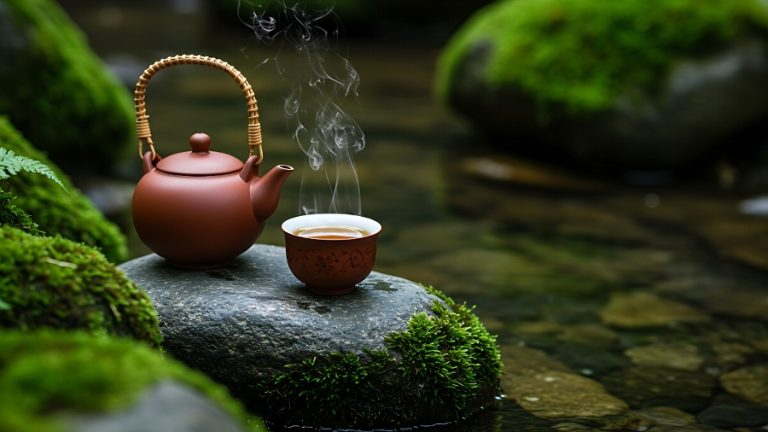
Drinking tea helps calm the mind, cultivate one’s temperament, and clear away distracting thoughts. It resonates with the Eastern cultural ideals of “clarity and tranquility” (清静) and “simplicity and serenity” (恬淡), while also reflecting the emphasis on inner reflection and self-cultivation found in Buddhism, Daoism, and Confucianism.
The tea ceremony is not merely a form of daily etiquette centered around tea; it is also a cultural practice of cultivating the body and character. Through preparing tea, boiling tea, whisking tea, brewing tea, appreciating tea, and tasting tea, people experience harmony of emotions and inner peace during the process of drinking tea.
Tea culture originated in China, and the term “tea ceremony” (茶道, chádào) also first appeared in Chinese literature. The Tang dynasty work Fengshi Wenjian Ji (Records of Things Heard and Seen by Feng Shi) states: “The tea way flourished greatly; among princes, nobles, and court officials, there was no one who did not drink tea.”
This is one of the earliest known written records containing the term “tea ceremony” (茶道). During the Tang dynasty, tea drinking gradually evolved from an everyday beverage into an activity with both ritual and cultural significance. Tea gatherings became popular among the imperial court, Buddhist monasteries, and literati circles. Tang scholar Lu Wen (吕温), in his Preface to the Third Month Third Day Tea Banquet (San Yue San Cha Yan Xu), vividly described the elegant atmosphere of tea banquets and the refined pleasures of tea appreciation, showing that tea had become an important part of social interaction among scholars and officials.

A tea culture system
By the Song dynasty, tea drinking placed even greater emphasis on the environment, utensils, etiquette, and procedures, forming a relatively complete tea culture system. Different settings gave rise to various forms of tea gatherings, including imperial court tea banquets, monastery tea gatherings, and literati tea assemblies.
Success
You are now signed up for our newsletter
Success
Check your email to complete sign up
Song Emperor Huizong (赵佶) was not only an enthusiastic tea drinker but also personally wrote Daguan Cha Lun (Treatise on Tea in the Daguan Era), in which he offered detailed discussions on tea quality, tea-making techniques, the method of whisking tea, and the aesthetics of tea appreciation. He believed that tea could: “Remove constraints from the chest and cleanse stagnation, bringing clarity and harmony.”
He also praised tea for possessing the qualities of: “Inner simplicity, leisure, purity, refined elegance, and quietude.”
These writings demonstrate the Song-era literati ideal of combining tea drinking with spiritual cultivation and self-refinement.
One of the most important features of Song dynasty tea culture was “tea competition” (斗茶, dòuchá). Originally popular in the Jianzhou region of Fujian, tea competition gradually spread to the imperial court and scholar-official circles, becoming an elegant gathering that combined evaluation of tea quality with the exchange of technical skills.
Tea competitions mainly compared the quality of tea leaves, the techniques of whisking tea, and the appearance of the foam produced in the tea bowl. Tea with a bright white color and fine, long-lasting froth was highly valued. Participants also paid attention to the quality of tea utensils and the water used for preparation.
Tea competition not only tested skills in tea production and preparation but also reflected the literati’s pursuit of tea artistry, aesthetics, and refined taste. It became one of the defining symbols of Song dynasty tea culture.
At the end of the Southern Song dynasty, the Japanese Zen monk Nampo Jōmyō (南浦昭明) traveled to Jingshan Temple (径山寺) in Zhejiang, China, to study Zen teachings and monastic tea rituals. After returning to Japan, he brought back the Song dynasty Zen temple tea practices, which had a significant influence on the formation of Japanese Zen tea rituals.
Tea etiquette imported to Japan
Japanese historical texts, including the Ruiju Meibutsu Kō (Classified Study of Famous Objects) and the Honchō Kōsōden(Biographies of Eminent Monks of Japan), record that Nampo Jōmyō returned to Japan with tea utensils and transmitted related tea etiquette. For this reason, he is regarded as one of the important figures in the historical development of Japanese tea rituals. Through the long-term evolution and refinement by generations of monks, literati, and tea practitioners, these traditions eventually developed into what is known today as Japanese tea ceremony (茶道, chadō).
From the Northern and Southern Dynasties period through the early Muromachi period, Japan absorbed a large amount of Song and Yuan dynasty tea culture. Tea competitions became popular among Buddhist temples and the samurai class. Early tea competitions mainly focused on identifying the origins of tea leaves and comparing tea quality. Over time, they developed into more structured forms of competition.
The later Japanese systems such as “four types and ten servings” (四種十服, shishu jūfuku) belonged to tea competition practices of the Japanese Muromachi period and were not systems found in Song dynasty Chinese tea competitions. As Japanese culture matured, tea competitions gradually moved away from an emphasis on luxury and rivalry, placing greater importance on refinement, etiquette, and spiritual cultivation.
During the middle Muromachi period, Japanese tea culture gradually transformed from entertainment and competition into a practice of self-cultivation. Murata Jukō (村田珠光) combined Zen philosophy with tea culture and introduced the concept of “wabi tea” (侘茶, wabicha), emphasizing simplicity, naturalness, and inner spiritual depth. He argued that tea drinking should return to a state of simplicity and tranquility rather than become an expression of luxury and display. For this reason, he is regarded as one of the key founders of the wabi tea tradition.
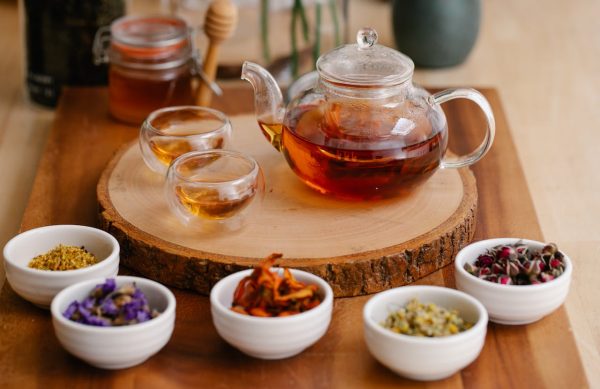
‘Wabi tea’
After him, Takeno Jōō (武野绍鸥) further developed the ideals of wabi tea, helping to refine tea practices and laying the foundation for the later Japanese tea ceremony.
By the Azuchi–Momoyama period, tea master Sen no Rikyū (千利休) brought together the achievements of earlier generations, established the grass-hut tea style (草庵茶風, sōan cha), and transformed Japanese tea into a complete system combining etiquette, philosophy, and aesthetics.
He formulated the four core principles of tea: “Harmony, Respect, Purity, and Tranquility” (和、敬、清、寂; wa, kei, sei, jaku).
These principles emphasize that people should live in harmony with one another, treat each other with respect, maintain physical and spiritual purity, and seek inner stillness and stability. Influenced by Zen Buddhism while also absorbing the spiritual essence of Chinese tea culture, these ideals became the central principles of Japanese tea ceremony that continue today.
Sen no Rikyū was highly respected by the powerful figures of his time. However, in his later years, due to political circumstances and a deterioration of his relationship with Toyotomi Hideyoshi (丰臣秀吉), he was ordered to commit ritual suicide (seppuku) in 1591 (Tenshō 19). Scholars continue to debate the exact reasons behind his death, with explanations including political struggles, conflicts over etiquette and authority, and personal disagreements. No single explanation has gained universal acceptance.
A continued tradition
Nevertheless, Sen no Rikyū’s contribution to the Japanese tea ceremony did not end with his death. His disciples and successors continued to preserve and develop his teachings, eventually forming the three major schools that have had the greatest influence on modern Japanese tea ceremony:
- Omotesenke (表千家)
- Urasenke (里千家)
- Mushanokōji Senke (武者小路千家)
Together, these three Sen schools remain the most influential branches of Japanese tea tradition today.
During the early Edo period, Japanese literati were influenced by the loose-leaf tea brewing methods of Ming dynasty China, and a new sencha (煎茶) culture gradually emerged. During the Ming dynasty, China abandoned the earlier practice of compressed tea cakes, and the brewing of loose-leaf tea gradually became the mainstream method of tea consumption. Japanese scholars subsequently adopted this loose-leaf brewing style, developing a distinctive tradition known as the Sencha tea ceremony (煎茶道, senchadō).
From this point onward, matcha tea ceremony (抹茶道) and sencha tea ceremony (煎茶道) developed side by side. Formal tea gatherings continued to emphasize matcha, while gatherings among literati and everyday tea drinkers increasingly adopted the sencha style. Over time, sencha culture became widespread and developed into an important component of Japanese tea culture.
During the Tang dynasty, Japanese envoys to the Tang court and Buddhist monks studying in China brought Chinese tea culture back to Japan. At that time, the prevailing method of tea consumption was based on steamed and compressed tea cakes (团茶, tuánchá). This type of tea was first steamed and pressed into cakes, then ground into powder and boiled when consumed, a method similar to Tang dynasty tea practices.
As the envoy system to Tang China was abolished in the mid-to-late Heian period, exchanges between China and Japan declined for a time, and Japan’s early tea-drinking customs gradually faded.

Whisked tea
By the Song dynasty, China had developed the practice of whisked tea (点茶, diǎnchá). Steamed green tea was ground into a fine powder; when consumed, the tea powder was placed in a tea bowl, hot water was added, and a bamboo whisk (茶筅, chasen) was used to rapidly whisk the mixture, creating a delicate layer of fine foam on the surface of the tea. This method later became an important source of inspiration for Japanese matcha culture.
Combining technical skill with visual aesthetics, this style of tea preparation had a profound influence on the later development of Japanese tea ceremony.
At the end of the Southern Song dynasty, the Japanese Zen monk Nanpo Shōmyō came to Jingshan Temple in Zhejiang, China, to study Zen teachings and monastic tea rituals. After returning to Japan, he brought back the Song dynasty Zen temple tea ceremony, which had an important influence on the formation of Japanese Zen tea rituals. Japanese historical texts such as Ruijū Meibutsu Kō (A Classified Study of Famous Things) and Honchō Kōsōden (Biographies of Eminent Monks of Japan) both record that Nanpo Shōmyō brought tea utensils back to Japan and taught related rituals. Therefore, he is regarded as one of the important figures in the development of Japanese tea rituals. Through the long-term evolution and development by generations of monks, literati, and tea practitioners, modern Japanese tea ceremony gradually took shape.
From the Nanbokuchō period to the early Muromachi period, Japan absorbed a large amount of Song and Yuan dynasty tea culture. Tea competitions became popular among Buddhist temples and the samurai class. Early tea competitions mainly focused on identifying the origins of tea leaves and comparing the quality of different teas. They gradually developed into more fixed competitive formats. The later popular system known as shishu jūfuku (“four kinds and ten servings”) was part of Japanese tea competitions during the Muromachi period and was not a system from Song dynasty China. As Japanese culture gradually matured, tea competitions moved away from simply pursuing luxury and competition, and began emphasizing taste, etiquette, and spiritual cultivation.
During the middle Muromachi period, Japanese tea culture gradually shifted from entertainment and competition toward self-cultivation and spiritual refinement. Murata Jukō integrated Zen thought with tea culture and proposed the concept of wabi-cha, emphasizing simplicity, naturalness, and inner spirituality. He argued that tea drinking should return to simplicity and tranquility rather than become a display of luxury, and he is therefore regarded as one of the important founders of Japanese wabi tea. Later, Takeno Jōō further developed the ideas of wabi tea, making tea rituals more mature and laying the foundation for later Japanese tea ceremonies.
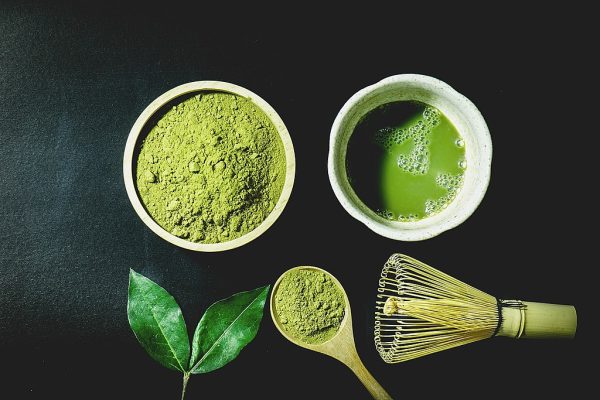
The ‘grass hut’ tea style
During the Azuchi–Momoyama period, tea master Sen no Rikyū brought together the achievements of earlier generations and established the sōan (“grass hut”) tea style, developing the Japanese tea ceremony into a complete system combining etiquette, philosophy, and aesthetics. He proposed the four principles of wa, kei, sei, and jaku (“harmony, respect, purity, and tranquility”), advocating harmonious relationships between people, mutual respect, cleanliness and purity, and the pursuit of inner peace and stability. These ideas were influenced by Zen Buddhism and also absorbed the spiritual essence of Chinese tea culture, becoming the core principles of Japanese tea ceremony today.
Sen no Rikyū was highly respected by powerful figures of his time. However, in his later years, due to political factors and worsening relations with Toyotomi Hideyoshi, he was ordered to commit ritual suicide in 1591. Scholars continue to debate the true reasons behind his death, with explanations including political struggles, conflicts over etiquette, and personal disputes. Nevertheless, Rikyū’s contribution to the Japanese tea ceremony did not end with his death. His disciples and descendants continued to transmit and develop his teachings, eventually forming the three major schools of Omotesenke, Urasenke, and Mushakōjisenke, which have had the greatest influence on modern Japanese tea ceremony.
During the early Edo period, Japanese literati were influenced by the Ming dynasty Chinese method of brewing loose-leaf tea, leading to the gradual emergence of sencha culture. In Ming China, compressed tea cakes were abandoned and loose-leaf tea brewing gradually became dominant. Japanese literati learned this method and developed their own distinctive sencha-dō (way of sencha). From then on, matcha tea ceremony and sencha culture developed side by side: formal tea gatherings continued to focus on matcha, while literati gatherings and daily life increasingly adopted sencha brewing. Sencha culture later spread widely and became an important part of Japanese tea culture.
Compared with Japanese tea ceremony, which is highly institutionalized and emphasizes rituals and lineage transmission, Chinese tea culture evolved continuously through the Tang, Song, Yuan, Ming, and Qing dynasties. Tea preparation methods also changed with time—from Tang dynasty boiled tea, to Song dynasty whisked tea, and finally to loose-leaf brewing during the Ming and Qing periods—forming a diverse and rich historical development.
Although China did not develop a unified and fixed tea ceremony system like Japan, Chinese tea practitioners throughout history generally valued elegance, naturalness, harmony, and self-cultivation. Modern scholars often summarize the spirit of Chinese tea culture as “qing, jing, yi, zhen” (“clarity, respect, harmony, and authenticity”), reflecting its emphasis on nature, moral character, and humanistic cultivation.