Amid a sluggish global economic recovery, China’s real estate market is confronting unprecedented challenges. A video resurfacing online from April, in which former People’s Bank of China Deputy Governor and Tsinghua University National Finance Research Institute Director Zhu Ming was interviewed by CCTV, has sparked widespread attention. Zhu bluntly stated that Chinese housing prices are “unlikely to rise again,” citing data to support his view. He pointed to a high urbanization rate exceeding 66 percent, per capita housing area reaching 43 square meters, and a rapidly aging population—all factors making China’s property market a “game of hot potato” with no one willing to play. Economist Xu Chenggang also warned that China’s economy is sinking into severe deflation, weak domestic demand, and overcapacity, with foreign investment fleeing and a full-blown crisis looming.
Housing prices fall for 41 consecutive months: No major city is immune
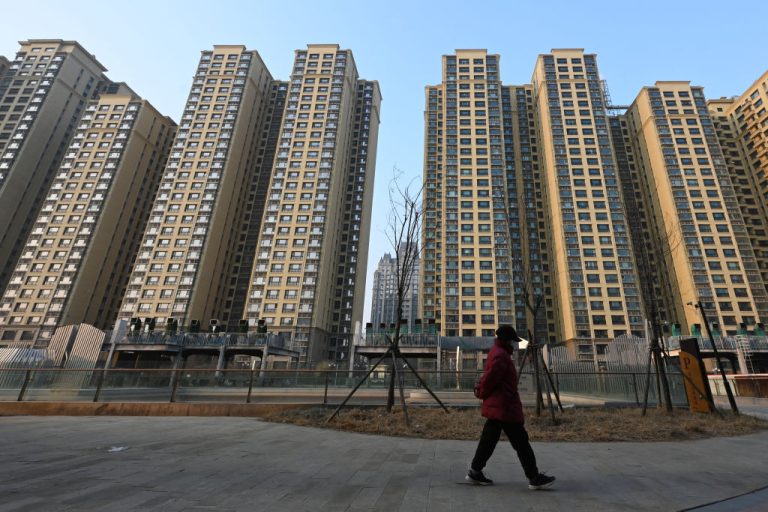
According to the latest September data, second-hand housing prices in China’s major cities continue to fall: Beijing, Shanghai, and Shenzhen dropped by 0.6 percent, 0.48 percent, and 0.5 percent respectively, while Guangzhou plunged 0.97 percent after restrictions were fully lifted. Zhu emphasized that this is not an isolated incident; second-hand prices have fallen for 41 consecutive months, uninterrupted for more than three years. Nationwide, the second-hand market is lifeless, with both buyers and sellers shifting from initial anxiety to indifference—even state-backed enterprises are increasingly offloading properties.
Zhu identified four major reasons why housing prices are unlikely to rebound:
- Urbanization Limit Reached: With a 66 percent urbanization rate, growth potential is limited. Zhu notes that Japan’s 10% urbanization rise from 1990 to 2000 largely resulted from village depopulation rather than rural-to-urban migration—a pattern now appearing in China.
- High Per Capita Housing Area: At 43 square meters per person, China has surpassed Europe, leaving little room for expansion.
- Rapid Aging Population: People aged 60 and above account for 23.8 percent of the population, and the key homebuying group (ages 20–35) has declined by 56 million over the past decade.
- High Household Debt: Residents’ leverage is at its limit, and heavy debt burdens constrain further property purchases.
Zhu stresses that the logic of the property market has fundamentally shifted from investment-driven to primarily demand-driven. The sharp drop in pre-sale housing is not just a developer issue; speculative buying has waned, and capital may be tied up in savings for 10–15 years, reducing risk appetite. This affects other asset markets, including stocks. Older generations (ages 45–69) hold most savings and favor low-risk investments over equities. Middle-class millennials (born in the 1980s) face mortgage and family pressures, while Generation Z (born in the 1990s) struggles with low incomes and limited savings, driving higher savings rates but weaker consumption.
Other experts, including Fu Peng, Huang Qifan, and Xiang Songzuo, have repeatedly warned that housing prices cannot return to past highs. Those promoting dramatic price increases, according to Zhu, are “either foolish or malicious,” ignoring structural constraints such as sustained population decline and peaked urbanization. Zhu concludes that China no longer lacks capital, technology, or savings—it lacks people—not just workers, but consumers. This demographic shortfall heightens deflation risks, makes pricing difficult for businesses, and disrupts economic circulation.
Wealth distribution and debt crisis: Households hit hardest
Success
You are now signed up for our newsletter
Success
Check your email to complete sign up
China’s economic troubles extend beyond real estate, encompassing wealth distribution and debt imbalances. Zhu Ming illustrated with data that China’s population peak has passed, with the 45–69 age group now the largest segment, controlling the majority of bank savings. Millennials born in the 1980s are burdened by mortgages and family expenses, while Generation Z (born in the 1990s) earns little, resulting in high average savings rates but stark inequality. While bank deposits appear ample, debts are concentrated among younger adults, and savings among the elderly, creating a structural imbalance.
Debt remains a major pain point. Zhu recalls that in the 1990s, Premier Zhu Rongji addressed corporate layoffs and bad loans by creating four major asset management companies to offload debt. Today, real estate developers carry debt ratios as high as 90 percent, far above international norms. The government pressures banks to intervene, but concerns over accountability slow the process. Without government backstops, banks are unwilling to take risks. Zhu likens the current situation to a tangled web: corporate and financial sector problems intersect, and local government hidden debts are enormous.
Legacy debt from the 4-trillion-yuan stimulus has ballooned into a 40-trillion-yuan investment gap, now partially covered by a 1-trillion-yuan special government bond. Zhu compares local government debt to the 2014 European debt crisis: the central government acts like Germany, local governments like Greece. Once hidden debts become visible, both household and government leverage will spike. Zhu warns that conventional monetary and fiscal policy will lose effectiveness, leaving only structural reform—but if demographic decline is not addressed, reforms will fail. He points to Japan in the 1990s as a cautionary example: fiscal, monetary, and supply-side reforms all proved ineffective until population decline caused long-term stagnation.
Zhu Ming emphasizes that domestic debt in China is essentially a form of taxation. Quoting the phrase, “Domestic debt is not really debt, as long as people are around to repay it,” he warns that a shrinking population could turn debt into a major crisis. Unlike Western countries, which offset demographic decline through immigration, China relies on birth rates. Over the past 40 years, one of China’s three “dividends” was its large population—today, that demographic advantage has become a burden. Over the next 20–30 years, capital and technology will be abundant and interest rates extremely low, but the lack of population will fundamentally reshape economic growth, debt patterns, and investment structures.
Economically, the three major sectors—business, government, and finance—effectively “tax” the household sector. Businesses extract wealth through the PPI-CPI gap, governments through land-based revenue, and banks through interest rate spreads. If households collapse, China’s domestic circulation could break down entirely. Zhu notes that after Japan’s 1990s stagnation, the country shifted to overseas investment, corporate multinational trade, and welfare-dependent government structures, but taxes still returned from abroad. Without structural reform, China cannot replicate that model.
Xu Chenggang: Deflation and systemic crisis in China
Economist Xu Chenggang examines China’s economic challenges from macroeconomic and institutional perspectives. In 2024, industrial producer prices fell 2.2 percent, marking two years of persistent deflation that has dampened consumer and investor confidence. Weak domestic demand and overcapacity reinforce each other, with the root cause traced to households’ declining share of GDP and collapsing confidence. Rising household savings are not a sign of strength but a defensive response to uncertainty, further suppressing consumption.
Industrial firms are facing losses at rates comparable to over 20 years ago, with one-third of companies unprofitable and conditions worsening since 2013. Xu stresses that a functioning market economy requires rule of law and judicial independence. While China’s constitution names the National People’s Congress as the highest authority, in practice the Party dominates, leaving no genuine debate or voting; legislative sessions are largely ceremonial. Party control over legislation, enforcement, and judiciary concentrates power and makes corruption inevitable.
Corruption, in turn, inhibits economic growth. Purely economic reforms cannot trigger political reform; Xu compares this to Deng Xiaoping’s 1990s southern tour, likening it to China’s historic Self-Strengthening Movement, which also failed. Without property rights and human rights protection, capital outflows accelerate and foreign investment flees. Xu cites 2024 Nobel economic research showing that, all else equal, GDP in democracies exceeds that of non-democratic systems by more than 10 percent, reinforcing his argument that institutional quality is key to growth.
China’s current crisis is not cyclical but systemic. Without the rule of law, stimulus policies are ineffective. Historical examples, such as Nazi Germany, show that rapid economic growth under repressive regimes does not constitute a good system. China’s highly concentrated power structure drives inequality and corruption, and anti-corruption campaigns treat symptoms, not root causes.
China’s ‘new normal’ in real estate: Key indicators and strategic adjustments
Economist Zhu Ming identifies ten indicators signaling that China’s real estate market has reached a turning point:
- Population decline, with 1.4 billion as a ceiling.
- Urbanization at 65 percent, leaving limited growth potential.
- Accelerating aging, projected to exceed 30 percent by 2035.
- Primary housing inventory at 600 million square meters, with 2 billion square meters idle.
- Per capita living space at 50 square meters, reaching a plateau.
- Annual construction at 1.7 billion square meters—half the global total—has peaked.
- Property and land prices quadrupled over 20 years, signaling a bubble burst.
- Urban redevelopment has reached its limit.
- Overcapacity in public infrastructure.
- Developers’ debt ratios at 90 percent, hitting the ceiling.
To navigate the crisis, Zhu proposes five key adjustments for property developers:
- Reduce debt ratios to 40–50 percent.
- Focus on market-driven, structural development.
- Concentrate on core business, avoid cross-sector diversification.
- Consolidate developers from 90,000 to 10,000.
- Shift toward mixed-use developments and issue bonds to balance financing.
Zhu stresses that the government should avoid heavy-handed intervention, instead guiding a soft landing through restructuring, mergers and acquisitions, strategic investment, land and inventory buybacks, and off-balance-sheet special bonds to ensure stability. With real estate accounting for 5–10 percent of GDP, its health affects livelihoods, finance, and supply chains, making a “stabilize small, secure big” approach essential.
Long-term, Zhu predicts property price growth will fall below GDP growth, balancing depreciation. He remains cautiously optimistic that, after the adjustment, the market can enter a healthy cycle consistent with the “housing is for living, not speculation” principle.
Both Zhu and economist Xu Chenggang emphasize demographics as critical. Zhu urges increased fertility, warning “if we don’t have children now, it will be too late,” while Xu highlights the need for systemic reform. Without action, debt, deflation, and collapsed domestic demand could worsen.
Experts agree that China’s economic transition requires balancing domestic demand and foreign trade, protecting property rights, and encouraging population growth. Delays of 5–10 years could deepen the crisis. While government stimulus may have limited impact, structural reforms remain the ultimate solution.
By Yin Hua