Recent weeks have seen mounting speculation that Chinese leader Xi Jinping may be facing the most serious crisis of his political life. Foreign and Chinese-language commentators claim that Xi’s authority inside the Chinese Communist Party (CCP) is weakening amid persistent rumors of illness, diplomatic restrictions, and internal division.
Some even describe the situation as Xi’s “darkest hour.”
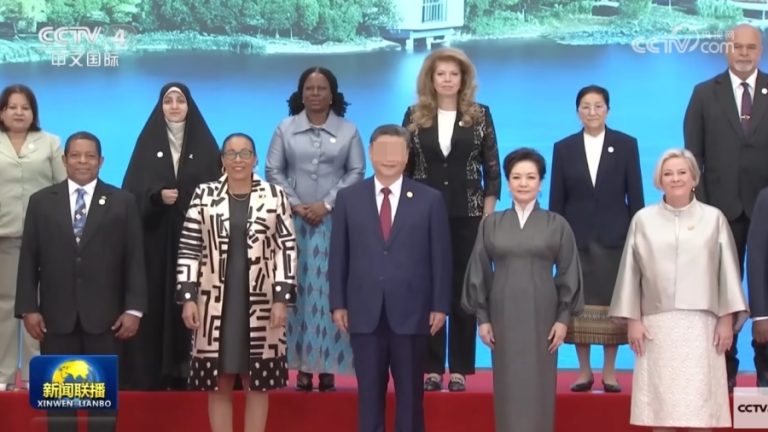
On Oct. 13, 2025, Xi Jinping and his wife Peng Liyuan appeared at the Global Women’s Summit in Beijing. The Chinese state media coverage showed Xi delivering brief remarks, pledging to donate US$10 million to UN Women and US$100 million to international development programs over the next five years.
His appearance came as rumors spread that he had suffered a stroke and was recovering under medical supervision.
Observers noted that the state-run broadcaster CCTV heavily edited the footage of his speech—most of his words were read aloud by a news anchor. When Xi did appear on camera, he seemed fatigued, spoke slowly, and often looked down at his notes. For many viewers, this only fueled speculation that the reports of a stroke were not baseless.
Success
You are now signed up for our newsletter
Success
Check your email to complete sign up
Foreign media claims: Diplomatic restrictions
According to Fox News, U.S.-based China analyst Gordon Chang discussed Xi’s status in a recent broadcast titled “Xi Jinping Could Step Down at the Fourth Plenary Session.”
Citing information allegedly from the U.S. ambassador to China, Chang said that a meeting planned between Donald Trump and Xi during the upcoming APEC Summit in South Korea had been abruptly canceled and would not take place until at least 2026.
Political commentator Tang Jingyuan, speaking on his own channel, called this cancellation “highly unusual.”
He pointed out that only four days after Trump confirmed his participation in APEC, U.S. Ambassador David Perdue announced the Xi–Trump meeting was postponed.
According to Chang, this was not a mere scheduling adjustment but an “external symptom of an internal power struggle.”
He speculated that Xi might have lost the freedom to travel abroad, or even feared being unable to return to China if he left.
Chang also said that, for the first time, a major U.S. media outlet was openly discussing the possibility of Xi “handing over power.”
He argued that Xi’s loss of two key positions—CCP General Secretary and Chairman of the Central Military Commission—was “a real possibility.”
Abnormal diplomatic changes
Tang Jingyuan and other commentators noted that Xi’s diplomatic schedule had recently become erratic. On Sept. 3, North Korean leader Kim Jong Un attended China’s parade marking the “80th anniversary of victory in the War of Resistance.”
Under normal circumstances, Xi would have attended the Oct. 10 military parade in Pyongyang celebrating the 80th anniversary of the Workers’ Party of Korea. Instead, Premier Li Qiang represented China at the event.
Observers offered two explanations: Xi’s health prevented him from traveling, or he was restricted from leaving the country.
Adding to this theory, Xi’s planned visit to South Korea during the APEC period was canceled.
Seoul’s Shilla Hotel confirmed that the Chinese delegation canceled its reservation on Sept. 27.
South Korean media described the incident as “an abnormal adjustment in Beijing’s diplomatic schedule.”
Tang suggested that anti-Xi factions within the CCP might be deliberately imposing travel restrictions on him.
Their alleged goal: to prevent Xi from seeking foreign support or using overseas trips as a chance to flee, a scenario some compared to Lin Biao’s attempted escape during Mao’s era.
Signs of internal tensions
According to multiple reports circulating in Chinese-language media, Xi’s relationship with General Zhang Youxia, vice chairman of the Central Military Commission, has deteriorated sharply.
Zhang, reportedly allied with Chief of Staff Liu Zhenli, is said to have taken partial control of Beijing’s and Zhongnanhai’s security operations.
The 82nd Group Army—a key rapid-response force—has allegedly been placed on high alert and now answers to Zhang rather than Xi.
Some sources claim Zhang has been authorized to act in Xi’s place, exercising “executive powers” within the military commission.
Independent commentator Cai Shenkun cited anonymous sources claiming that all CCP directives must now be co-signed by former Premier Wen Jiabao before taking effect.
According to political analyst Tang Jingyuan, this situation “is almost equivalent to declaring that Xi’s central authority is no longer functioning.”
If true, this would mark a stunning reversal for a leader who has spent more than a decade consolidating near-absolute power.
Speculation over Xi’s health and public Image
Rumors about Xi’s health have persisted since mid-2024.
Taiwanese economist Wu Jialong claimed in a Facebook post that Xi may have suffered three strokes since last July.
Although Xi reportedly recovered from earlier episodes, Wu said his condition was “growing increasingly difficult.”
Wu further speculated that Xi might be “politically forced to have a stroke”—that is, his supposed illness could serve as a political pretext to remove him from power.
According to Wu, anti-Xi forces within the Party could be forcing him into medical seclusion while publicly portraying his absence as due to illness.
Trump’s Ambiguous Remark
Adding another layer of intrigue, Donald Trump posted on Truth Social on October 12 (U.S. Eastern Time), saying that Xi was going through “a bad moment.”
Trump did not elaborate, leaving readers to speculate about the meaning of his remark.
Commentators believe Trump’s phrase may have carried a double meaning—referencing both Xi’s physical health and his weakening position inside the CCP.
Some analysts see it as further indication that Xi is enduring his “darkest moment” since taking office.
Editorial Note:
This article compiles information from international and Chinese-language media, as well as commentary from independent analysts and public posts by figures such as Gordon Chang, Tang Jingyuan, Cai Shenkun, and Wu Jialong.
Most of the claims described—regarding Xi Jinping’s health, travel restrictions, or internal power shifts—remain unverified.
They are included here to illustrate the scale of public speculation about China’s opaque political system and should be treated as such.