By Chen Jing, Vision Times
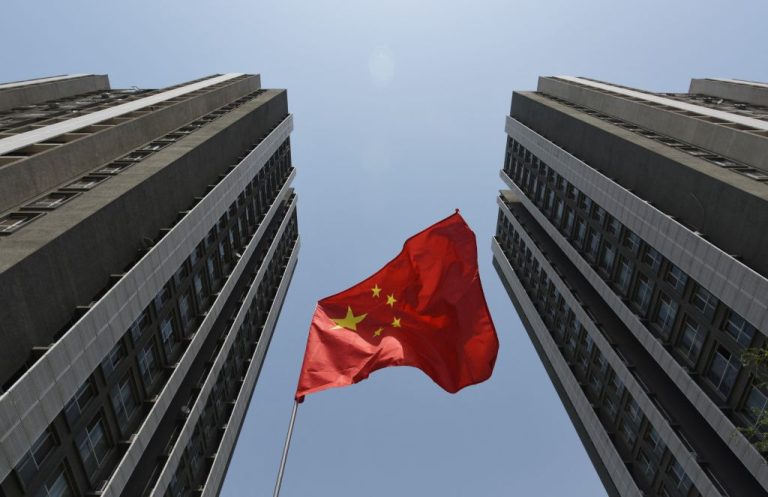
As the Chinese Communist Party (CCP) convenes for the Fourth Plenary Session of the 20th Central Committee, currently taking place between Oct 20-23, speculation is swirling that President Xi Jinping’s decade of dominance may be nearing its end.
Multiple unverified reports suggest that the Chinese leader (though still nominally in charge) is now under “restricted movement” and close internal surveillance. In the Party’s history, such a situation has only ever meant one thing: A ruler who has lost the army’s loyalty and the Party’s trust.
From Hua Guofeng to Zhao Ziyang, every CCP leader who’s lost control of the Party’s inner workings has eventually became a figurehead in name only. In a system built on secrecy and fear, even the title of “core leader” can be “redefined overnight,” sources say.
RELATED: Beijing in Crisis: Xi Jinping Faces Silent Revolt as Fourth Plenum Opens
An internal purge
Success
You are now signed up for our newsletter
Success
Check your email to complete sign up
Analysts note that when the CCP’s vast stability-maintenance apparatus begins guarding against its own leader, the system has already entered self-defense mode. If Xi is indeed under informal confinement, it would signal not just the loss of trust within the Party’s top echelons but the beginning of an unprecedented internal split within the CCP’s ruling elite.
Recent “economic rectification” drives in Shenzhen, targeting powerful conglomerates such as Vanke, Metro Group, and Yuanwei Holdings, have been widely interpreted as “political surgery” targeting the Xi family’s financial arteries.
In CCP politics, money and power are inseparable, meaning whoever can sever Xi’s financial networks will effectively be able to control his future. For years, Xi’s authority has rested less on ideological legitimacy, but rather on a vast “patronage web of shared spoils.” As that network unravels, his final line of defense within the Party is beginning to collapse.
Military shuffles
Leaked accounts circulating among Beijing insiders describe a new Central Military Commission (CMC) led by Zhang Youxia, with Hu Chunhua and Liu Zhenli as vice chairmen, marking a dramatic shift from personal command to collective control.
RELATED: Are Hu Chunhua and Wang Yang Poised for a Comeback as the CCP’s Fourth Plenum Nears?
History offers a precedent: Hua Guofeng fell after losing the army, and Zhao Ziyang was purged once the military turned away from him. If Zhang Youxia now holds true command, the People’s Liberation Army (PLA) no longer answers to Xi, thereby stripping him from his title of “supreme leader.”
Within elite circles, a quiet consensus appears to be forming: It is better to cut losses now than endure further chaos. The coming post-Xi era may not bring democracy, but it could ease the tightening authoritarian grip that has defined his iron-fisted rule.
A Red Guard in the crosshairs
Unlike Hua Guofeng, who knew when to step back, or Zhao Ziyang, a rational reformer, Xi remains a product of the Cultural Revolution, driven by both ideology and control. If he retains even partial power, observers expect him to use propaganda and foreign-policy theatrics to sow confusion and stage an attempted comeback. But if stripped of all authority, he may resort to even more extreme measures.
This, insiders warn, is what most alarms the anti-Xi faction: A deposed leader who still commands the Party’s propaganda machine — and potentially its nuclear chain of command — poses unpredictable danger within the CCP’s highest ranks.
Meanwhile, rumors of a “transitional framework,” with Wang Yang leading the Party, Hu Chunhua managing the government, and Zhang Youxia commanding the military, suggest an internal self-rescue model reminiscent of Deng Xiaoping’s “three-head” structure. Though that plan is designed to stabilize the regime through “internal power-sharing,” experts caution that such arrangements are temporary cease-fires and won’t result in permanent, genuine reform.
Without rule of law, transparency, or free speech, any “collective leadership” will eventually re-centralize power under new hands. Analysts warn that this could be the CCP’s final chance for internal correction — and if it fails, total collapse may soon follow.
A coded farewell?
A recent report by state mouthpiece “Xinhua News” praising Xi for achieving “one blueprint carried through, each generation following the last” appears, on closer reading, to be a subtle farewell message. In the revised “Qiushi” version, the phrase “passing the baton” was quietly removed — leaving only “the blueprint.” Analysts say the change signals a propaganda effort to preserve Xi’s image while quietly preparing for a change in succession.
In the CCP’s rhetorical code, such wording is not typically seen as flattery, but as “a eulogy in disguise,” experts note.
The CCP’s evolution has never been driven by reform, but by fear. Mao’s death produced Deng; Deng’s decline produced Jiang; and now, Xi’s overreach has produced fear within the Party itself. When a regime must monitor its own leader and its mouthpieces begin speaking in double meanings, it ceases to be a monolith and becomes a fragile shell of competing interests.
“Xi’s downfall,” analysts say, “may be only the opening act. The deeper question is whether the CCP can survive once fear no longer binds it together.”
In every Chinese dynasty, the collapse of rulers reflected both political failure and moral decay. Confucian thinkers called it “Tianming — the Mandate of Heaven.” “The Heavens see through the eyes of the people,” says the “Book of Documents.” When the people suffer and ministers remain silent, Heaven’s mandate is withdrawn. Many Chinese scholars now argue that the CCP is following that same fatal trajectory.
The breaking of the mandate
Xi Jinping’s crisis is not only one of power, but of legitimacy. By replacing faith with loyalty, justice with obedience, and morality with “political security,” he now finds himself in a vulnerable spot. The result: Loyalty becomes fear, while obedience turns into pretense. Such “moral collapse,” analysts say, is the true cause of tyranny’s downfall.
The Qin Dynasty fell within two generations; the Sui collapsed after three years of neglecting its people. Today’s CCP, critics warn, is racing down that same path — its problem is no longer who rules, but whether the regime still has any moral right to exist.
Prophecy and symbolism
China’s ancient prophecy text “Tui Bei Tu” foretells that in the year of the “Black Rabbit entering the Blue Dragon’s cave,” chaos would precede renewal. This has been interpreted by believers as taking place between 2023 and 2024.
But by 2025, it describes a cosmic cycle of “fire and earth in conflict” bringing turmoil to the emperor’s star. Whether or not one believes in such omens, their revival reflects a public longing for moral reckoning — a hope that cosmic justice may correct what politics cannot.
The fate of communism
Communism was born as a revolt against injustice, but by denying spirituality and deifying struggle, it promised salvation through destruction. The Soviet Union built walls of blood only to crumble into dust; Eastern Europe’s red tide receded into ash.
Today’s CCP, critics say, is reenacting that final scene — collapsing not from foreign pressure, but from spiritual emptiness and internal ruin. Xi Jinping’s personal fate may simply mirror that of the Party itself: A movement born out of struggle is destined to be consumed by it.
The next chapter: China’s awakening
When the illusion of power finally breaks, ordinary Chinese may finally rediscover the meaning of nation and conscience. China’s future will not emerge from another strongman’s rise, but from millions reclaiming truth and goodness over fear.
The Fourth Plenum may obscure the truth for weeks or months, but it cannot stop history. Power will dissolve, lies will fracture, and the clock has already struck. This is not the end of a meeting — it is the final curtain call of Xi’s era.
Editorial note: Views expressed in this article are the opinions of the author and do not necessarily reflect the views of Vision Times.