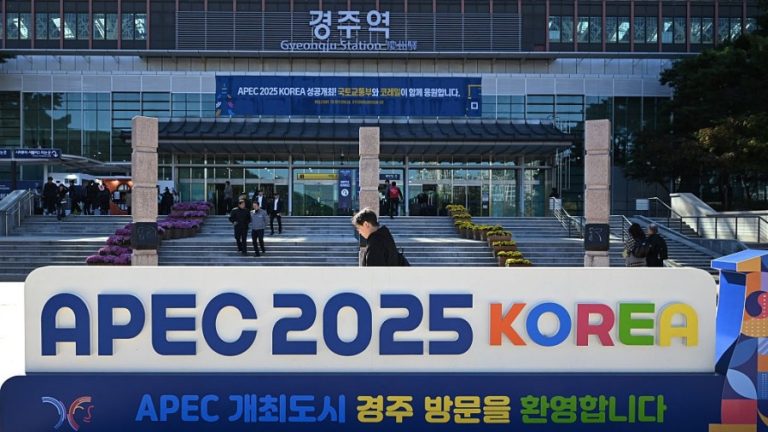
U.S. President Donald Trump is expected to attend the Asia-Pacific Economic Cooperation (APEC) Summit in Gyeongju, South Korea, at the end of this month, with a potential meeting with Chinese Communist Party (CCP) leader Xi Jinping actively being discussed, according to multiple administration officials cited by CNN.
Officials said both sides have held “in-depth discussions” about possible bilateral talks between Trump and Xi on the sidelines of APEC. While details remain under negotiation, the prospect of a renewed encounter between the two leaders is drawing attention in both Washington and Beijing.
Xi reportedly extended a personal invitation to President Trump and First Lady Melania Trump during a recent phone call — an offer the president “positively received,” White House aides said.
The administration emphasized that Trump’s trip will focus primarily on economic cooperation, though trade, defense, and civil nuclear energy are expected to feature prominently in the agenda.
For South Korea, the summit represents both a diplomatic opportunity and a balancing act amid intensifying U.S.–China rivalry. President Lee Jae-myung, who hosted Trump at the White House in August, has sought to position Seoul as a bridge for dialogue rather than confrontation.
Success
You are now signed up for our newsletter
Success
Check your email to complete sign up
Speculation over a possible Kim Jong Un meeting
Trump’s visit has also fueled speculation that it could open the door to renewed engagement with North Korean leader Kim Jong Un, though Pyongyang’s participation in APEC remains uncertain.
During his meeting with Trump, President Lee reportedly encouraged potential dialogue between Washington and Pyongyang.
“I’d like to meet Kim Jong Un. He wants to meet with me, and we look forward to this opportunity,” Trump told reporters, describing the idea as part of his broader effort to “improve relations” and reduce tensions on the Korean Peninsula.
Analysts say Trump’s remarks reflect his transactional diplomatic style, emphasizing personal relationships to advance U.S. strategic goals in East Asia.
The potential Trump–Xi meeting comes as U.S.–China trade talks enter a critical phase. Following two rounds of senior-level negotiations in Europe, Trump postponed additional tariffs on Chinese imports, signaling a tactical pause to allow greater negotiating flexibility.
Earlier this year, Washington imposed 145 percent tariffs on certain Chinese goods, prompting Beijing to retaliate with 125 percent duties. Trump’s decision to suspend further escalation underscores his preference for strategic leverage over confrontation — a hallmark of his economic policy.
Domestic enforcement adds diplomatic pressure
At home, the Trump administration recently launched what the Associated Press described as the largest immigration enforcement operation in U.S. history, detaining approximately 475 undocumented workers near Hyundai Motor’s Georgia plant, many reportedly of Korean descent.
The Department of Homeland Security (DHS) said the raids resulted from a multi-agency investigation aimed at “protecting American jobs and ensuring fair competition.”
South Korean Foreign Minister Cho Hyun convened an emergency meeting in Seoul, confirming that about 300 South Korean nationals were among those detained. Cho stated that Seoul would work closely with Washington to ensure Korean investors and citizens “are treated fairly and without discrimination.”
Hyundai Motor later pledged full compliance with U.S. labor regulations and announced an internal review of its contractors and subcontractors. DHS reaffirmed that the enforcement action demonstrated the U.S. government’s “commitment to the rule of law and a level playing field.”
The APEC Summit offers Trump a stage to advance his economic nationalism while reasserting U.S. leadership in Asia amid a shifting strategic landscape.
A meeting with Xi Jinping could either stabilize trade relations or reignite tensions, depending on the tone of their discussions. Meanwhile, South Korea must navigate the delicate balance between its security alliance with Washington and its economic dependence on Beijing.
As one Seoul-based analyst told Vision Times: “For President Lee, this is a high-wire act — maintaining ties with both giants without falling off the rope.”