By Li Muzi, Vision Times
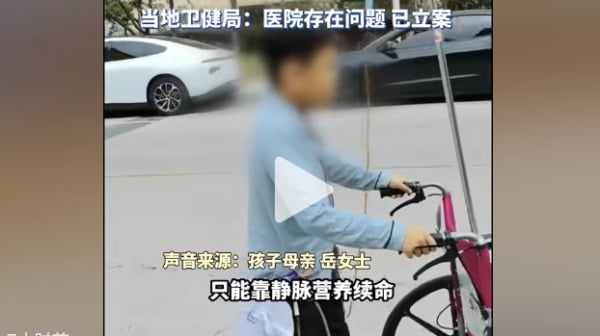
A shocking case of medical malpractice out of China’s Heze, Shandong Province has once again sparked outrage across Chinese social media. According to a now-viral post, a 10-year-old boy was left unable to eat or drink after what doctors described as a “routine operation” to remove a supposed abdominal tumor. His family says the surgery, which lasted nearly 14 hours, resulted in the removal of most of his digestive system, leaving him now dependent on intravenous nutrition just to stay alive.
“He can’t eat or drink,” the boy’s mother, known as Ms. Yue, said in a tearful post. “Almost all of his digestive and absorption organs are gone. They told us, ‘If you don’t sign [the documents], it means you’re refusing treatment.’”
The case, now under official investigation, has ignited a nationwide debate over medical accountability, informed consent, and the ethics of China’s county-level hospitals.

A routine surgery gone wrong
The boy, known as Xiao Ye, was a cheerful 5th grader when the incident occurred in October 2023. During recess, he was accidentally hit in the abdomen by another child and complained of pain afterwards. His mother, Ms. Yue, said there was no sign of external injury, but doctors at Chengwu County People’s Hospital diagnosed him with an abdominal hematoma and advised further tests.
Success
You are now signed up for our newsletter
Success
Check your email to complete sign up
RELATED: Three Flu Strains Sweeping China: Hospitals Overwhelmed as Child Deaths Reported in Hong Kong
After a contrast-enhanced CT scan, physicians told the family that an “abnormal mass” was found between his stomach and pancreas, recommending laparoscopic exploration followed by surgery to remove the mass. “We were told it might just be a small blood clot,” Ms. Yue recalled. “But once he went into the operating room, everything changed.”
The operation stretched over 14 excruciating hours, during which doctors repeatedly returned to ask for consent to proceed with additional procedures. “Shortly after it started, a doctor rushed out saying there was massive bleeding and they needed to open the abdomen,” Ms. Yue said. “We wanted to transfer hospitals, but they refused.”

“Then they said a large tumor was found on the pancreas and it had to be removed — along with the duodenum. Every hour or two, they came out for another signature. We signed four times in total. When we hesitated, they said we were refusing treatment.”
When the surgery finally ended, the family was told that Xiao Ye’s duodenum, small intestine, pancreas, gallbladder, and two-thirds of his stomach had been removed, leaving less than half a meter of his colon. “His entire digestive and absorption system was basically gone,” Ms. Yue said.
Kept alive by machines
Now 12 years old, Xiao Ye has spent the past two years confined to hospital beds across China. “He’s surviving on intravenous nutrition,” his mother said. “His bilirubin keeps rising, and he’s grown quiet and withdrawn — he barely speaks anymore.”
The family has also traveled to major hospitals nationwide seeking treatment, but were told he would need multiple organ transplants — an extremely difficult and costly procedure.
In July 2025, Chengwu County People’s Hospital issued a 200,000 yuan (about USD $27,000) as a “compensation payment” — a fraction of what the family says is needed for ongoing care. They are now demanding the release of surgical footage and monitoring records to clarify what really happened in the operating room. “We just want to see the truth,” Ms. Yue said. “We want justice for our child.”
‘We want justice for our child’
A third-party forensic report issued in December 2024 found that the hospital’s medical conduct was indeed faulty and that there was a link between the surgery and the child’s resulting injuries. A written response from Chengwu County’s Health Commission, dated Sept. 28, 2025, cited multiple violations, including:
- The hospital failed to complete medical records within 24 hours.
- The surgical consent forms were incomplete and improperly signed.
- Pre-operative consultations were not conducted in accordance with protocol.
Ms. Yue also argues that the hospital lacked the expertise and equipment for such a complex operation and that poor judgment and miscommunication resulted in irreversible harm.
‘He was just a child’
The case went viral on Chinese social media after local outlet “Red Star News” and “Chao News” posted video reports showing the family’s ordeal. “Six organs were cut out,” Ms. Yue said in one video. “He can’t eat, can’t drink, and can only survive through IV nutrition.”
Netizens reacted with shock and fury:
- “This is terrifying — was there even a tumor?”
- “Organ trafficking — is that what this was?”
- “Hospitals are supposed to save lives, not destroy them. How could they do this to a child?”
- “Even if the doctors are small fish, there are bigger devils behind them.”
Some commenters drew comparisons to other medical scandals, calling the incident “a dark reflection of a broken system.” China is no stranger to controversy when it comes to its shady organ transplant and procurement practices, which have long drawn scrutiny from international human rights organizations.
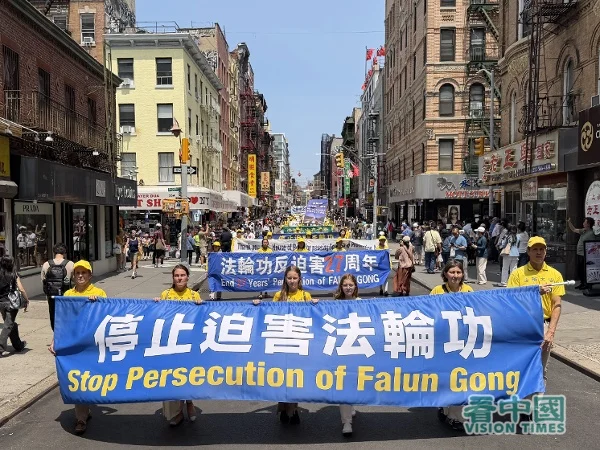
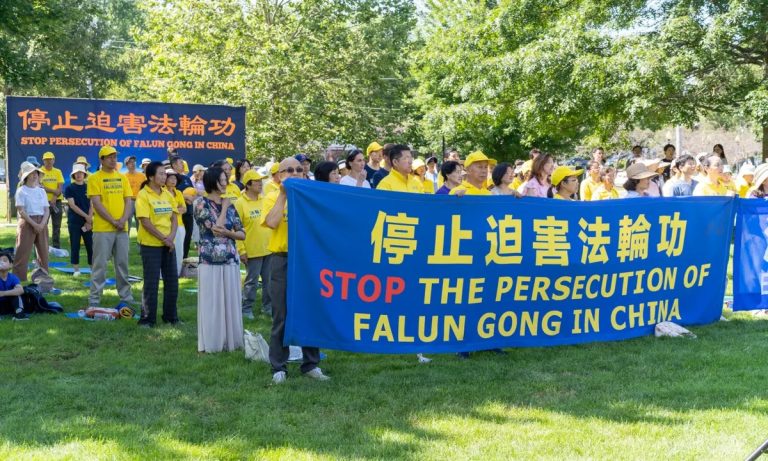
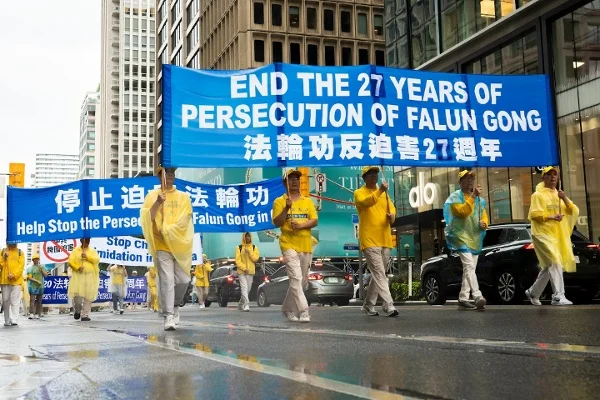
For decades, Beijing has faced allegations of forced organ harvesting — first from executed prisoners, and later from prisoners of conscience, including Falun Gong practitioners, Muslim Uyghurs, Tibetans, and other detainees held in secret facilities. Despite official denials, multiple independent investigations and witness testimonies have detailed a state-sanctioned network in which hospitals, police, and military units allegedly collaborated to supply organs for profit.
A pattern of medical abuse
Xiao Ye’s ordeal has revived memories of similar controversies. In one earlier incident, a woman from Shenzhen accused The University of Hong Kong–Shenzhen Hospital of “removing five healthy organs” from her 77-year-old mother during a 2018 surgery.
“They forged a pancreatic cancer diagnosis to trick us into signing,” she said in a now-viral video on X. “During the operation, they found no tumor — yet still removed her pancreas, gallbladder, spleen, duodenum, and part of her stomach. My mother died.”
The family’s lawsuit led to a 2023 court ruling ordering the hospital to pay 620,000 yuan (about USD $85,000) in compensation. The daughter claimed that “other victims exist” and that she had filed a police report in 2021 — one that has yet to receive a response from officials.
Chinese social media has been flooded with posts about missing persons, medical negligence, and even alleged organ trafficking, especially involving children and young adults.
‘Treat us like human beings’
While authorities have not acknowledged systemic wrongdoing, public confidence in the medical system continues to erode. “We don’t expect doctors to be gods,” one user wrote. “We just want them to treat us like human beings.”
The Shandong case underscores a deeper crisis in China’s healthcare structure — where underqualified local hospitals, opaque medical oversight, and profit-driven practices collide. As public outrage grows, the calls for transparency, accountability, and reform are becoming impossible to ignore.
For Xiao Ye and his family, the fight is far from over. Two years after the surgery that changed his life, the boy who once ran and played with classmates now lies in a hospital bed — a child kept alive by tubes and hope. “He just keeps saying, ‘I want to go home,’” Ms. Yue said tearfully. “But he can’t.”