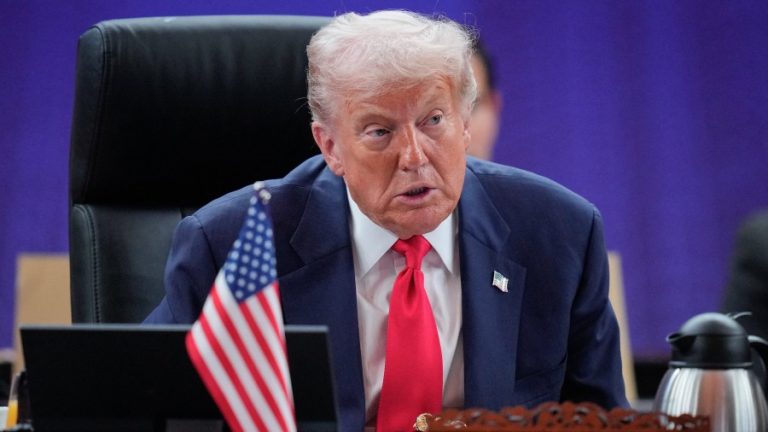
As the U.S.-China Cold War enters its sixth year, a highly anticipated meeting between President Donald Trump and Chinese Communist Party (CCP) leader Xi Jinping has taken place, marking a critical juncture in a confrontation that continues to reshape global geopolitics.
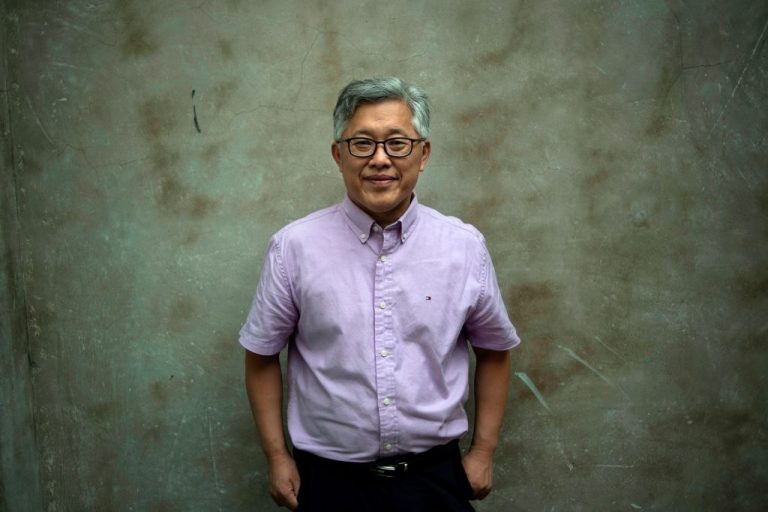
Influential commentator Gongzi Shen argues that Trump’s unconventional “hybrid strategy” diplomacy has effectively initiated the countdown to the CCP’s collapse. Meanwhile, economist Cheng Xiaonong, in his new book The Cold War Iron Curtain Descends on the Taiwan Strait, predicts that the Cold War will continue for roughly 15 years—culminating in the fall of the CCP around 2040, when Taiwan could rise as the world’s second-strongest power through technological dominance.
Trump’s unpredictable strategy: A slow-acting poison for the CCP
In his YouTube program, Shen analyzes Trump’s diplomatic moves through the lens of game theory’s “mixed strategy.” By intentionally defying predictability, Trump forces his opponents into paralysis. What appears as chaos, Shen argues, conceals precise strategic logic.
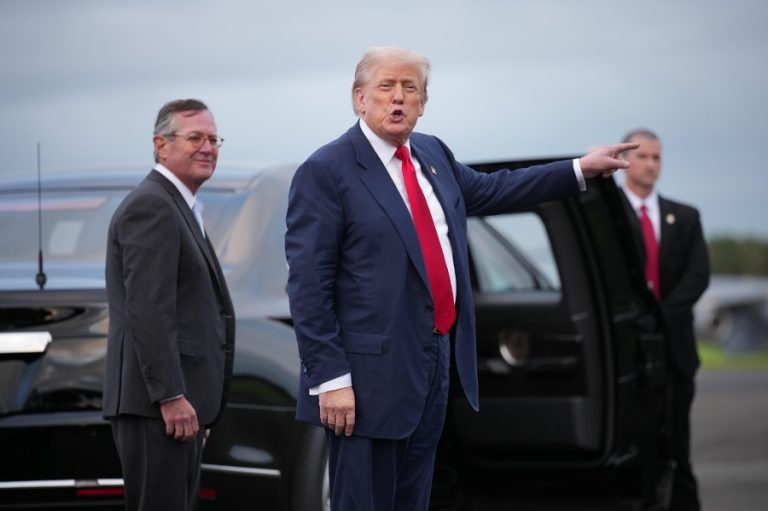
From the 25 percent steel and aluminum tariffs in 2018 to threats of 30 percent tariffs on all Chinese goods in 2019, and then the sudden signing of the Phase One trade deal amid the 2020 pandemic, Trump consistently broke expectations. Since returning to the White House in 2024, he has threatened tariffs as high as 100 percent, vacillated over whether to meet Xi at APEC, and shifted U.S. positions within days—forcing Beijing’s policymaking apparatus into constant crisis mode.
Each Trump provocation, Shen says, triggers frantic cross-ministerial coordination in Beijing—followed by wasted efforts once he reverses course.
Success
You are now signed up for our newsletter
Success
Check your email to complete sign up
“Trump tweets at zero cost,” Shen quips, “but Chinese officials pay with endless sleepless nights.”
The TikTok saga illustrates this dynamic. Trump’s 2020 threat to ban the app sent ByteDance into panic negotiations to sell its U.S. operations. Biden’s election brought temporary relief—until Congress passed a forced-sale bill in 2023 and Trump reemerged in 2024 hinting he “could save TikTok.” The company burned hundreds of millions of dollars on lawsuits and restructuring while its leadership was trapped in uncertainty.
Beneath the surface, Shen sees a clash of systems. America’s open market and free media absorb shocks through self-correction, while China’s command economy depends on stability and rigid control. When faced with unpredictable variables, local governments hesitate, companies freeze investments, and policymakers must plan for every scenario at once—creating systemic paralysis. “These aren’t sanctions,” Shen concludes. “It’s information warfare designed to suffocate the system.”
Compared to the Obama-Biden era’s “predictable containment,” Trump’s strategy denies Beijing any reaction window. For a centralized regime reliant on five-year plans and top-down coordination, chaos is more lethal than confrontation.
Four countdown clocks to crisis (2027–2030)
According to Shen, four “countdown clocks” are now ticking simultaneously—each set to hit a critical point between 2027 and 2030, creating a perfect storm for the CCP.
- Demographic Collapse:
China’s working-age population peaked in 2015 and has fallen by 30 million since. By 2030, it will shrink by another 40 million, while those over 60 will surpass 300 million—one in four citizens—most lacking sufficient pensions or healthcare. “The aging wave,” Shen warns, “will hit like an avalanche.” - Erosion of Resource Leverage:
China currently dominates global refining of rare earths, graphite, and cobalt, but the U.S. and its allies are rapidly building alternative supply chains. By 2028, they could achieve 30–40% independence; by 2037, over 80%. After 2030, even a Chinese embargo would be, Shen says, “a minor inconvenience, not a weapon.” - Political Clock Running Out:
Xi Jinping, born in 1953, will be 74 at the 21st Party Congress in 2027 and 79 by 2032. Whether he steps down or clings to power, Shen predicts he will face “a China crushed by debt, demographic decline, and decoupling pressures.” Desperate to cement his legacy, Xi might gamble on “military unification” with Taiwan. - Taiwan’s Electoral Timeline:
Successive Democratic Progressive Party (DPP) victories in 2024, 2028, and 2032 would further erode Beijing’s “one country, two systems” narrative. “Each Taiwanese election,” Shen notes, “forces Beijing to ask: if not now, when?”
By 2030, Shen warns, these four trends—demographic decline, resource loss, Xi’s aging leadership, and Taiwan’s democratic consolidation—will converge into an irreversible inflection point. Beyond that, the U.S. will complete “painless decoupling,” and China will lose its last leverage to shape history.
Cheng Xiaonong: The CCP will be the next soviet union
Economist Cheng Xiaonong shares Shen’s diagnosis but frames it in a longer arc. He calls the current confrontation “humanity’s second Cold War.” Unlike the U.S.-Soviet rivalry, this Cold War is rooted in globalized supply chains—the CCP’s presumed advantage that now turns against it.
“The Cold War is no longer just about missiles or ideology,” Cheng explains. “It’s a four-front conflict—spying, technology, military, and trade.” Nuclear deterrence prevents direct war, making the Cold War itself a stabilizer: a “fire extinguisher” against reckless invasion. Cheng traces the war’s ignition to 2020—when Beijing’s naval expansion and Trump’s trade decoupling ended decades of engagement—and identifies 2025’s rare-earth embargo as the start of phase two: full-scale economic weaponization.
Cheng argues the CCP’s survival depends on dominating foreign markets while restricting domestic ones—an imbalance the U.S. will no longer tolerate. “No nation,” he writes, “will accept a trillion-dollar trade deficit while being locked out of its partner’s market.”
He predicts the U.S.-China Cold War will last 20 years—half the length of the U.S.-Soviet standoff. Having begun in 2020, it will end around 2040, when China’s overleveraged economy and exhausted military budgets collapse. Nations still tied to Beijing, he warns, “will sink with the ship.”
For Taiwan, Cheng prescribes a clear survival strategy: integrate completely with the U.S. high-tech ecosystem.
“Only by fusing with American industrial chains,” he says, “can Taiwan escape the blast zone and turn crisis into opportunity.”
He foresees a new industrial revolution beginning in 2025, driven by automation and AI. Within months, he predicts, 10,000 fully automated factories will emerge across the U.S., rendering concerns over labor costs obsolete. Taiwan’s semiconductors and precision tools will be the “wings” enabling America’s technological ascent.
To those advocating rapprochement with Beijing, Cheng issues a stark warning: “In the sixth year of the Cold War, any attempt to ‘improve’ cross-strait relations is like boarding the Titanic.” He likens the CCP’s economic outreach to plundering—where Taiwan’s wealth and technology would be swallowed by the mainland’s collapsing system.
By 2040, Cheng predicts, China’s vast territory will fragment into dozens of smaller nations, while Taiwan—aligned with the United States—will emerge as a technological superpower. “The world,” he says, “will stand in awe when it hears: ‘I’m Taiwanese.’”
2030: The divide. 2040: The endgame.
Together, Shen and Cheng portray Trump as the nemesis of autocracy—his erratic diplomacy a catalyst accelerating the CCP’s structural decline.
The U.S.-China Cold War, they argue, is a one-way journey with no off-ramp—ending only with the fall of the red regime.
As Cheng concludes, “Twenty years pass in the blink of an eye. Six have gone. Fourteen remain before the final reckoning.”
The gears of history, once in motion, no longer turn back.
By Li Ting