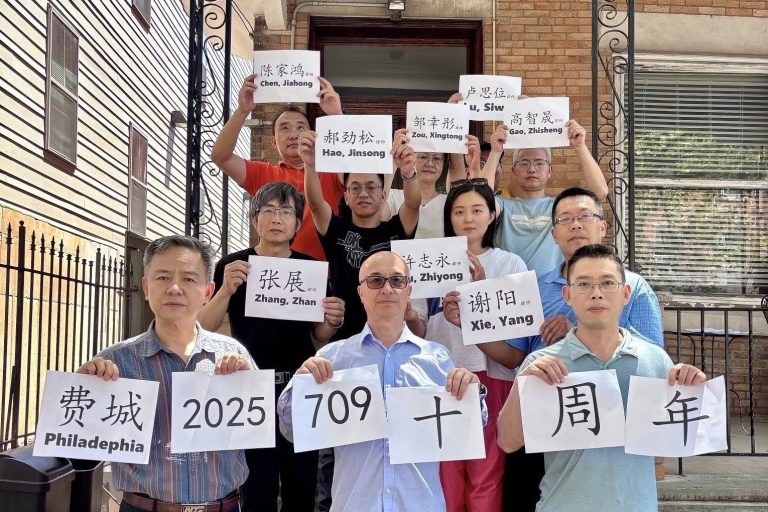
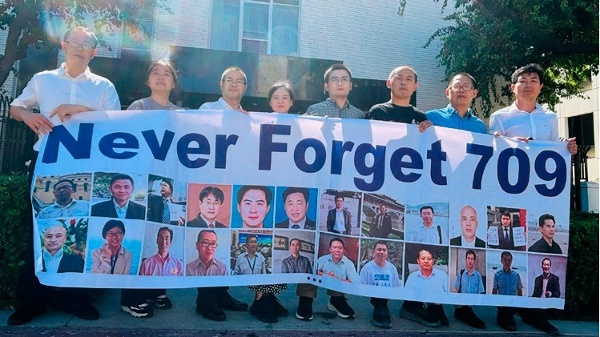
11 years after China’s nationwide “709 Crackdown” targeted hundreds of human rights lawyers, legal assistants, and activists, exiled attorney You Feiyu says the sweeping campaign permanently changed both his family’s lives, as well as his understanding of China’s legal system.
Starting in July 9, 2015, Chinese authorities launched a coordinated operation across more than 20 provinces, detaining, questioning, or otherwise restricting more than 300 lawyers and human rights advocates. The campaign, widely known as the “709 Crackdown,” has since been cited by international human rights organizations as a defining moment for China’s legal profession. At the time, the United States and several other democratic governments publicly condemned the crackdown and called on Beijing to release detained lawyers and uphold the rule of law.
Now living in the United States, You spoke with Vision Times about his personal experiences, the crackdown’s long-term effects, and his hopes for China’s future.
RELATED: 11 Years After China’s ‘709 Crackdown,’ Exiled Lawyer Reflects on Its Lasting Impact
A family caught up in the whirlwind
You recalled sensing that the political environment had already begun to change before the events of July 2015. “When the 709 incident happened, I had already felt that the overall environment was changing,” he said.
Success
You are now signed up for our newsletter
Success
Check your email to complete sign up
As a human rights lawyer, You said he and his two brothers became targets of official pressure following the crackdown. He recalled that his parents lived in constant fear and uncertainty as family members struggled to stay in contact as the clampdown intensified.
According to You, many relatives of detained lawyers experienced similar hardships, including surveillance, travel restrictions, and prolonged psychological stress. “It didn’t just target one lawyer,” he said, adding, “By targeting an entire family, it made many more people feel afraid.”
A turning point for China’s legal community
The crackdown also reshaped You’s own understanding of the legal profession. He said that before 2015, many lawyers believed they could use China’s existing legal system to help vulnerable groups by handling labor disputes, land rights cases, and other public interest litigation. “Many lawyers believed the law could become a tool for solving social problems,” he said.
After the crackdown, however, You said many legal professionals began questioning whether the law could function independently in politically sensitive cases. “This led many people in the legal profession to ask whether China truly has the rule of law,” he said.
Several prominent lawyers detained during the 709 Crackdown, including Zhou Shifeng, Wang Yu, Wang Quanzhang, and Li Heping, were later prosecuted or lost their licenses to practice law. While some have since been released from prison, many have remained subject to various restrictions.
During the interview, You distinguished between having written laws and what he described as genuine rule of law. “Having legal texts does not necessarily mean a country has the rule of law,” he said. In his view, a functioning legal system requires laws that apply equally to everyone, meaningful limits on government power, an independent judiciary, and effective protection of individual rights.
He further argued that the central question is whether the legal system can protect individuals when disputes involve public authorities. “If the law cannot limit power,” he said, “then it is very difficult for the law to truly become a tool for protecting the people.”
Why public awareness matters
When asked why many ordinary citizens remain silent when others face persecution, You suggested that many people believe such cases will never affect them personally. “People think that today it is lawyers, rights defenders, or other groups,” he said. “But just because it is happening to someone else today does not mean it can never happen to you.”
He argued that protecting the rights of others ultimately helps safeguard society as a whole. “If everyone chooses to remain silent,” he said, “then when the problem eventually reaches you, there may be no one left to speak for you.”
You said lasting change requires greater public understanding of democratic governance, individual rights, and the rule of law. He encouraged Chinese citizens to learn from the institutional development of democratic societies, saying those experiences may offer useful perspectives on limiting government power and protecting individual freedoms. He also urged overseas Chinese communities to continue paying attention to developments inside China and to support initiatives promoting legal reform and human rights.
Reflecting on his own journey, You said the 709 Crackdown fundamentally changed how he views the relationship between law and political institutions. “If there are no institutional guarantees,” he said, “the words written in law alone cannot protect people’s rights.”
Looking back 11 years later, You said commemorating the anniversary is about more than remembering a single event. “The true rule of law,” he said, “is when every ordinary person can receive fair protection, even when facing powerful institutions.”
Editorial note: These accounts reflect You’s personal observations and have not been independently verified by Vision Times.