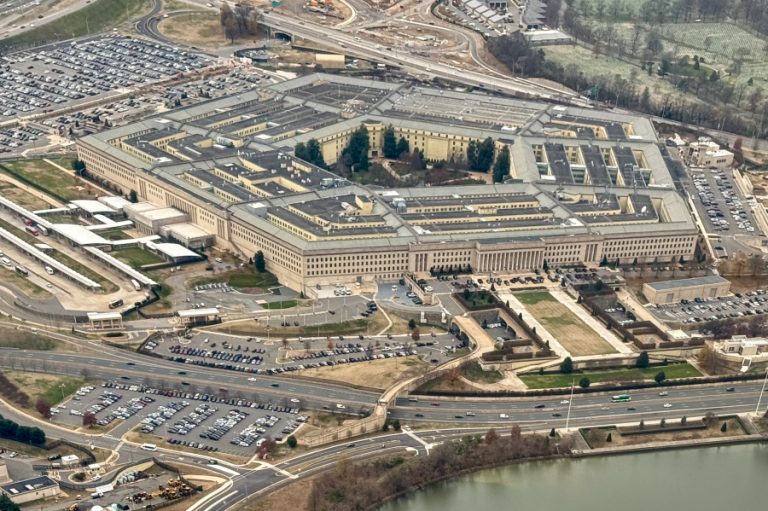
U.S. President Donald Trump has ordered the Pentagon to immediately resume nuclear weapons testing, ending a 33-year moratorium and signaling a major escalation in global nuclear competition.
The surprise announcement came just minutes before Trump’s scheduled meeting with Chinese leader Xi Jinping in Busan, South Korea, and has triggered strong reactions from Beijing, Moscow, and Western analysts.
Trump made the announcement aboard Air Force One en route to the APEC summit, posting on Truth Social that he had directed the Department of Defense “to begin testing our nuclear weapons on an equal footing with other nuclear powers.”
“Given other nations’ testing plans, I’ve ordered the War Department to begin testing immediately,” Trump wrote. “Russia ranks second, and China—though still behind—will catch up within five years.”
Russia’s state-run RIA Novosti quoted a senior lawmaker as saying the move “ushers in a new era of uncertainty and open confrontation.”
Success
You are now signed up for our newsletter
Success
Check your email to complete sign up
At a regular press briefing in Beijing, China’s Ministry of National Defense said it had “taken note of relevant reports” and reiterated that China’s nuclear policy “has always been consistent and clear.”
It remains unclear whether Trump’s directive involves underground nuclear detonation tests or flight tests of nuclear-capable missiles. According to the International Atomic Energy Agency, no nuclear power other than North Korea has conducted an explosive test in more than 25 years.
We have to keep pace
Speaking to reporters aboard Air Force One, Trump said resuming tests was necessary to maintain strategic balance.
“Since other nations are testing, I think we should do it too,” he said, adding that the test site would be announced later.
Asked whether the move risked reigniting a nuclear arms race, Trump said the U.S. arsenal was “very safe” and insisted he still supports denuclearization.
“We have too many nuclear weapons,” he said. “Russia is second, China is third, and China will catch up in four or five years. We’re negotiating with Russia, and if we reach an agreement, China will be included.”
Trump’s order comes amid renewed nuclear expansion by both China and Russia. Moscow recently claimed successful tests of a nuclear-powered cruise missile and a nuclear-powered torpedo known as Poseidon.
Earlier this week, Trump criticized Russian President Vladimir Putin, saying he should “end the war in Ukraine instead of testing missiles.”
China and Russia accelerate nuclear modernization
According to the Washington-based Center for Strategic and International Studies (CSIS), China’s nuclear arsenal is expected to more than double—from about 300 warheads in 2020 to roughly 600 by the end of 2025—and could exceed 1,000 warheads by 2030, according to U.S. Defense Department estimates.
CSIS noted that during September’s military parade, the Chinese Communist Party displayed five nuclear delivery systems capable of striking the U.S. mainland.
The Arms Control Association estimates that the U.S. currently maintains about 5,225 nuclear warheads, compared with 5,580 for Russia.
On Wednesday, Russian President Vladimir Putin announced the successful test of the Poseidon “super torpedo,” which analysts warn could generate radioactive tsunamis powerful enough to devastate entire coastal cities. Earlier this month, Russia also tested the Burevestnik nuclear cruise missile and conducted large-scale launch drills—moves seen as responses to Washington’s harder security stance.
Trump’s bid to rewrite nuclear diplomacy
Trump has long sought to reshape global arms control. In August, he said he had discussed a new framework with Putin and hoped to bring China into future negotiations. Beijing dismissed the idea as “unrealistic,” citing its much smaller arsenal compared with the U.S. and Russia.
Back in February, Trump proposed a trilateral arms control framework involving the U.S., Russia, and China.
Historically, all major nuclear powers—with the exception of North Korea—ceased explosive nuclear testing in the 1990s. North Korea last tested in 2017, Russia in 1990, the U.S. in 1992, and China in 1996.
The U.S. ushered in the nuclear age in July 1945 with the first atomic bomb test at Alamogordo, New Mexico. One month later, the bombs dropped on Hiroshima and Nagasaki forced Japan’s surrender and ended World War II.
By Gao Yun