Rising over the skyline of Guangzhou, China’s 600-meter television tower twists elegantly toward the clouds. Locals call it Xiaoman’s Waist — a nickname that predates skyscrapers by more than a thousand years.
The phrase comes from an age when poets, not architects, defined beauty. To call someone’s figure a “Xiaoman’s waist” was to invoke the perfect grace of a dancer whose movements swayed like willow branches in the breeze.
Her name was Xiao Man, and her story began in the Tang Dynasty.
In imperial China, wealthy households often kept jiaji — private courtesans trained in music, poetry, and dance. They were artists and companions, neither wives nor servants, admired for their refinement.
Bai Juyi, one of the greatest poets of the Tang era, was known not only for his verse but for the cultivated life he built around art. In his later years, after serving in high office, he retired to Luoyang, where he described his home with gentle pride: “A house of ten acres, a garden of five; a pond, a thousand stalks of bamboo. Books and wine, songs and strings — enough for peace of mind.”
Success
You are now signed up for our newsletter
Success
Check your email to complete sign up
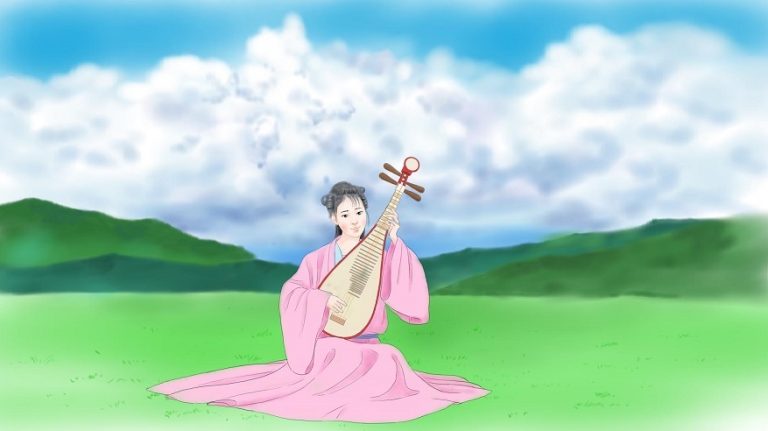
Among the singers who filled that home with music were two women whose names would outlive them: Fan Su and Xiao Man. One sang with a voice as soft as silk and lips like cherries; the other danced with the lightness of a willow in spring.
Bai immortalized them in a single couplet that would echo through centuries: “Cherry lips of Fan Su, willow waist of Xiao Man.”
From that line came two enduring idioms in Chinese — cherry lips and Xiaoman’s waist, expressions still used today to describe feminine grace.
Parting with song
Fan Su and Xiao Man served Bai Juyi for a decade, the most serene period of his long life. Yet even for poets, beauty fades and health fails. In his later years, Bai suffered paralysis and decided to release his household performers so they might find their own destinies.
According to old chronicles, when his beloved camel was to be sold, the animal turned and cried aloud, unwilling to part. Fan Su knelt beside it, weeping: “Master rode this camel for five years — its strength carried him a thousand days. My songs, too, have carried him through countless nights. How can he let us both go without sorrow?”
Bai was moved but remained resolute. “All things must pass,” he sighed, and he sent them away with gifts and blessings.
In his illness, he wrote Farewell to the Willow Branches: “Two willows by my tower swayed with me through many drunken springs. Tomorrow they will go, and spring itself will go with them.”
Six years later, the old poet followed them into history.
Two hundred years later, the Song poet Su Shi — better known as Su Dongpo — found in Bai Juyi a kindred soul. “I am much like Bai Letian,” he once mused, “except that I have no Fan Su or Xiao Man.”
But he did have Wang Chaoyun, a singer who became his confidante, his student, and eventually his wife. Through Su’s exiles and imprisonments, she followed him from one desolate posting to another — from Hangzhou’s tranquil waters to the remote hills of Huizhou.
A popular tale says that one day, disheartened by political rejection, Su asked his attendants, “Do you know what fills my heart?”
“Your learning,” said one.
“Your poetry,” said another.
Chaoyun smiled: “You are full of thoughts that the world is not ready to hear.”
Su laughed. “Only Chaoyun truly understands me.”
The singer and the exile
On a midsummer night during their exile, the two watched the Qixi Festival moon rise over Huangzhou. When Su asked what she wished from the Weaver Girl in heaven, Chaoyun whispered, “Others pray for skill and beauty; I pray never to be parted from you again.”
Su first met her by West Lake, where she sang as a twelve-year-old performer. He compared her to the legendary beauty Xi Shi — “To compare West Lake to Xi Shi, whether lightly or richly adorned, she is always fair.”
Neither poet nor girl knew that they would share twenty-two years together, until Chaoyun died at thirty-four, far from home.
In Huizhou, Chaoyun would sing one of Su’s most famous lyrics, Butterflies — Spring Scene:
“Blossoms fade, green plums swell,
Swallows skim by water wells.
Willow fluff drifts, the breeze grows thin,
Where in the world can new blossoms begin?”
Whenever she reached that final line, tears silenced her voice. “It is that thought,” she told him, “that wounds me most.”
Su smiled sadly: “I grieve for autumn; you, for spring.”
After she died, he could never bear to hear the song again.
The pavilion of six illusions
Su buried Wang Chaoyun by West Lake in Huizhou, at the far end of what is now called the Su Causeway. There he built a small pavilion named Liuru Ting — the Pavilion of Six Illusions — after a verse from the Diamond Sutra: “All things are like dreams, illusions, bubbles, and shadows — like dew or lightning; thus should one behold them.”
On its pillars he carved his final words to her: “None understood my discord with the world but Chaoyun; When evening rain falls, her melody returns to me.”
From Bai Juyi’s “cherry lips and willow waist” to Su Dongpo’s moonlit grief, these stories speak to the same truth that binds art, love, and loss: all beauty is fleeting, yet it endures in memory and song.
Just as the tower in Guangzhou now carries the name Xiaoman’s Waist, modern China still remembers the women who once inspired poets — symbols not merely of elegance, but of devotion and the quiet courage to love across time.