By Zimeng, Vision Times
In the wake of Yu Menglong’s death, long-shrouded corners of China’s entertainment world have come under unprecedented scrutiny. Rumors of elite political forces manipulating the industry — and the stars within it — are spreading rapidly across social media and within the entertainment scene itself.
One of the most telling reactions came from online personality Zhao Lihua, who has fiercely defended several entertainment figures rumored to be linked to the case. When challenged by netizens, she snapped: “You? Even a hundred million of you added together couldn’t stir up the slightest wave.” But her brazen arrogance only fueled speculation that an untouchable power bloc lurks behind the industry’s scandals — a force so entrenched that few dare cross it due to fear of retaliation.
RELATED: How Yu Menglong’s Death Exposes Beijing’s Fragile Grip on Power
Now, a popular independent program, “Weiyu Looks at the World,” has made a striking allegation: The late singer Coco Lee may have offended a powerful political family — and paid the ultimate prize for it.
Coco Lee’s death: A simple tragedy, or something more?
Success
You are now signed up for our newsletter
Success
Check your email to complete sign up
Coco Lee’s agency announced that she had tragically died on July 2, 2023, reportedly after attempting suicide due to depression. Her sister, Carol Lee, confirmed her death but declined to provide details. She noted that Coco displayed symptoms “resembling poisoning,” including severe vomiting, and that the wrist injuries described publicly were “far too minor” to have caused her death.
Hong Kong outlets later reported the official cause as airway obstruction from inhaled vomit. But long before her death, Coco Lee had already suffered at the hands of one of China’s most powerful media machines.
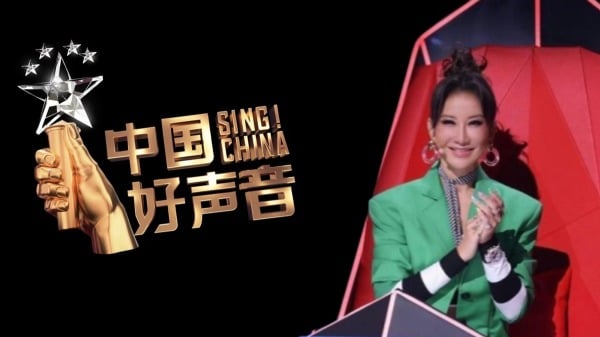
Two years earlier, Coco publicly accused “The Voice of China” — one of the country’s most popular and influential entertainment programs — of abusive treatment and corruption. In a leaked 2023 audio recording, she described her failing health, which included depression, breast cancer, nerve damage in her left leg, and difficulty standing.
RELATED: Yu Menglong’s Death Exposes the CCP’s Shadow Grip on China’s Entertainment Industry
Brewing backlash
Lee confronted the production team about unfair judging and opaque scoring practices. They told her the issues “could not be publicly discussed.” But still, she insisted: “What I’m saying is the truth. My words were edited.”
Then came the retaliation. During a duet with contestant Wang Zepeng, producers had agreed that Wang would support Coco onstage due to her injury. But when the performance began, Wang was positioned with his back to her, leaving Coco — in seven-inch heels — to stand unaided. She fell in front of a live audience; no staff intervened. Only judge Fish Leong rushed to help, later earning rebuke from the production team.
Wang later confirmed it had been a setup: He was never informed of the change, and both singers’ phones had been confiscated after the mishap. Additional recordings show Coco being physically yanked offstage by a director’s assistant.
RELATED: A Curse and a Reckoning: A Psychic’s Predictions on Yu Menglong and Song Yiren
Coco’s courage ignited a wave of national backlash against “The Voice,” triggering boycotts and scrutiny of its powerful backers. But her resistance appears to have exacted a heavy price. As “Weiyu Looks at the World” put it: She offended people whom “no one is allowed to offend.”
Who really controls ‘The Voice of China’?
The program is produced by Canxing Culture, a subsidiary of Star CM Holdings, a joint venture between CMC Capital Partners and News Corporation Australia.
CMC’s nominal chairman is media figure Li Ruigang, but according to the program’s investigation, the real power belongs to Li Tong, daughter of former CCP propaganda czar Li Changchun — one of the most influential men in China’s political and media landscape.
“Weiyu Looks at the World” reveals several key claims during the segment, including:
- Li Ruigang and Li Tong were effectively a political power couple.
- After meeting Li Tong, Li Ruigang’s career surged; he soon held major positions in Shanghai’s political and media institutions.
- Backed by Li Changchun, the family built a media empire. “The Voice of China” secured massive advertising deals, including a 60 million yuan sponsorship from herbal drink maker Jiaduobao.
- The program generated 1.7 billion yuan in ad revenue in its first season — not counting profits from artist contracts, tours, and music academies.
The report also alleges that Coco Lee’s exposure of backstage corruption threatened a lucrative political-commercial machine — and that retaliation from above was inevitable. Though conclusive evidence remains elusive, the program argues that her death “is unlikely to have been simply the result of depression.”
RELATED: Hong Kong Bans 13 Films on ‘National Security’ Grounds, But Won’t Disclose the Titles
Was Li Changchun pulling the strings?
Li Changchun served as CCP propaganda chief and Politburo Standing Committee member, wielding enormous influence over China’s media and cultural sectors. His political tenure was marked by deeply controversial policies, including the “blood plasma economy” in Henan, which led to widespread HIV infections among rural villagers. But still, Li’s exit from office reportedly came with vast wealth.
“Weiyu Looks at the World” concludes with an ominous claim: Actor Qiu Feng was also killed through a scheme linked to Shaolin abbot Shi Yongxin — who, it says, operated under Li Changchun’s protection.
According to the program, “many stars who disobeyed — or were selected — eventually met the same fate.”
Editor’s note: The findings, claims, and timelines referenced in this article are based on publicly available online accounts, citizen-led investigations, and social-media materials that have not been independently verified. They are presented here for informational purposes only.