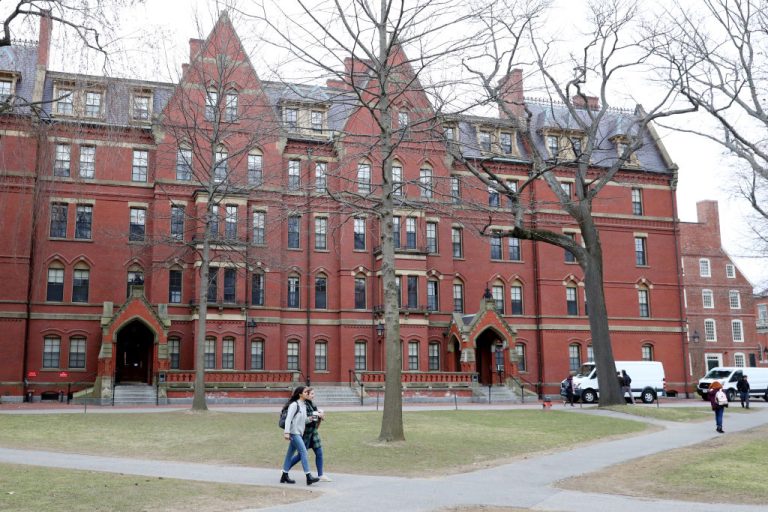
On July 20, the U.S. Department of Justice (DOJ) opened a compliance review into whether Harvard University allowed Chinese donors and financial aid programs to unlawfully exclude American students from applying, marking the latest federal investigation into the Ivy League institution under the Trump administration.
DOJ officials said Harvard’s foreign funding disclosures raised concerns over certain China-linked scholarship programs that may unlawfully discriminate against U.S. students. The department did not identify specific scholarship funds and emphasized that no conclusions have yet been reached.
RELATED: Confucius Institutes Rebrand on Canadian Soil Under New Name
‘Deliberately excludes American citizens’
The DOJ said its inquiry focuses on Harvard’s China-related scholarship programs, claiming that some donations from Chinese sources were designated for students from specific countries. If those restrictions excluded U.S. citizens based on national origin, the department said they could violate federal civil rights laws as well as the rights of American students.
“Schools cannot take federal dollars and then turn around and accept money from foreign sources to give financial aid that deliberately excludes American citizens,” Harmeet Dhillon, assistant attorney general for the DOJ’s Civil Rights Division, said in the statement. “Doing so is illegal, and we will stop it wherever we find it.”
Success
You are now signed up for our newsletter
Success
Check your email to complete sign up
The investigation is being conducted as a compliance review, meaning it was initiated by the federal government rather than in response to a private complaint. In announcing the probe, the DOJ advanced an unusual legal argument, asserting that even privately funded scholarships may violate the civil rights of American students if they are restricted to applicants from particular countries.
According to the department, Harvard appears to have accepted funding from Chinese sources while honoring donor-imposed restrictions that directed scholarships to foreign students, presumably Chinese nationals, potentially disadvantaging applicants of other nationalities, including U.S. citizens.
Harvard claps back
Harvard responded that it complies with federal reporting requirements governing foreign donations and, in accordance with its obligations under Title VI, “does not unlawfully discriminate on the basis of race, ethnicity, or national origin in allocating financial aid.” The university said it was reviewing the Justice Department’s notice.
A university spokesperson added that Harvard is reviewing the Justice Department’s notice. Like many American universities, Harvard receives foreign funding through donations, grants, and contractual agreements. In recent months, the Trump administration has intensified scrutiny of foreign financial ties at U.S. universities, arguing that funding from adversarial nations could present national security concerns.
Federal disclosure records show Harvard has received approximately $4.5 billion in foreign funding over several decades, including roughly $630 million from Chinese sources.
Federal pressure campaign
The investigation marks the latest saga in the Trump administration’s widening conflict with Harvard. The administration has repeatedly criticized the university, arguing that it has become increasingly influenced by “woke” ideology and has failed to adequately address issues such as antisemitism and targeting of other religious groups on campus. Federal officials have also sought greater oversight of the university’s admissions and hiring practices while threatening to withhold billions of dollars in federal funding.
Though the legal disputes remain ongoing, the administration has continued exploring additional avenues to pressure the university. Those efforts have included proposals to restrict Harvard’s ability to enroll international students, bar federal funding for active-duty military personnel attending the university, and launch broader investigations into its admissions policies.
The latest DOJ inquiry signals that foreign-funded scholarship programs have become another front in the administration’s broader examination of Harvard’s relationship with overseas donors and its compliance with federal civil rights laws in the U.S.