Respiratory illnesses are rapidly increasing across mainland China as officials warn that the country will likely see a major influenza peak between mid-December 2025 and early January 2026.
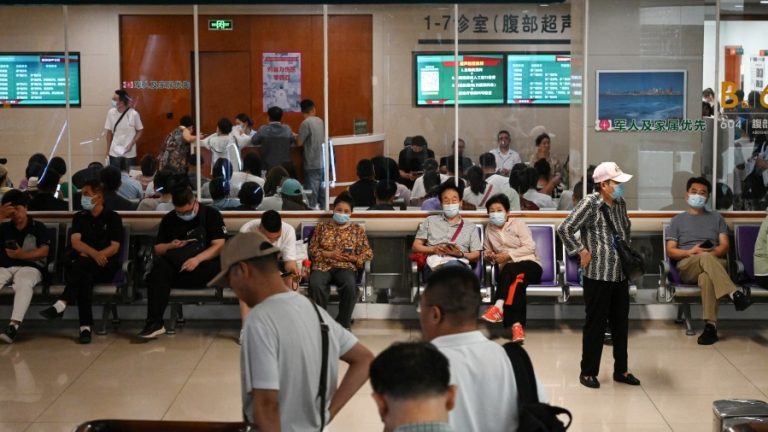
Health authorities say H3N2, a highly contagious subtype of influenza A, has become the dominant strain nationwide. Hospitals in multiple cities — especially children’s hospitals — are seeing surging patient volumes.
A 12-year-old girl from Zhejiang Province, identified by media as Xiaoxiao, developed a severe case of “white lung” after just one day of fever, according to reports from Jimu News and other Chinese outlets.
Initially, Xiaoxiao had only a mild cough and a temperature of 38°C (100.4°F). Doctors at a local clinic diagnosed pneumonia and lung atelectasis. Her parents thought it was a common cold — until her condition suddenly worsened.
She was transferred to Zhejiang University Fourth Hospital, where doctors found her left lung completely opaque on chest scans and her blood oxygen level hovering around 90 percent. The hospital diagnosed her with plastic bronchitis, a rare and life-threatening respiratory condition.
Success
You are now signed up for our newsletter
Success
Check your email to complete sign up
Doctors said her airway was blocked by thick mucus plugs. During an emergency bronchoscopy, physicians observed severe mucosal swelling and removed large amounts of yellow-white secretions that had sealed her left main bronchus.
After the procedure, Xiaoxiao’s condition improved, and she was later discharged from the hospital.
Doctors warn of severe pediatric cases
Doctors explained that plastic bronchitis most often affects children aged 2 to 12 and is typically caused by influenza viruses, Mycoplasma pneumoniae, or adenovirus infections. If untreated, it can lead to long-term lung damage or even death.
Dr. Lu Xiao, deputy chief physician at the Emergency Department of Zhejiang University Second Hospital, said in a video posted on Douyin that “the flu has arrived early this year.” He noted a sharp increase in emergency cases linked to influenza and warned that the current H3N2 strain differs from last year’s virus and is highly transmissible.
“If you don’t take it seriously, it can lead to major complications,” Lu cautioned.
“One of my patients — a healthy, athletic man — ignored his symptoms, and his lungs turned completely white. He spent days in intensive care before recovering.”
The Zhejiang case quickly went viral on Chinese social media. Many netizens shared their own flu experiences and questioned whether the wave of “white lung” cases could be related to COVID-19 vaccine side effects.
Comments included:
“We never heard of white lung before the COVID vaccines.”
“Everyone got vaccinated, and now these strange illnesses keep appearing.”
“After getting the shots, it’s always one sickness after another.”
Others lamented the broader public health situation:
“There are viruses everywhere — life is getting harder.”
“Thirty years ago, these diseases didn’t exist.”
“Can people still live a normal life now?”
While such claims have not been substantiated, the intensity of the online debate reflects widespread anxiety over China’s deteriorating public health environment.
Flu activity rising nationwide
According to the China CDC and National Disease Control Bureau, influenza and other respiratory infections — including RSV and rhinovirus — are increasing across the country.
Southern provinces have seen higher flu activity than the north, with H3N2 accounting for over 95 percent of cases. A smaller number of H1N1 and B-type flu cases have also been detected.
Officials estimate that the upcoming flu peak will hit in mid-December through early January, urging the public to take preventive measures and seek prompt treatment for symptoms such as persistent fever, cough, or breathing difficulties.
From Zhejiang to Henan and beyond, China is once again facing a surge of respiratory illnesses.
As hospitals struggle with high patient volumes, experts warn that early intervention and vaccination remain key to preventing severe outcomes.
Public unease, however, continues to grow — not only over the spread of the virus itself but also over trust in the nation’s medical system and official transparency.
By Li Muzi