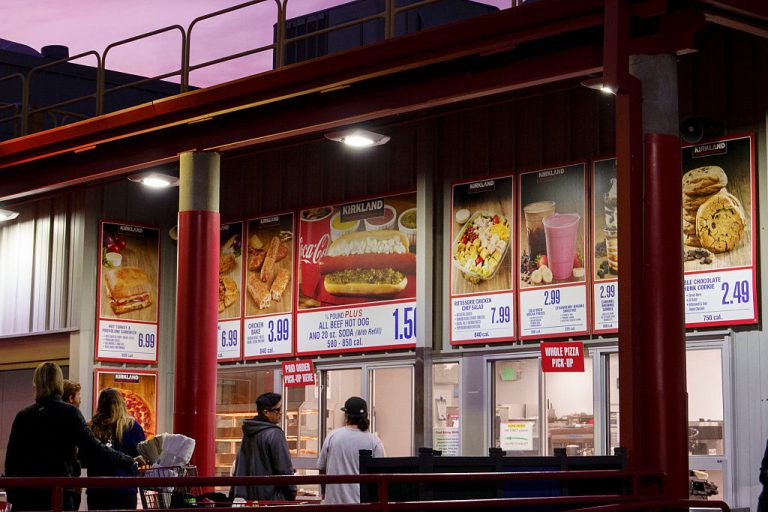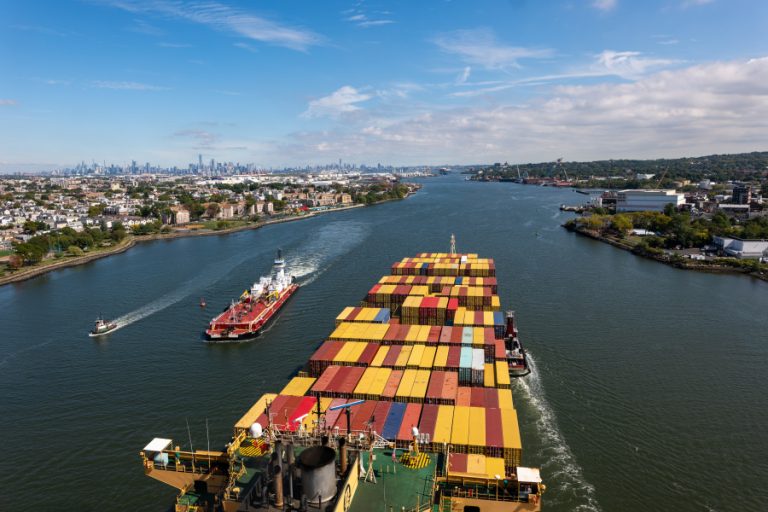
On Friday, Nov. 14, U.S. President Donald Trump announced that the United States will lower import tariffs on certain foods and agricultural products — including coffee, cocoa, bananas, and some beef products — in order to ease the pressure rising food prices have placed on household budgets. On the same day, the United States and Switzerland announced a major trade agreement: the U.S. will cut tariffs on Swiss goods from 39 percent to 15 percent, while Swiss companies pledged to invest US$200 billion in the United States by 2028.
Trump cuts import tariffs on coffee, beef, and more
According to CNBC, the tariff reductions target food categories that heavily affect household spending, including coffee, cocoa, bananas, black tea, green tea, cinnamon, nutmeg, and fruits such as tomatoes, avocados, coconuts, oranges, and pineapples.
Since early this year, as new tariffs took effect, global supply tightened, and inflation pressures mounted, many U.S. food distributors have raised prices on beef, coffee, chocolate, and other goods, straining family budgets. The tariff cuts are seen as a measure by the federal government to ease living costs while maintaining industrial policy priorities.
Over the past year, the U.S. imposed high tariffs on certain beef products from major suppliers such as Brazil, Australia, New Zealand, and Uruguay — with Brazil’s effective rate at one point exceeding 75 percent. Meanwhile, the U.S. domestic cattle herd has fallen to its lowest level in nearly 75 years due to drought and rising feed costs.
With rising costs for steel, aluminum, fertilizers, and other inputs, U.S. ranchers face challenges rebuilding herds, tightening overall supply. According to the Bureau of Labor Statistics, fresh beef prices in September rose 12 percent–18 percent year-over-year.
Success
You are now signed up for our newsletter
Success
Check your email to complete sign up
Producers told CNBC that tariff changes and the U.S.’s recent expansion of Argentina’s beef import quota have altered market conditions. Companies are becoming more cautious about capacity expansion and investment, which has further tightened supply.
U.S. ground roasted coffee prices hit US$8.41 per pound in July, the highest ever, up 33 percent year-over-year.
Brazil supplies about one-third of U.S. coffee beans, while major exporters like Vietnam and Colombia are also affected by the food tariffs. Roasters and cafés report that, because the U.S. does not produce coffee beans domestically, costs are passed through imports. Wholesale costs have risen 18 percent–25 percent this year, prompting some shops to add surcharges.
The Tax Foundation estimates that roughly 74 percent of U.S. food imports face tariff impacts, including goods like tea and spices that lack domestic supply chains. Meanwhile, global coffee prices remain near the 50-year highs set in February, adding double cost pressure on the U.S. market.
Major breakthrough in US–Switzerland trade
Beyond food tariffs, the U.S. and Switzerland announced a framework trade agreement Friday: the U.S. will cut tariffs on Swiss imports from 39 percent to 15 percent, and Swiss companies will invest US$200 billion in the U.S. by the end of 2028. The agreement also applies to Liechtenstein and is expected to have details finalized in Q1 2026.
According to CNA, U.S. Trade Representative Jamieson Greer said the agreement dismantles long-standing trade barriers and opens new markets for U.S. exporters. He noted that Switzerland’s planned large-scale investments in pharmaceuticals, aerospace, medical devices, and gold manufacturing will help reduce U.S. trade deficits in critical industries.
The White House said at least US$67 billion of the investment is expected to materialize before 2026. This includes previously announced commitments — such as Roche’s US$50 billion, Novartis’s US$23 billion, and investments from ABB and rail manufacturer Stadler.
Tariff cap on pharmaceuticals
Swiss Economy Minister Guy Parmelin said the new tariff levels place Switzerland “on par with the EU,” noting that about 40 percent of Swiss exports are affected.
The 15 percent tariff cap will apply to future national-security tariffs imposed under Section 232, covering potential tariff arrangements for semiconductors and other industries. The White House said that under the old framework, tariff rates on some patented drugs could theoretically reach 100 percent. The new system provides greater predictability and stability by capping them at 15 percent.
Swiss officials said the new tariffs can be implemented within days or weeks after the U.S. Customs system is updated.
Switzerland opens its market to US goods; Recognizes US vehicle standards
As part of the agreement, Switzerland will cut tariffs on certain U.S. industrial goods, agricultural products, and seafood, and will offer several duty-free quotas to the U.S., including:
- 500 tons of beef
- 1,000 tons of bison meat
- 1,500 tons of poultry
The U.S. said Switzerland will also remove tariffs on certain nuts, fruits, seafood, and chemicals.
The White House emphasized that Switzerland will recognize U.S. motor vehicle safety standards — a key move expected to ease long-standing U.S.–EU tensions over automotive market access.
Swiss industry welcomes the agreement
Swiss industry groups broadly welcomed the deal, saying it gives Swiss companies the same competitive conditions in the U.S. market as EU exporters.
Nicola Tettamanti, chairman of the Swiss mechanical engineering association Swissmechanic, said, “For the first time, we have the same conditions as European competitors in the U.S. market.”
Hans Gersbach of the Swiss Economic Institute KOF predicted the main beneficiaries would be the machinery, precision instruments, watchmaking, and food industries. KOF forecasts that once the tariff changes take effect, Switzerland’s economic growth could exceed 1 percent in 2026.
Swissmem, the Swiss technology industry association, reported that in the three months through September, Swiss exports to the U.S. fell 14 percent, with machine-tool exports dropping 43 percent due to the 39 percent tariff.
Pictet economist Nadia Gharbi said the new agreement removes a “major downside risk” for Switzerland’s economy. Previously, EU exporters faced tariffs around 15 percent when selling to the U.S., while Swiss companies faced far higher rates. With the tariff levels now aligned, competitiveness is expected to recover.
In 2024, Switzerland ran a goods-trade surplus of US$38.3 billion with the U.S. By the first seven months of 2025, that number rose to US$55.7 billion, due largely to U.S. importers accelerating purchases ahead of the tariff restructuring.
By Gao Yun.