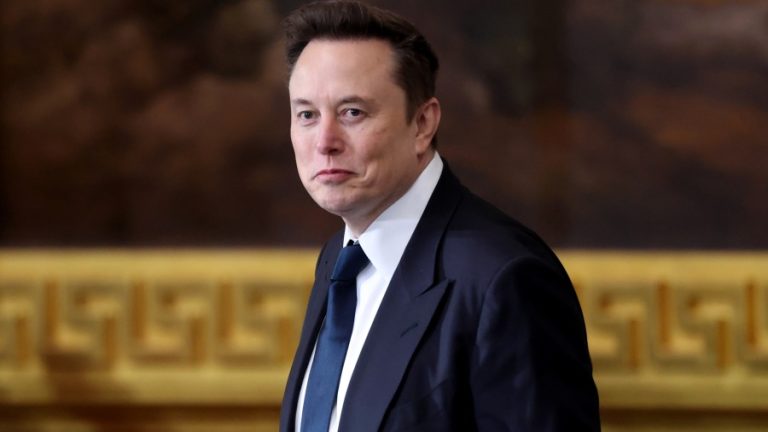
When Forbes updated its annual ranking this October, Elon Musk once again stood at the top—his wealth now exceeding $500 billion. It is a remarkable benchmark for someone who grew up in the quiet suburbs of Pretoria, South Africa, and rose to lead a portfolio of companies reshaping modern life: Tesla, SpaceX, Starlink, X, and Neuralink.
Behind the rockets, electric cars, neural implants, and AI systems lies a single question Musk is often asked: How does he keep learning fast enough to stay ahead of the industries he disrupts?
The education of a relentless self-learner
Musk’s formal schooling never fully defined him. After studying science and economics at Queen’s University in Canada, he transferred to the University of Pennsylvania and completed dual bachelor’s degrees in physics and economics. A brief stint in a Stanford Ph.D. program ended after just two days—he withdrew to launch Zip2.
Despite his academic background, Musk has repeatedly stressed one theme in public speeches, including a 2014 USC commencement address: a degree isn’t proof of ability; learning never ends.
His childhood in Pretoria had already pushed him toward this philosophy. Bullied at school and emotionally isolated at home, he escaped into books, reading up to ten hours a day. At 12, he taught himself programming and sold a homemade video game—Blastar—for $500. Science-fiction classics like The Hitchhiker’s Guide to the Galaxy and Foundation nudged him toward imagining humanity as a multi-planetary species.
Success
You are now signed up for our newsletter
Success
Check your email to complete sign up
Thinking in first principles
If there is a single thread running through Musk’s learning method, it is his reliance on first-principles thinking—breaking any problem down to its elemental truths. In a 2012 TED interview he explained it simply: “boil things down to their fundamental truths and reason up from there”.
This mindset guided SpaceX’s earliest days. While the aerospace industry saw rockets as government territory, Musk spent two years studying physics and propellant chemistry on his own. His conclusion: rockets were simply physics and engineering. With Tesla, he dove into electrochemistry; with Neuralink, neuroscience and AI; with xAI, the foundations of deep learning that later contributed to the 2025 release of Grok Imagine v0.9.
A cross-field learning engine
Musk’s approach blends five methods—shaped through Reddit AMAs, TED appearances, and countless interviews:
1. Build a knowledge tree
Understand the core concepts first—the trunk—before branching out. He once used this metaphor in a 2015 Reddit AMA. SpaceX followed the same logic, designing its rockets from physics upward rather than replicating existing models.
2. Transfer knowledge across domains
What Musk learns in one field migrates to another. SpaceX navigation algorithms informed Tesla’s Autopilot. Neuralink’s surgical techniques drew on optimization strategies from X. Tesla’s 2025 FSD v14.1 combined decision trees with computer vision—another cross-disciplinary leap.
“Innovation happens at the intersection of knowledge,” he told Joe Rogan in 2018.
3. Learn by doing—and failing
Failure is integral to his process. After early SpaceX explosions, Musk spent nights combing through telemetry. A 2020 internal speech captured his stance: failure is progress.
4. Read widely, consult deeply
Musk consumes information voraciously—from encyclopedias to fiction—and complements reading with expert conversations. Neuroscientists he met in 2017 informed Neuralink’s early concepts. “Books and conversations are shortcuts to knowledge,” he wrote in 2023.
5. Push problems to their root
His problem-solving relies on drilling down with repeated why’s. To lower Tesla’s battery costs, he immersed himself in electrochemistry and redesigned production, cutting costs by 90 percent.
These habits have propelled every company he founded or rebuilt—from Zip2 and PayPal to Tesla, SpaceX, Neuralink, and the xAI models powering Grok’s 2025 innovations.
Musk’s view of the future—Powered by AI
Musk has long been outspoken about artificial intelligence. In a 2014 MIT lecture, he called it humanity’s greatest existential risk. He predicted AGI by 2030 and launched xAI to accelerate scientific discovery while safeguarding human values.
His warnings sit alongside optimism. In a 2025 post on X, he wrote that AI would reshape education, medicine, and transportation—if managed responsibly. He also imagines a future where humans merge with AI through neural interfaces, seeing them as a potential “last line of defense.”
The learning engine runs on a punishing schedule. Musk has said he works more than 80 hours a week, structuring his days into five-minute blocks and reviewing progress nightly. His “theme days” divide the week between SpaceX, Tesla, X, and weekend work on Neuralink and The Boring Company.
He sleeps six hours, keeps meetings brief, and answers emails instantly. During crises—such as Twitter’s 2022 transition—his output accelerated. He cut 80 percent of staff and rebuilt the platform, eventually growing X to 500 million users.
Family time is woven into the structure. He shares meals with his children, reads The Hobbit with them, and uses travel time for reading and planning.
With 11 children and three marriages, Musk’s personal life is complex. Yet he tries to carve out focus for his family. Grimes once described the contrast: “He works like a storm but loves like gentle rain.” Musk unwinds by playing Elden Ring or chatting on X.
“A bit of fun helps me refocus,” he wrote in 2024.
Steering five companies at once
Musk’s leadership lies in defining direction, not micromanaging. Under his watch:
- Tesla crossed $1 trillion in market cap in 2025
- Cybertruck sales topped one million
- SpaceX put Starship into Mars orbit
- Starlink launched 10,000 satellites
- X passed 500 million users
- Neuralink helped paralyzed patients walk again
- The Boring Company advanced urban transit solutions
His companies also cross-pollinate—Tesla batteries support Starlink; X data trains Grok. Together, their combined value surpassed $1 trillion in 2025.
Musk’s impact is visible worldwide: the Model Y became 2025’s best-selling vehicle; Tesla cut millions of tons of emissions; Starlink brought remote regions online; Neuralink advanced neurological treatment; X restored a global speech platform; and SpaceX slashed the cost of reaching orbit.
His philanthropy includes donating Tesla shares to charity, funding clean-water systems for Flint, Michigan, and using SpaceX to deliver Starlink terminals to disaster zones and conflict areas. He also consistently argues that humanity must become multi-planetary.
“Technology should serve humanity, not enslave it,” he said in 2024.
The article ends with two reflections: a traditional Chinese proverb—see the virtuous and strive to emulate them—and Tony Robbins’ reminder that success leaves clues. Musk’s own words echo a similar belief: “We are made of stars, destined to shine.”