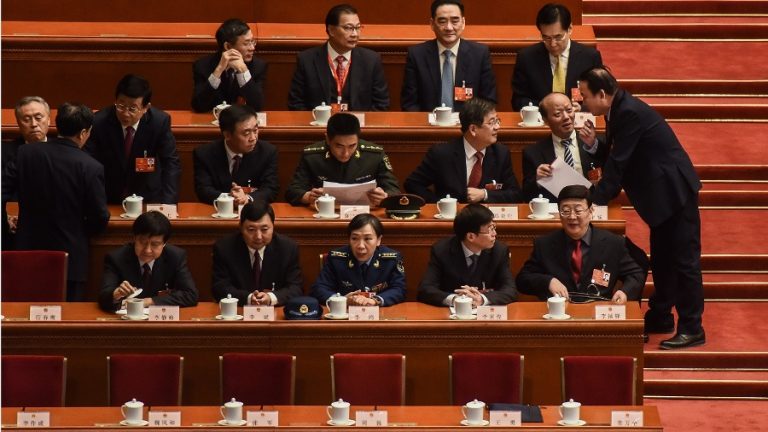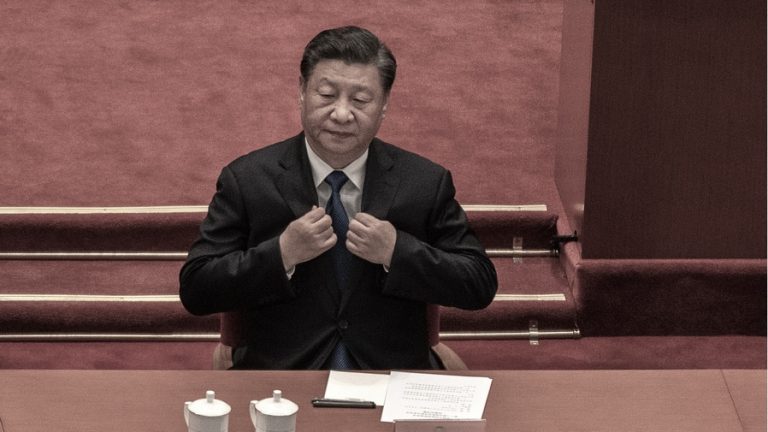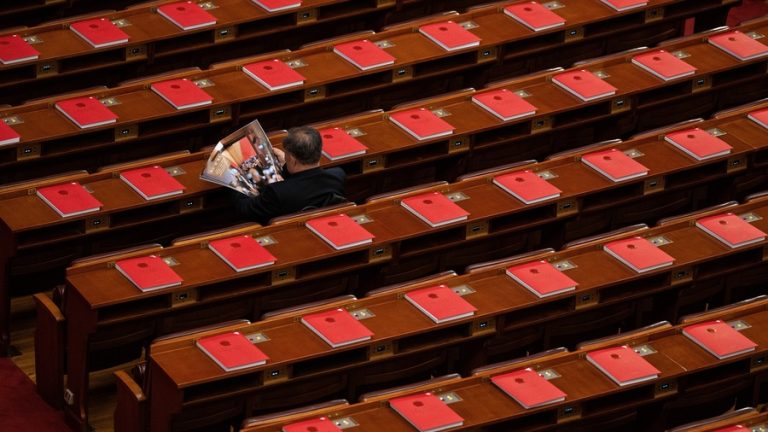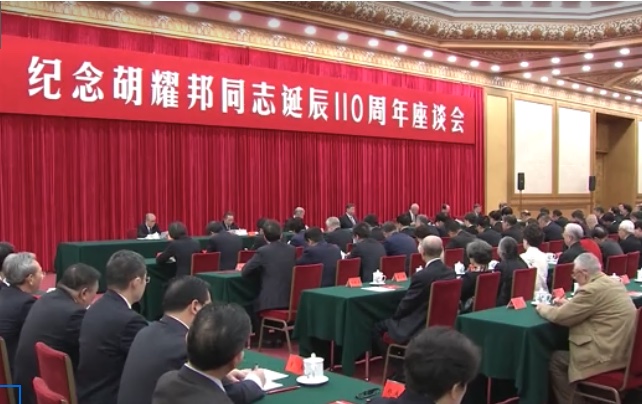
On Nov. 20, the Chinese Communist Party (CCP) held a symposium in the Great Hall of the People to commemorate the 110th anniversary of the birth pf former general secretary Hu Yaobang, who was known for his liberal views and policies and being eventually ousted by CCP hardliners in the late 1980s.
Senior officials present at the symposium included Chinese leader Xi Jinping, as well as senior Party officials Li Xi, Shi Taifeng, Li Ganjie, Li Shulei, Li Hongzhong, Chen Wenqing, Liu Jingguo, Wang Xiaohong, and Zhang Shengmin, with Cai Qi presiding.
The event drew attention. While Hu is remembered as an important reformer who deviated from the CCP’s totalitarian politics, Xi has presided over increased repression, mass surveillance, and curtailing of freedoms as he works to bolster the power of the Communist Party.
Xi delivered a speech reviewing Hu Yaobang’s “glorious” lifetime and praised him as “a loyal communist fighter who stood the test of time, a great proletarian revolutionary and statesman, and an outstanding political worker of our military.”
Xi highlighted five qualities of Hu that Party members should emulate: steadfast ideals and loyalty to the CCP; pursuit of truth and contributions to “bringing order out of chaos” (撥亂反正); advocacy of reform and opening, including the grit to “chew tough bones”; deep affection for the people; and emphasis on Party conduct and integrity. Xi urged cadres to implement the Eight-point Regulations and maintain a “clean and upright character.” Concluding, he invoked Hu’s metaphor of “climbing Mount Tai” to rally the Party to unite around the center and “forge ahead with determination.”
Remembering a reformer
Success
You are now signed up for our newsletter
Success
Check your email to complete sign up
Footage from state broadcaster CCTV showed Hu Yaobang’s son Hu Deping seated toward the back with no close-up, and also captured retired PLA general Liu Yuan and Xi’s brother Xi Yuanping at the event.
Hu Yaobang was CCP chairman and then general secretary from 1981 to 1987, though subordinate to Deng Xiaoping. He was widely respected for leading the overturning of wrongful convictions and political persecutions during the era of founding Chinese communist leader Mao Zedong.
Notable achievements included the 1978 “Truth Criterion Debate,” rehabilitation of around 3 million cadres, removal of class labels for tens of millions, and rectifying the cases of the “Hu Feng counter-revolutionary clique,” “rightists,” and countless Cultural Revolution victims. His reforms earned him popularity among cadres and citizens. Conservative elders like Chen Yun and Deng Liqun opposed his liberal tendencies and used his handling of the 1986 student protests to remove him in 1987. His death in 1989 indirectly became a catalyst for the Tiananmen protests.
Hu became politically sensitive in the Jiang Zemin years, given that Jiang partially owed his political rise as CCP chief to his eagerness in suppressing the 1989 protests while Party secretary of Shanghai. The CCP resumed commemorations for Hu in 2005, with a more extensive one in 2015 under Xi, which included the publication of “Selected Works of Hu Yaobang” and a documentary series.
Why the commemoration?
SinoInsider, a political risk consultancy, notes that Xi Jinping’s father Xi Zhongxun and Hu Yaobang were close allies. Hu rehabilitated Xi after the Cultural Revolution, and Xi later assisted him in Party affairs. Xi Zhongxun was the only Politburo member to defend Hu in 1987, when the rest of the Party elite went against him for his reformist positions.
Following the death of Hu in 1989, the elder Xi had written to the Party leadership that mishandling Hu’s funeral could lead to public unrest, given the massive respect the late general secretary had commanded for his policies of tolerance and openness.
Xi Jinping reportedly met Hu’s family in 2009 and 2012, and Hu Deping and Hu Dehua initially expressed optimism about Xi’s reformist potential. Xi’s later centralization of power and the 2016 closure of Yanhuang Chunqiu disappointed reform-minded princelings.
According to SinoInsider, Xi appears to use the commemoration to consolidate “quan wei,” borrow Hu’s legacy to legitimize Marxist-Leninist governance, justify anti-corruption efforts, and create the perception that he has not abandoned reform despite the authoritarian turn the CCP has taken since Xi took office in 2012.
Xi also seeks to rally the Party to tackle economic challenges by invoking Hu’s spirit of “standing at the forefront of the tide” and being “bold enough to face all kinds of difficulties and challenges.” The tribute may also be intended as a gesture toward princelings amid resentment over Xi’s purges in the financial sector that have shaken elite interests. The historic Xi–Hu family ties give the event symbolic weight at a time of elite discontent towards the failures of Xi’s leadership.