By Hezi
Some stories change you the moment you hear them. This is one of those stories—an account widely shared online that offers a raw, unfiltered glimpse of life, death, and sacrifice in the animal world. It left me shaken, and after witnessing it, I have never again wished to harm any living creature.
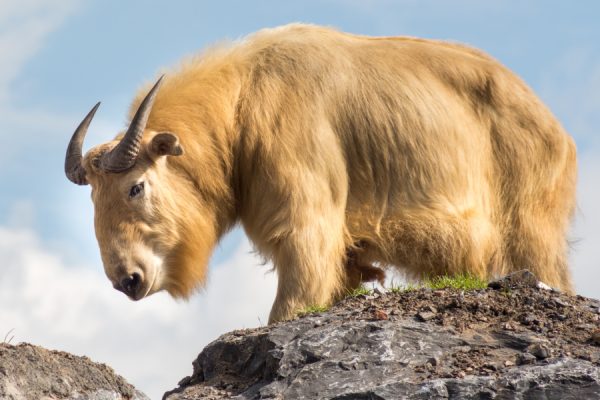
It happened during a hunt for bharal—blue sheep that resemble domestic goats. They’re agile jumpers, gentle by nature, and weighing around 30 kilograms each, they’re considered an easy target for hunters.
Our hunting team had surrounded more than sixty bharal, driving them toward the sheer cliffside known as Duanming Rock on Mount Bulang. The plan was grim: force them over the edge to avoid wasting bullets.
After nearly half an hour of tense standoff, an old male bharal let out a cry. Instantly, the herd was divided into two groups: the older animals and the younger ones. I saw it clearly but couldn’t make sense of the sudden separation.
Success
You are now signed up for our newsletter
Success
Check your email to complete sign up
Then, from the older group, a male stepped forward. His neck fur hung long against his chest, deep wrinkles lined his face, and his horns were chipped and broken. He was unmistakably old. He walked toward the younger group and bleated once. A half-grown bharal stepped out to join him.
Together, the old one and the young one approached the cliff’s edge, then stepped back a few paces. Without warning, the younger bharal sprinted forward, leaping across the abyss. Almost at the same moment, the old one charged after it. The young bharal’s takeoff angle was slightly higher; the old one’s slightly lower—one ahead, one behind.
There was no way either could reach the opposite cliff. Not unless they could fly.
Sure enough, the young bharal managed only a few meters before gravity took hold and its body began to fall, tracing a terrible downward arc. It had seconds before crashing into the ravine below.
Then something extraordinary happened.
With uncanny timing and precision, the old bharal positioned himself directly beneath the falling youngster at the exact moment it descended from its highest point. It was like watching two spacecraft docking in midair. The young bharal’s hooves struck the old one’s back with force—using him as a living springboard to push upward and leap again.
The old bharal, like a rocket booster that had burned through its fuel, separated and dropped. But unlike a spent booster, he fell in a straight, brutal plunge—his life ending the moment he was kicked downward.
The young bharal’s second leap wasn’t high, but it was enough. It cleared the last two meters and landed lightly on the opposite cliff, bleating triumphantly before disappearing behind a rock.
The trial jump had worked.
One pair after another followed, arcs of motion crossing the ravine like streaks of light. Every time, a young bharal survived—and every time, an older one fell to its death.
I never imagined that in the face of annihilation, animals could devise a way for half the herd to sacrifice themselves so the other half could live. And I never imagined the old bharal walking so calmly toward death, offering their bodies willingly to open a path for the next generation.
The sight overwhelmed me. From that moment on, I refused to kill.
This short story is devastating in its simplicity. It reveals a level of selflessness we rarely associate with animals—an instinctive, unspoken loyalty that surpasses much of what humans claim as “civilization.”
Humans often call themselves superior, yet we’ve inflicted countless wounds on nature: killing for pleasure, for taste, for sport. By comparison, these animals appeared pure—almost painfully so.
If a story like this doesn’t move a person, that is the real tragedy. After witnessing such a scene, who could still hunt? Who could still casually take a life?