By Jin tao pai’an
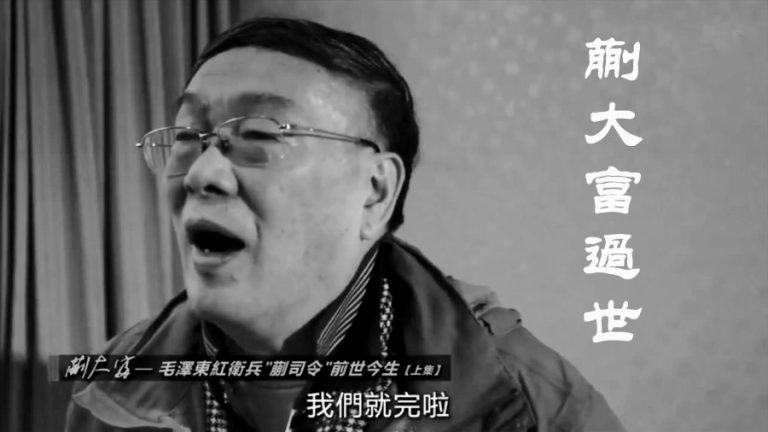
Kuai Dafu—Tsinghua University alumnus and one of the Cultural Revolution’s most feared Red Guard commanders—has died.
Known nationwide as “Commander Kuai,” a title personally granted by Mao Zedong, he was once a figure capable of shaking provincial governors, ministry leaders, and military district commanders. Mao elevated him to the top of the era’s radical left, enabling his rise as China’s “No. 1 rebel” during the Cultural Revolution’s violent peak.
Kuai helped launch the first nationwide call to “strike down Liu Shaoqi,” directed mass assaults on so-called “capitalist-roaders,” and championed the idea that fabricating rumors was “glorious for the revolution.” His campaigns left five people dead and injured more than 700 others.
Yet in his final years—despite having over 3,000 WeChat contacts—no one checked on him.
Success
You are now signed up for our newsletter
Success
Check your email to complete sign up
“Rebellion is justified” was the defining slogan of his youth. Kuai Dafu helped script the violence but never acknowledged his role.
This was the same young Red Guard who once cried in Mao’s arms, begging for his life. Now he has died quietly of illness.
With his passing, four of the Cultural Revolution’s five major Red Guard leaders—Nie Yuanzi, Tan Houlan, Wang Dabing, and Kuai Dafu—are gone. Only Han Aijing remains alive.
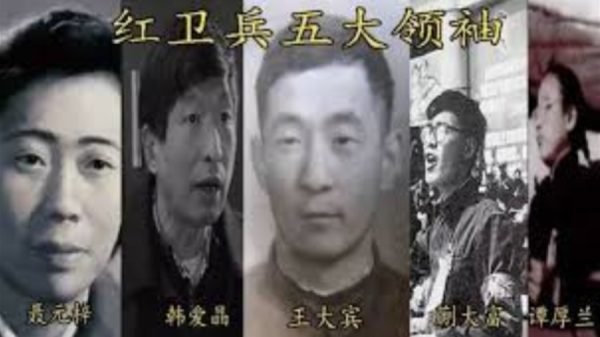
A leader whose words once moved a nation
The Cultural Revolution generation is fading, but the memory of that era’s brutality remains embedded in the CCP’s political DNA—especially in figures like Kuai Dafu, who witnessed the horrors in Qingtongxia, Ningxia.
If he left behind any “legacy,” it was his impact on political culture. His sharp, aggressive writing style fueled nationwide upheaval. His big-character posters were copied verbatim and treated as semi-official directives. His influence helped normalize the propaganda hierarchy summarized as: “small newspapers copy big newspapers; big newspapers copy Liang Xiao.”
If Mao’s words carried “the weight of ten thousand,” Kuai’s pronouncements—during the movement’s height—were powerful enough to mobilize the country. Traces of his rhetoric can still be found in state propaganda today.
A grassroots youth thrust into daily interactions with senior Party leaders, Kuai became a small legend inside the machinery of the Cultural Revolution—neither a courtier nor an official, yet able to wield immense power.
In September 1966, when Mao reviewed Red Guards in Tiananmen Square, he summoned Kuai and asked: “Commander Kuai, do you want to stand on my left or my right?”
With Lin Biao on one side and Zhou Enlai on the other, Kuai positioned himself directly behind Mao—a small but telling act of instinctive political calculation.
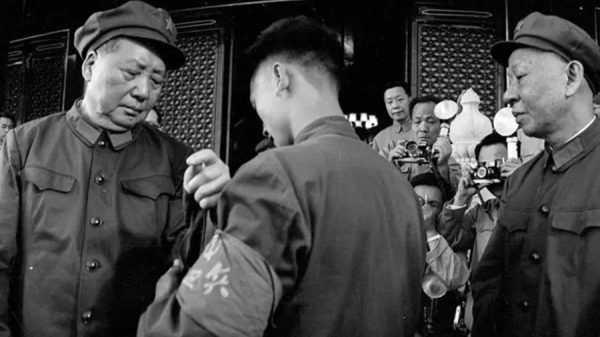
How Kuai Dafu framed his own past
Party records show that Kuai consistently portrayed himself as a “victim of the era,” not a perpetrator.
During his 1983 trial, he challenged the judge: “You’re ten years older than I am. In 1966, did you know Chairman Mao was wrong? Did you know Lin Biao or Jiang Qing were bad? Did you ever shout ‘Down with Liu Shaoqi’? If you didn’t know, why am I a counterrevolutionary?”
The remark still resonates with those who refuse to confront the nature of the regime they served.
Kuai Dafu was detained on Nov. 1, 1970, arrested in April 1978, and released in October 1987.
He spent nearly a decade in Qincheng Prison and at a labor farm in Qinghai. Even after his release, he showed no genuine remorse.
He later said, “We followed the Party in revolution, and in the end we were jailed by the Party,” adding that compared with those who died, “our suffering is nothing.”
His worldview fused evolutionism, dialectical materialism, and atheism—ideologies that shaped him into a loyal enforcer of Party violence. Official evaluations mirrored the CCP’s standard political language, but his actions aligned with the Party’s longstanding patterns of destruction.
Labeled an “ultra-leftist outside the Lin Biao–Jiang Qing group,” he faced charges including counterrevolutionary propaganda, illegal detention, looting, and disrupting social order—offenses that today mirror crimes like “inciting subversion” and “picking quarrels and provoking trouble.”
Yet every one of those acts had been carried out under Mao’s direct encouragement. Without Mao’s protection, Kuai Dafu would never have risen to prominence.
A man who never reflected
Kuai was unusual among former Red Guard leaders because he openly recounted his past. In his memoir Commander Kuai: The Past and Present of Mao’s Red Guard, he described—with lingering intoxication—the power he once held: the ability to determine who lived and who died.
He never wrote a genuine confession. Even after Tsinghua University excluded him from an anniversary celebration, he appeared uninvited—still clinging to the aura of the past and to Mao.
He never confronted the suffering created by communism or the millions who were harmed. Without such reflection, redemption was impossible.
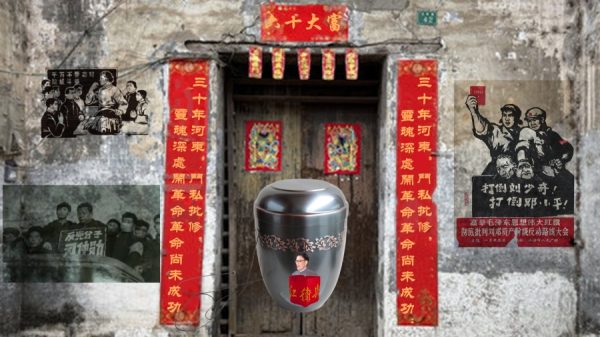
Sixty years of Kuai Dafu
After his release, he reportedly spent 15 years in Nanhai and accumulated wealth. His recipe for success, he said, included diligence, intelligence, luck—and, finally, “good moral conduct.”
State media continued shaping his narrative until the end.
Sima Qian once wrote: “Death comes to all—some heavier than Mount Tai, others lighter than a feather.”
Where does Kuai Dafu’s fall on that scale?
The regime he once served remains, and its tragedies continue. In death, Xi Jinping’s former classmate forces the public once again to confront that history—offering a silent warning to those still serving the system. Death comes to all, the old historian wrote, but reincarnation is real.
It is never too late to awaken, and to safeguard one’s future.