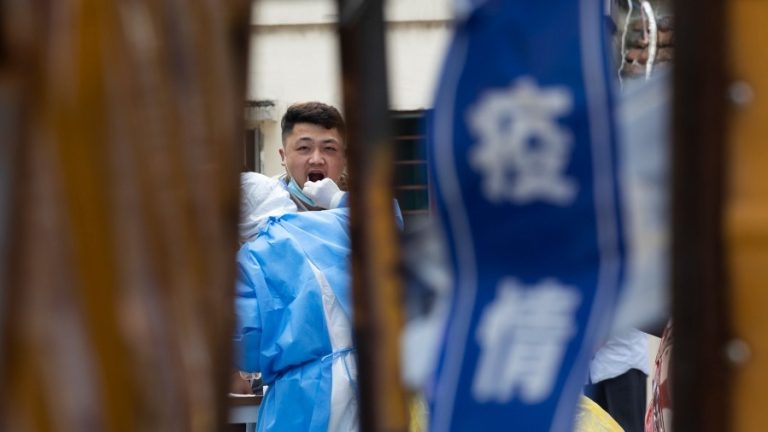
China’s Center for Disease Control and Prevention, the national epidemic agency that answers to the Communist Party rather than to any independent public health authority, reported nearly 79,000 new confirmed domestic COVID-19 cases for June, including 130 severe cases and one death. The total is 3.6 times May’s count. All 3,741 virus samples sequenced during the month were Omicron subvariants.
At sentinel hospitals tracking flu-like illness, the share of patients testing positive for COVID-19 climbed across four consecutive weeks in June, from 2.9 percent to 4.1 percent, then 5.3 percent, then 6.4 percent. A separate national respiratory disease surveillance report published July 9 put COVID-19 positivity at 9.6 percent among flu-like patients, second only to influenza at 11.6 percent and just ahead of enterovirus at 9.1 percent.
May saw 21,861 new confirmed cases, with 35 severe cases and one death; April recorded 23,477 cases, with 64 severe cases and four deaths. Cases surged in June while severe cases and deaths stayed comparatively flat, a divergence that has fed public doubt about whether the figures capture the outbreak’s true extent. Official Chinese pandemic statistics have long faced accusations of undercounting and manipulation, and the reported numbers depend on hospitals that choose to test for and report the virus, with no independent verification.
Guangdong and Hong Kong show the earliest signs of the wave
Several bloggers in Guangdong have posted videos on Chinese social media describing painful symptoms after infection, and residents have filled the comment sections with accounts of a fast-moving outbreak. One widely echoed comment called the current wave of flu and COVID-19 in Guangzhou unusually severe and described it as the starting point of this round of illness. Others reported being summoned by their local community health office for testing, or bracing for another round of vaccinations.
A Douyin blogger who tracks COVID-19 trends under the handle Xinghua Dabai said in a June 15 video that the virus was showing renewed signs of building toward a new peak, though the outbreak had not yet reached a nationwide surge. The blogger suggested Guangdong, given its proximity to Hong Kong and Macau, could be the first region to see cases spike.
Success
You are now signed up for our newsletter
Success
Check your email to complete sign up
The chairman of the Chinese University of Hong Kong’s Department of Medicine and Therapeutics and respiratory specialist Professor David Hui Shu-cheong warned that Hong Kong was seeing rising COVID-19 cases and increased hospital admissions. He cautioned that the city could face a summer COVID-19 wave coinciding with heightened influenza activity, urging vigilance and vaccination for high-risk groups.
On July 10, Guangdong’s provincial disease control center issued a health advisory listing eight diseases residents should watch for in July: dengue fever, chikungunya, influenza, COVID-19, hand-foot-mouth disease and herpangina, malaria, monkeypox, and Ebola.
RELATED:
Online reaction mixes resignation with suspicion of official motives
Commenters on Weibo and X pushed back on the idea that the June figures represent anything new, arguing that COVID-19 has circulated continuously in China since the end of strict pandemic controls and has simply been passed off as a common cold, sometimes folded into seasonal flu diagnoses. Several urged people not to delay treatment if they develop cold-like symptoms.
Others questioned how the government could produce case counts at all when, in their view, local hospitals no longer test for or report COVID-19 infections. Some tied the report’s timing to the political calendar, floating the idea that authorities might be laying groundwork for renewed restrictions ahead of the Communist Party’s 21st National Congress. One comment charged that the Party has treated COVID-19 as a tool of political control and social management from the outset, using the pandemic narrative to justify the mass lockdowns of the “zero-COVID” era after the fact.