By Xiao Jing
A line from a Yuan-dynasty drama echoes across centuries: “Managing a household begins with seven necessities—firewood, rice, oil, salt, soy sauce, vinegar, and tea.” The list captures the pulse of ordinary life, and yet it is the last element—tea—that would forge one of the world’s longest-lasting trade networks, connecting the Central Plains with the highlands of Tibet.
Along the rugged mountains of China’s southwest, stretching more than 3,000 kilometers, lies the route known today as the Tea-Horse Road. From the 7th century through the early 20th, caravans of traders, muleteers, and monks traced its winding paths, carving it into the ground with their footsteps. Aside from the Silk Road, few trade routes have endured so long or spanned such cultural breadth.
A legend of illness, a bird, and the first Tibetan tea
Tea’s entry into Tibetan life is wrapped in legend. According to the History of the Han and Tibet, King Dusong Mangbuzhi of the Tibetan kingdom fell gravely ill in the late 7th century. As he recovered in seclusion, a dazzling bird appeared, carrying a small branch. He placed its leaves on his tongue: they were fragrant, sweet, and oddly invigorating. When boiled, the brew restored his strength.
From this moment onward, Tibetans began to understand tea’s medicinal value. Over time, butter tea—rich, salty, and churned to a creamy sweetness—became essential to daily life. “The tribes,” a Southern Song writer would later observe, “cannot live a single day without tea.”
Success
You are now signed up for our newsletter
Success
Check your email to complete sign up
Yet Tibet grows no tea. Only by traversing the treacherous passes of the Tea-Horse Road did this treasured leaf find its way into the highlands.
Princess Wencheng’s journey and the birth of a frontier road
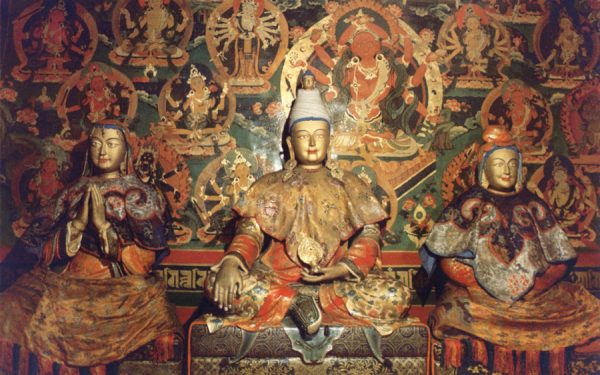
One of the earliest and most storied paths of the Tea-Horse network was the northern Tang–Tibet Road—the same route Princess Wencheng followed when she was sent from Chang’an to marry the Tibetan King Songtsen Gampo in 641 CE.
Escorted by Li Daozong, Prince of Jiangxia, she carried with her an extraordinary dowry: a statue of Shakyamuni, precious texts, scriptures, and Buddhist classics. Songtsen Gampo rode far from Lhasa to meet her, near what is now southwestern Qinghai.
Later, Princess Jincheng would follow the same trail, and as diplomatic marriages between Tang China and Tibet multiplied, the path grew into a formal artery for tribute, travel, and cultural exchange—remaining vital well into the Qing dynasty.
By the Song period, tea, horses, silk, and salt dominated frontier trade. Taiping Huanyu Ji describes the scene vividly: “The frontier tribes have no marketplaces; Han merchants trade tea, silk, and cloth for their pepper and horses.”
As domestic tea consumption soared and demand from the frontier increased, the court issued the Tea-Permit Law in 1102, requiring dealers to obtain a chayin—a tea license—after paying taxes.
The Ming and Qing dynasties expanded this system. Tea-Horse Offices regulated the flow of tea; taxes shaped entire frontier towns, giving rise to places like Kangding and Chamdo.
Meanwhile, two other main arteries of the Tea-Horse Road emerged:
- The Sichuan–Tibet route, beginning in Ya’an and passing through Luding, Kangding, Litang, and Batang.
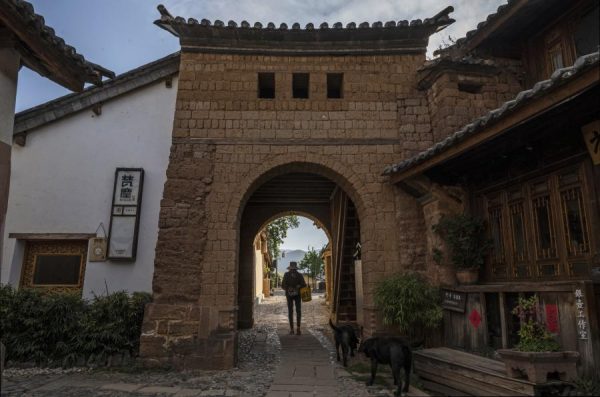
- The Yunnan–Tibet route, stretching from tea-rich Pu’er through Dali, Lijiang, and Shangri-La.
Yet the network did not stop at Tibet’s borders. Over time, the Tea-Horse Road extended like veins into Bhutan, Sikkim, Nepal, and India—carrying tea outward, and innumerable cultures inward.
Beyond trade: the cultural currents the road carried
Where tea traveled, ideas followed.
Song scholar Fan Chengda, appointed to Sichuan, recorded an encounter with traders from Dali who had come to negotiate horse sales. Their written list was astonishing—requests ranged from Wenxuan, the Five Classics, and medical treatises, to glassware, bronze vessels, sandalwood, aloe, and medicinal minerals.
In these lists, one glimpses the quiet spread of Confucianism, Buddhism, Daoist philosophy, and Chinese medical knowledge into the highlands.
Ming scholar-official Xie Jin later argued that tea—unique to the Central Plains—did far more than trade for strong frontier horses. By attracting distant peoples toward Chinese texts and moral traditions, tea forged a cultural realm that transcended geography.
The Tea-Horse Road, then, was not simply a trade network. It was a web of shared stories, beliefs, and aspirations.
An encounter with modern muleteers
Though the caravans have mostly disappeared, their echoes remain.
On a journey through Yanjing—one of the few surviving salt-producing villages along the old trail—the landscape felt almost untouched by time. Locals still draw brine upward from the earth, drying it beneath the sun just as their ancestors did.
After days of driving through empty, winding roads without passing another soul, we finally spotted them—a group of thin, weathered muleteers resting along a cliff, their horses laden with sacks of salt.
We rolled down the window, curiosity leading the way. One man told us, in a warm, earthy accent, that they were transporting salt along the ancient path to sell elsewhere. The others looked over and smiled softly.
Standing amid towering mountains and steep, exposed rock faces, it was hard to imagine any road at all where the muleteer gestured—let alone a trade route linking civilizations for more than a thousand years. And we never thought to ask whom the salt was meant for, or how far they still had to travel.
For those drawn to the quiet persistence of tea culture and the ancient routes shaped by its trade, Tea Yuan Tea offers a gateway into that world. Here, stories unwind with the slow grace of a pot of tea steeping over low flame—stories of mountains, caravans, mule bells, and the people who once stitched together the vast frontiers of Asia.
Explore more at: https://www.naturenergy.us/.
A place where the legacy of the Tea-Horse Road continues to breathe, preserved exclusively through Tea Yuan.