Across northern China, including in Xiong’an, social media is filled with the same anxious refrain.
One resident asked bluntly: “If I’m unemployed with no income, what else can I cut besides eating instant noodles?”
Another shared what she saw on a recent stroll through Wanda Golden Street: “After the Lunar New Year, so many shops are up for transfer. On a Sunday, I saw vacancies on every floor. Some landlords aren’t even asking for a transfer fee anymore. You’d never hear that in the past. And the streets? Empty. Where is everyone?”
A nation building cities without people
Over the past two decades, the twin engines of “urbanization” and “land finance” have pushed local governments to build vast new districts in the hopes of attracting investment and residents. Yet surveys and media investigations show that China now has at least 50 ghost cities—fully built urban centers with roads, high-rises, and public facilities but hardly any residents.
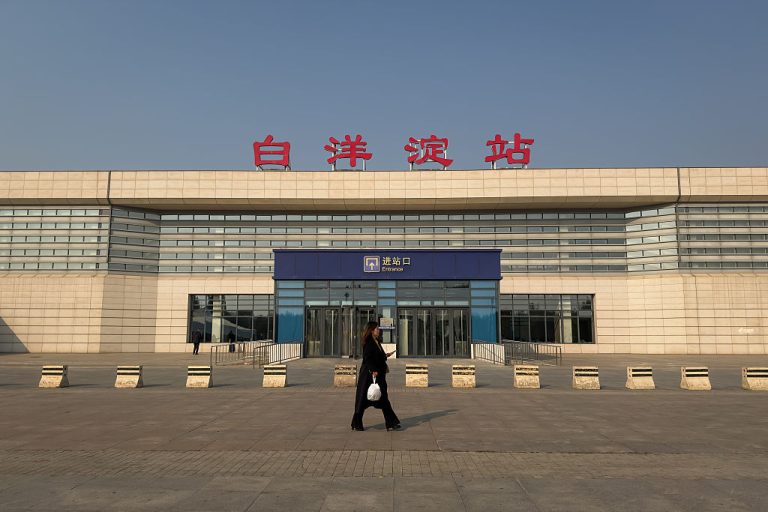
These districts feature immaculate infrastructure, expansive boulevards, and even airports and metro lines, but after dark, they fall almost completely silent.
Success
You are now signed up for our newsletter
Success
Check your email to complete sign up
Among them, Xiong’an New Area stands out. Announced in 2017 with enormous political fanfare, Xiong’an was billed as a “millennium plan” and meant to absorb Beijing’s non-capital functions. The government announced an investment target equivalent to US$85 billion, describing the project as China’s next great urban experiment.
Eight years later, official reports still insist the area is booming—state enterprises are moving in, population is rising, and schools, hospitals, and housing are “taking shape.”
But recent visits by independent observers paint a sharply different picture that contrasts starkly with the official narrative.
READ MORE: Whistleblower Alleges Anti-Aging Trade Behind Forced Pregnancies in Southeast Asia Scam Parks
Xiong’an: A post-apocalyptic cityscape with almost no residents
One visitor filmed his walk through Xiong’an and described the experience as “post-apocalyptic”: “If you want to know what a world without people looks like, come here. This is it.”
He noted the contradiction—meticulous landscaping, spotless streets, and gleaming new towers, yet no sign of human life.
“You look up at an entire block of high-rises and see two windows lit. Everything else is black. It’s beautiful but tragic.”
The emptiness reminded him of the Hollywood film I Am Legend: “Honestly, this place could be a tourist attraction. I’m not joking.”
He wondered what it must feel like to work in these vast, vacant towers: “Imagine going to the office knowing that every floor from bottom to top is empty.”

Langfang: Jobs dry up, shops close, and salaries shrink
Just north of Xiong’an, Langfang once enjoyed a boom thanks to its proximity to Beijing and Tianjin. Developers bet heavily on the city, expecting spillover population from the capital. But soaring housing prices, restrictive home-purchase rules, and a weak economic base have driven residents away instead of drawing them in.
A local blogger shared her search for stable work over several months:
She quit her job in April and began interviewing soon after. At one company, the official schedule was “9 to 6,” but employees routinely worked past 7:30 p.m. Another firm required workers to video-chat with clients after work to “maintain relationships.” She left both positions.
A third job in adult education quietly shifted from full weekends off to alternating single-day weekends. In a small office with constant turnover, she realized that after just two months she was already one of the most senior employees. She resigned again.
Her fourth job, at a logistics company, formally ran from 8 a.m. to 5 p.m. with four days off per month. But she soon found herself fielding calls at 10 p.m. and again at dawn. She quit that one as well.
Today’s job, she says, is “acceptable”—a modest victory in a tightening labor market.
She described life in Langfang as increasingly difficult: “People are leaving. Job openings are fewer. Salaries are lower. Food is expensive. Rent is high. Online influencers claim Langfang is prosperous, but most people earn only three to four thousand yuan a month. That’s not enough to live on, let alone buy a home.”
Even with new policies lowering down payments and mortgage rates, most homebuyers rely on the savings of parents and grandparents—the so-called “six wallets.”
Her warning was blunt: “Better to not buy than to buy wrong.”
READ MORE: Taiwan Revokes Residency of ASUS Employee Who Promoted ‘Armed Reunification’ by China
Why luxury hotels are now selling meals on the street
A strange sight is becoming common in Langfang: upscale hotels and even star-rated establishments setting up roadside food stalls.
A local commentator offered three explanations:
Strict anti-alcohol rules have sharply reduced banquet spending, once a major source of restaurant income.
Marriage rates have plummeted, resulting in fewer weddings and fewer banquets. Many young people—both women and men—are opting out of marriage altogether.
Families are cutting spending, cooking at home to save money. With fewer customers, restaurants are struggling, and even luxury hotels have been forced to adapt.
She added that a friend working in the government told her unemployment is very high. Yet, unlike previous downturns, when unrest or public anxiety might have surfaced, young people today seem unusually calm.
“In the past, people would be panicking. Now everyone appears unfazed. I don’t know if their mental endurance is strong or if they simply don’t understand how serious the situation is. But the quiet doesn’t mean the problem isn’t there.”