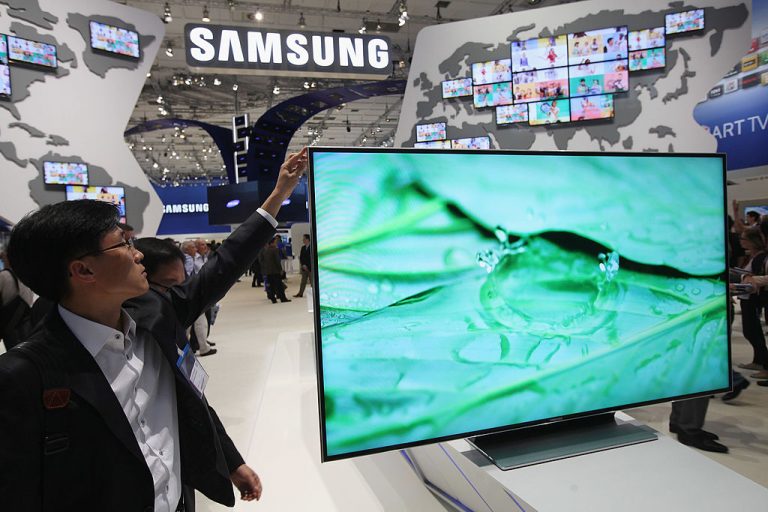
Chinese-made smart televisions are once again in hot water over privacy and data collection practices after a cybersecurity investigation found that some devices may be gathering information from users’ home networks without their knowledge or consent.
In a report titled “Your Chinese-Made TV Could Be Spying on You,” U.S. media outlet AOL cited research by cybersecurity firm Bitdefender indicating that certain Chinese-manufactured smart TVs may scan devices connected to the same Wi-Fi network and collect related data.
According to the report, some smart televisions do more than track viewing habits. Researchers found that certain models may search for smartphones, computers, gaming consoles, and other smart home devices connected to the same network. In some cases, the devices reportedly conduct periodic scans of the home network environment.
Smart TVs used to collect data
Xing Jian, an internet technology expert familiar with network security, said the data collection capabilities of modern smart televisions extend beyond the norm of just keeping tabs. “If a Chinese-made smart TV remote has a microphone, it can collect your voice. It can also analyze and profile you based on your personal preferences, such as the channels and content you watch,” said Xing.
The AOL report noted that many smart televisions are equipped with so-called, Automatic Content Recognition (ACR) technology, voice assistants, and advertising tracking systems. Viewing records, voice commands, and user behavior may all become sources of data collection. “In addition, if you use Chinese apps, they can read your information and store it on servers, potentially leading to data leaks. Apps can also automatically obtain your personal information and private data,” added Xing.
Success
You are now signed up for our newsletter
Success
Check your email to complete sign up
The U.S. Federal Bureau of Investigation has previously warned that internet-connected smart devices can create privacy and cybersecurity risks. Security experts generally recommend disabling voice features, limiting app permissions, reviewing privacy settings, and separating smart devices from primary home networks whenever possible.
Concerns over broader monitoring
Liu, an internet technology scholar from Hunan, said governments have intensified efforts to collect information on citizens in recent years. “They collect residents’ information through smart TVs, mobile apps, fitness apps, and camera apps, then use big data analytics to identify patterns in your activities, including your preferences and even political leanings, before categorizing you,” he said.
The issue first drew widespread attention in 2021 when a Chinese internet user posted on the technology forum V2EX under the title “My Television Is Monitoring Every Device Connected to My Network.” The user claimed that a Chinese-made Android television in his home contained a built-in service called “Gozen Data Service” that scanned connected devices every 10 minutes, including nearby network environments.
According to the post, the user initially investigated the device after noticing slow screen transmission speeds. Packet analysis allegedly revealed that the service uploaded hostnames, MAC addresses, IP addresses, and network latency information while also scanning nearby Wi-Fi networks and transmitting the collected data to domains associated with the company.
The Gozen data controversy
Liu argued that such technologies can become powerful tools in authoritarian systems. “Authoritarian regimes are very interested in collecting information about their citizens. If this type of monitoring behavior extends overseas, it is clearly offensive to foreign governments and can be viewed as a form of infringement,” he said.
Previous reporting identified Gozen Data as a product of Beijing-based Gozen Data Technology Co. Public records indicate that by the end of 2018, the company’s data coverage extended to approximately 103 million smart TV devices, representing more than half of China’s connected television market at the time.
Company materials and industry reports indicate that Gozen Data partnered with major television manufacturers including TCL, Skyworth, Changhong, Konka, Toshiba, and others. Through software development tools embedded at the system level, the company reportedly gained access to smart TV usage data.
As Chinese television brands continue expanding overseas, privacy concerns are increasingly becoming an international issue rather than a domestic Chinese one. Chinese media reported that mainland China’s television exports reached approximately 107 million units in 2025, with brands such as TCL, Hisense, Xiaomi, and Skyworth gaining significant market share across North America, Europe, Southeast Asia, and emerging markets.
The renewed attention from U.S. media highlights growing concerns about whether data collection practices embedded in smart devices could pose privacy and security risks far beyond China’s borders. “If this kind of monitoring enters households overseas, it will become a problem for many countries,” Liu said.