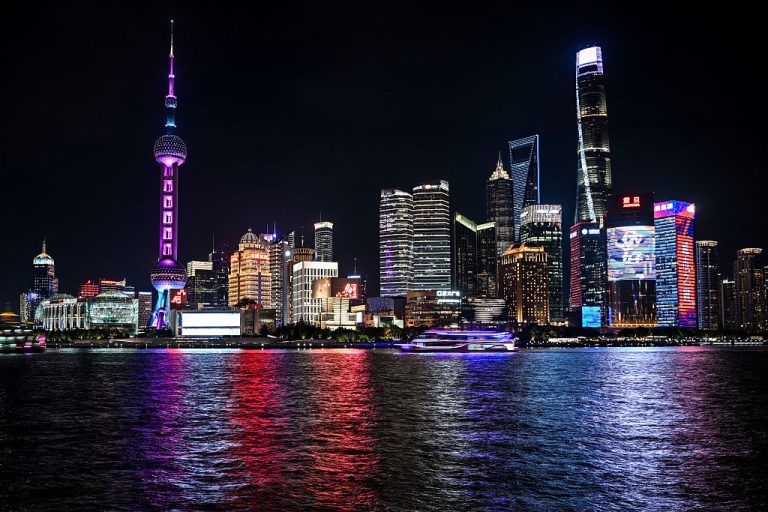
Shanghai was once defined by its density—crowded malls, noisy markets, and weekend foot traffic so heavy that people moved shoulder-to-shoulder. But across the city today, residents are noticing something unsettling: the crowds are gone.
“It feels like there are far fewer people than before,” one resident said, looking out over a mall that once overwhelmed him with foot traffic. Even vegetable markets—typically filled with elderly shoppers—are visibly thinning out.
Delivery riders report the same trend. Orders have dropped sharply, and some wonder whether people have simply returned to their hometowns. From Shanghai to Beijing, north to south, the same emptiness is being observed. So the question hangs in the air: Where did everyone go?
A fruit shop owner, standing inside a deserted store, put it even more bluntly:
“In a city of 24.8 million, the streets are empty, the malls are empty, the scenic spots are empty. The restaurants, the barbershops, even the markets—they’re all empty. My shop is even emptier. Where are you? At home? Even at home you have to eat. So where did you go?”
Success
You are now signed up for our newsletter
Success
Check your email to complete sign up
For workers in domestic services, the shift has been just as jarring. In seven or eight years of housekeeping, one woman said she had never seen a December like this. Her company once had thirty or forty people seeking work at this time of year. Now they can barely gather twenty.
“Shanghai feels like a ghost city,” she said.
Shanghai, long promoted as China’s economic showcase, is now watching its shine fade. Residents are leaving. Streets lie quiet. And businesses—once the city’s heartbeat—are beginning to flicker out.
Rapid store turnover and widespread closures
Walking along several commercial streets, one content creator began counting how many shops had recently closed. Some of the storefronts had held grand openings just weeks earlier—complete with music and dancing—yet now they were marked with “For Rent” signs. Entire stretches of the street had gone dark.
One ground-floor restaurant space had cycled through four different concepts in a single year—barbecue, clay-pot stews, stir-fry dishes, and finally a farmhouse-style restaurant.
“It changes every month,” he said. “It’s terrifying.”
The turnover wasn’t limited to restaurants. A barbershop where he had purchased a membership card changed owners multiple times within a year—first a young man, then an older barber, and then yet another successor. Few examples captured the instability of physical retail more clearly than this.
Across the street, newly installed signs lasted only a short time before being replaced by fresh “For Rent” notices. On one 200- to 300-meter stretch, seven or eight supermarkets had opened simultaneously—an arrangement that made no economic sense and highlighted the desperation of landlords and entrepreneurs alike.
It raises an unavoidable question: If a shop survives only a month or two before closing, how much are owners losing? And in today’s climate of intense competition and dwindling customers, how long can anyone hold on?
The decline of Shanghai’s once-bustling bargain markets
Qipu Road, once one of Shanghai’s busiest bargain-shopping districts, used to draw crowds of people hunting for inexpensive clothing. On a recent Saturday in 2025, a blogger returned to the area. Before she even reached the basement level where shoes were sold, a musty smell drifted up the stairs.
The shops still offered clothing, but the energy that had defined the place was gone.
She remembered when the corridors were packed with trendy items priced between RMB 10 and RMB 40 (USD 1.40–5.60), and shoppers had to squeeze past one another just to move down the aisles. She used to spend entire days there—and once even lost her wallet, along with RMB 700 (USD 98) in cash and her ID.
Now, she said, “it’s all just memories.”
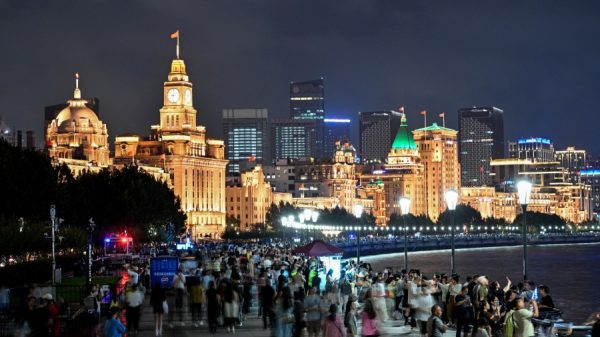
A weak rental market signals deepening financial stress
Another resident touring newly renovated rental units was stunned by what he saw. Rents ranged from RMB 900 to 1,800 (USD 126–252), yet after ten days, only three units had been rented.
“Shanghai really has no people left,” he said.
Across the city, financial stress is becoming impossible to ignore. Some residents say they can’t sleep at night. Others walk to work in a daze, overwhelmed by incomes that no longer cover their expenses. Mortgages, in particular, have become a source of constant anxiety.
One woman shared her family’s situation: Together, she and her husband earned RMB 8,427.20 (USD 1,179.80)—nearly RMB 943 (USD 132) less than the previous month. Their next paycheck would arrive earlier, she said, simply because there was no overtime left to calculate.
Rumors of layoffs swirl, but management has yet to make any announcements.
She considers her household “fortunate.” Many families survive on a single salary while supporting multiple generations. She and her husband had hoped to buy fish after payday to improve their meal, but in the end, they settled for fried noodles.
Their mortgage alone is RMB 3,000 (USD 420). Add utilities and basic living expenses, and every yuan has to stretch painfully far.
With the economy weakening and jobs becoming harder to secure, the couple is trying to save whatever they can. Like many born in the 1990s, they support both aging parents and young children.
“In the adult world,” she said, “savings are the only real protection.”
Shanghai’s population decline accelerates
Shanghai’s population decline underscores the city’s growing economic challenges. Since the outbreak of COVID-19, its migrant population has fallen sharply, dropping below 10 million in 2024. For the first time on record, deaths outnumbered births.
Shanghai has entered a period of demographic contraction—one that threatens its future workforce, vitality, and overall competitiveness.
Food and beverage businesses struggle to survive
Owners in the food and beverage industry express a similar sense of despair. A friend once asked a former milk-tea shop owner which franchise he should join. The response was blunt:
“Don’t join. Don’t open. Don’t open anything.”
Running a hotpot restaurant costs around RMB 30,000 (USD 4,200) per month. A nearby beef noodle shop had already closed after losing RMB 40,000 to 50,000 (USD 5,600–7,000). The former milk-tea shop owner said he, too, had lost tens of thousands operating his business.
“This economic environment isn’t fit for opening stores,” he said. “Not for heavy investment, and not for franchises.”
A city marked by emptiness and uncertainty
Across accounts from shop owners, delivery riders, renters, and market vendors, the message is consistent: Shanghai feels empty.
The reasons vary, but the reality is unmistakable. A city once defined by its density, energy, and economic pull is now marked by shuttered stores, declining incomes, departing residents, and a quiet that settles over once-crowded streets.
The crowds may return someday. For now, Shanghai’s story is one of absence—and of the people left trying to understand what happened.