China’s electric vehicle giant BYD, once propelled by strong backing from the Chinese Communist Party, has enjoyed years of rapid expansion. But as China’s broader economy continues to slow, BYD has been unable to escape the downturn. While the company has heavily marketed itself through appeals to “patriotic sentiment,” recurring quality problems have triggered growing dissatisfaction among car owners.
Videos circulating online show angry consumers pointing out alleged cost-cutting practices.
“This is our so-called domestically made, ‘leading’ new energy vehicle,” one owner says in a video. “The door panels are plastic, the fenders are plastic, and the inside is filled with foam.”
Another video claims: “If you ask which car has a crash beam thin enough to peel an apple, it’s BYD. A 300,000-yuan (about USD $42,000) domestic EV with a crash beam just one millimeter thick—so thin it’s like sheet metal. This kind of corner-cutting has become routine. Ultra-thin crash beams, suspension as thin as chopsticks, malfunctioning seat adjustments, and payload capacity set at the bare minimum.”
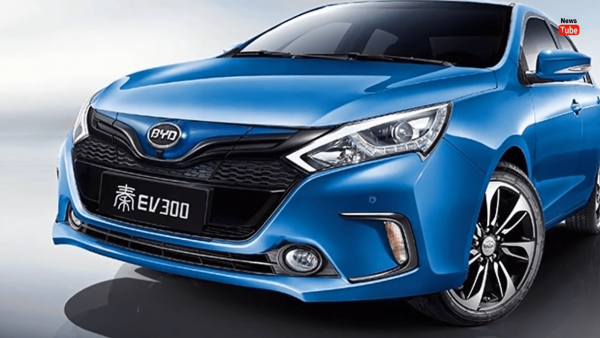
A third owner shows rust forming on a BYD Qin Plus purchased in August 2023 and delivered in October 2025: “Just over two years, and it’s already rusting. This is domestic quality. Look here, and here—it’s outrageous.”
Success
You are now signed up for our newsletter
Success
Check your email to complete sign up
BYD has promoted itself through “patriotic branding,” but quality concerns have fueled widespread online criticism, with many users posting photos and videos alleging substandard materials and workmanship.
Owners detail extensive defects
In May 2025, one buyer spent 240,000 yuan (about USD $33,000) on a BYD Han L from Guangcheng Sudi Co., only to later discover numerous issues. These reportedly included bubbling on the instrument panel and door panels; abnormal knocking sounds from plastic panels on both B-pillars; a broken clip under the rear seat that was not disclosed in advance; loose and rattling cup holders in the front and rear center consoles; exterior trim pieces shaking and making noise; interior panels scratched during installation of floor mats without prior notice; cracks in the front trunk; inability to disable the automatic rain-sensing wiper function; erratic lane changes by the assisted-driving system that nearly caused accidents; abnormal noises from the wiper stalk; noise when opening and closing the right rear door; the front passenger seat adjusting itself for two seconds during startup; rattling of the central display; sagging at the junction of the right A-pillar and roof liner; the charging sentry mode recording hundreds of useless videos at night; and the driver’s seat randomly changing its saved driving position.
Despite the vehicle being relatively new, the sheer number of problems has fueled skepticism toward official claims that Chinese new-energy vehicles are “far ahead” of global competitors.
Recalls and declining sales
Quality concerns have become difficult to deny. On Oct.17, 2025, BYD announced a recall covering 115,783 vehicles, including certain 2015 Tang models and batches of Yuan Pro pure electric vehicles. According to the notice, defects included inappropriate component design selection, which could cause abnormalities in the motor controller’s discharge function, potentially leading to failure of pure electric drive mode under extreme conditions. Vehicles produced between February 2021 and August 2022 also reportedly suffered from improperly installed battery sealing gaskets, reducing water-tightness.
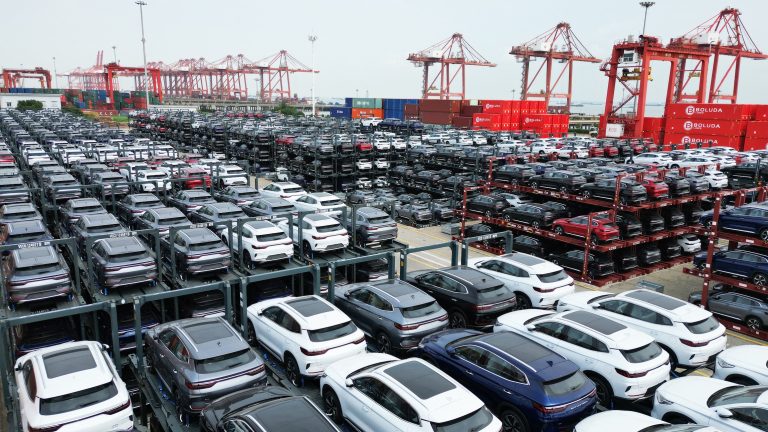
As the saying goes, consumers “vote with their feet.” With mounting quality complaints and an increasingly challenging economic environment, BYD has begun facing inventory buildup and slowing sales.
A commentator remarked: “BYD sold 440,000 vehicles in October, clearly showing signs of decline. Last October, BYD sold 500,000 vehicles. This year, it sold 60,000 fewer—even with overseas sales reaching 80,000 units. Domestically, BYD sold 100,000 fewer vehicles year-on-year.”
Chairman admits pressure as data tell the story
The sales slowdown has reportedly unsettled BYD chairman Wang Chuanfu. On Dec. 5, 2025, at an extraordinary shareholders’ meeting held at BYD’s Pingshan headquarters in Shenzhen, Wang acknowledged that domestic sales had declined. He cited reduced technological leadership compared with previous years and unresolved user pain points, such as slow charging performance in low temperatures.
Production and sales data reinforce these concerns. In November 2025, BYD sold 480,000 new-energy vehicles, down 5.3 percent year-on-year, though up 8.7 percent month-on-month. New-energy passenger vehicle sales reached 475,000 units, down 5.8 percent year-on-year. Excluding overseas sales, domestic sales were approximately 343,000 units—marking the seventh consecutive month of year-on-year decline.
China’s electric vehicle industry has long relied heavily on government subsidies and policy support, benefiting from low wages, low rents, and favorable financing conditions. This allowed manufacturers to push aggressive low-price strategies to boost sales volumes.
Sun Guoxiang, a professor of international affairs and business at Nanhua University in Taiwan, told overseas Chinese-language media that domestic demand has largely reached saturation. Falling incomes and weak consumer confidence, he said, have made it difficult for China’s market to absorb the massive capacity expansion driven by subsidies and local government investment. On the supply side, prolonged price wars have led many manufacturers to “sell more and lose more,” leaving most companies in persistent losses except for a few major players like BYD.
He added that with Europe and the United States launching anti-subsidy investigations, raising tariffs, and tightening rules of origin, China can no longer rely on exports to absorb excess capacity. As a result, the industry has entered a phase of structural imbalance, with both domestic and external markets cooling simultaneously.
Financial strain intensifies
On Oct. 30, 2025, BYD released its third-quarter financial report. Revenue for the quarter reached 195 billion yuan (about USD $27.1 billion), down about 3.05 percent year-on-year. Net profit attributable to shareholders fell to 7.82 billion yuan (about USD $1.09 billion), a sharp decline of 32.6 percent. Net profit excluding non-recurring items dropped to 6.89 billion yuan (about USD 960 million), indicating a significant deterioration in core profitability.
Net cash flow from operating activities for the first three quarters totaled 40.8 billion yuan (about USD $5.7 billion), down 27.42 percent year-on-year. The faster deterioration of cash flow compared with profits suggests rising accounts receivable, inventory buildup, and collection difficulties.
Financial data show BYD’s total assets reached 901.9 billion yuan (about USD $125.3 billion), up 15.14 percent from the beginning of the year. Inventory value surged to 153 billion yuan (about USD $21.3 billion), up 31.83 percent, while construction-in-progress ballooned to 48.8 billion yuan (about USD $6.8 billion), indicating continued large-scale capacity expansion.
Meanwhile, long-term borrowings climbed to 61.2 billion yuan (about USD $8.5 billion), up 641.1 percent from the start of the year. Other current liabilities reached 21.7 billion yuan (about USD $3.0 billion), up 300.18 percent.
In short, BYD’s net profit fell by nearly one-third in the first three quarters of 2025, while its debt burden surged several-fold.
Although BYD still ranked first in China’s new-energy vehicle market with retail sales of 307,000 units in November 2025, year-on-year sales dropped sharply by 26.5 percent.
Cui Dongshu, secretary-general of the China Passenger Car Association, told mainland media that a sharp year-end sales decline is “rare.” With government trade-in subsidies being reduced or suspended and the halving of new-energy vehicle purchase tax incentives set for next year, consumer willingness to buy cars has weakened or been postponed. Despite intensified discounting by automakers, he said, it remains difficult to reverse the broader downturn in new-energy vehicle sales.
Financial blogger “Cold-Eyed Finance” commented: “China’s electric vehicle industry has no easy way out. Overcapacity is the core problem. Manufacturers are locked in vicious internal competition, slashing prices and costs. The result is mounting losses while production continues. After this phase, it will be a test of endurance—and many won’t last. A wave of bankruptcies in China’s EV sector is likely to accelerate.”