By Li Jingyao
Former Chinese finance minister Wang Binggan passed away in Guangzhou on Dec. 8 at the age of 100, according to Chinese state media. His remains were cremated on Dec. 14 at the Guangzhou Funeral Home, where senior officials, including Politburo Standing Committee member Zhao Leji, attended the farewell ceremony. The Politburo serves as China’s top ruling body.
State media reports noted that all current Politburo Standing Committee members, as well as former Chinese Communist Party (CCP) leader Hu Jintao, either visited Wang during his final illness or conveyed condolences through official channels.
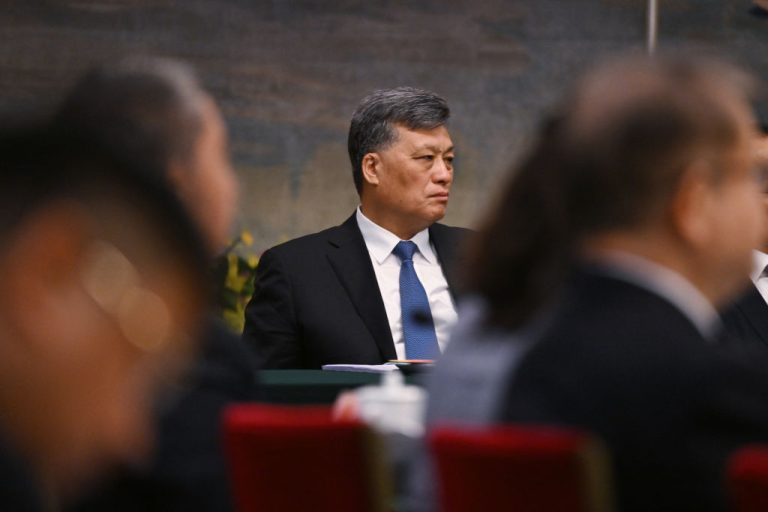
One notable absence, however, has drawn widespread attention: Ma Xingrui, a sitting Politburo member and former Xinjiang Party secretary, was not listed among those who sent funeral wreaths.
RELATED: Ma Xingrui Absent Again From Politburo, Fueling Probe Speculation
Absence from wreath list
Success
You are now signed up for our newsletter
Success
Check your email to complete sign up
Photos from the ceremony show that all current Politburo members were represented on official wreath, except Ma Xingrui. In China’s political system, funeral wreaths for senior officials are centrally coordinated and strictly reflect an individual’s current political standing, making any omission highly unusual and politically significant.
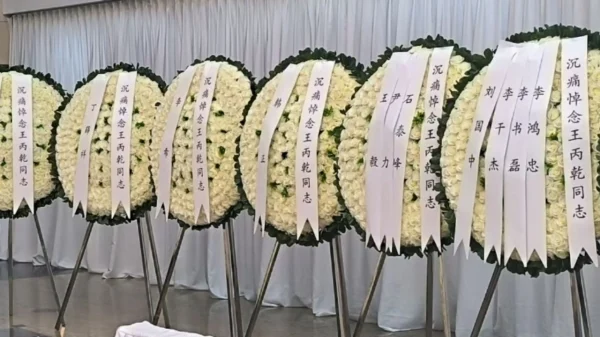
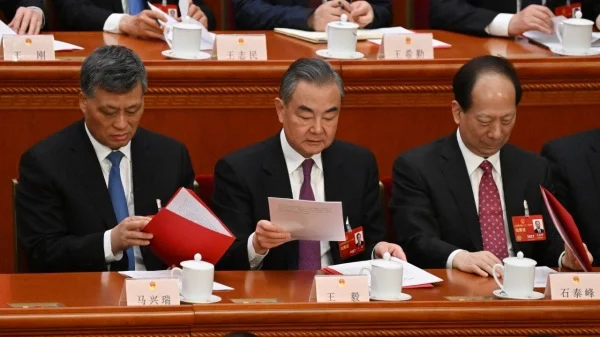
Under CCP protocol, Politburo members below the Standing Committee level are typically grouped together on shared wreaths, following a rigid hierarchy. In Wang Binggan’s case, the names of Wang Yi, Yin Li, and Shi Taifeng appeared together on a single wreath, while Ma’s name was missing entirely.
A comparable precedent occurred in June this year following the death of former Central Military Commission vice chairman Xu Qiliang. At the time, the only Politburo member whose name did not appear on a wreath was He Weidong, who was later officially confirmed to be under investigation.
Has Ma been pushed out?
Anti-CCP commentator Jiang Wangzheng, an overseas Chinese political blogger active on the social media platform X, wrote that Ma Xingrui had already been suspended from his Politburo duties, leaving him without the standing required to participate in official mourning rites.
Jiang described Ma’s situation as “game over,” using colloquial language to suggest that Ma’s political career has effectively ended.
Veteran political analyst Lei Ge echoed this assessment, arguing that removal from the wreath list amounts to a de facto confirmation that Ma has already fallen from power. He noted that funeral wreaths for officials of Wang Binggan’s rank are coordinated by the CCP General Office and are not optional.
“If someone no longer appears in these arrangements, it means their political status has already been stripped,” Lei said.
Pattern mirrors past high-level purges
Political commentator Tang Jingyuan pointed out that Ma Xingrui’s recent absences align with a familiar CCP pattern. Ma attended the CCP’s Fourth Plenum in October but subsequently missed several major events, including Politburo meetings on Nov. 28 and Dec. 8, as well as the Central Economic Work Conference held in Beijing from Dec. 10 to 11.
Tang noted that within the CCP system, senior officials are often removed from real authority well before any formal announcement is made public, with official confirmation sometimes delayed for months.
“In Ma’s case, the process appears to be moving faster than usual,” Tang said, adding that Ma could be formally announced as having fallen from office before China’s annual “Two Sessions” meetings next spring.
Hu Jintao’s name reappears in state media
The mourning coverage also marked a rare instance in which Hu Jintao was explicitly named in official reporting. Hu, who has largely remained out of public view since his abrupt removal from the CCP’s 20th Party Congress in 2022, has since appeared only indirectly in state media, typically in obituary notices or ceremonial contexts.
Observers note that Hu’s name has resurfaced more frequently in overseas discussions following last year’s Third Plenum, amid unverified reports suggesting coordination among retired Party elders and military figures critical of Xi Jinping’s leadership.
Jiang Wangzheng and other overseas commentators have alleged that Ma Xingrui is implicated in multiple corruption cases spanning Xinjiang, Zhejiang, and Guangdong, with some claims placing the total sums involved at hundreds of billions of yuan. These allegations have not been independently verified.
A familiar silence
According to Jiang, the alleged investigations extend to figures connected to China’s aerospace sector, regional governance in Xinjiang, the Evergrande financial scandal in Guangdong, and business dealings involving relatives of First Lady Peng Liyuan.
No official statement has been issued by the CCP’s top disciplinary bodies regarding Ma’s status. But analysts note that Ma Xingrui’s situation follows a long-standing CCP pattern: Political erasure through protocol and absence precedes public disclosure.
As Tang Jingyuan observed: “If the authorities wanted to maintain appearances, Ma could still have been allowed to send a wreath. The fact that he was not suggests the outcome is already settled.” For now, Ma Xingrui’s fall remains unofficial. But, as with similar cases before him, the political signals are becoming increasingly difficult to ignore.
Editorial note: Views expressed in this article are the opinions of the author and do not necessarily reflect the views of Vision Times.