By Li Muzi
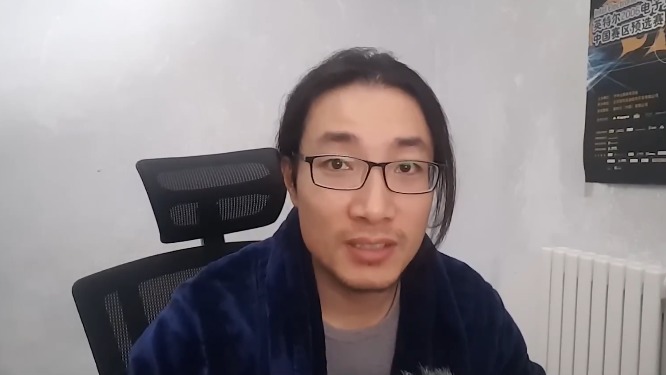
Guan Heng, a Chinese national from Henan province who once risked his life to film detention camps in Xinjiang, is now facing possible deportation from the United States. Guan, 38, was taken into custody by U.S. Immigration and Customs Enforcement (ICE) and is scheduled to appear in court in New York on Dec.15.
In 2020, Guan traveled alone to Xinjiang and secretly filmed extensive footage of detention facilities scattered across remote areas and guarded by armed personnel. The material later became key evidence cited by international media and human rights organizations documenting abuses committed by the Chinese Communist Party (CCP) in the region. He now faces the danger of being sent back to China.
Filming Xinjiang’s hidden detention system
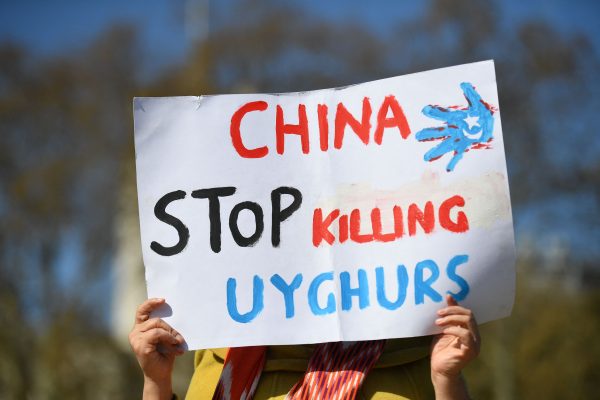
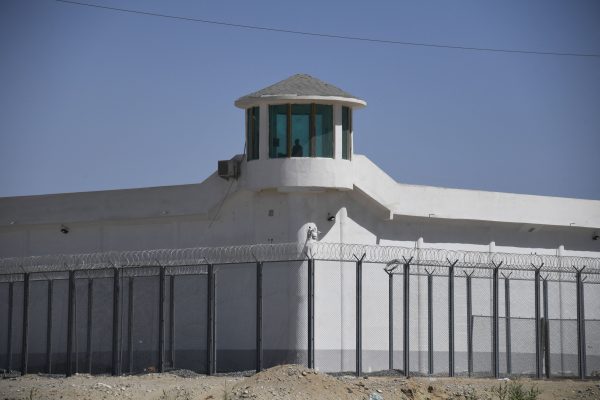
According to Taiwan’s Liberty Times, Guan drove across Xinjiang in 2020 using personal filming equipment to record what are widely known as Uyghur detention camps, officially referred to by Chinese authorities as “re-education centers.” Many of these facilities were deliberately built in isolated locations and remain heavily guarded.
Guan said the atmosphere changed immediately upon entering the region. “There were checkpoints everywhere—police, armed police, constant inspections,” he recalled. “Even checking into a hotel required repeated registration and facial recognition.” At gas stations, his motorcycle drew additional scrutiny.
Success
You are now signed up for our newsletter
Success
Check your email to complete sign up
These experiences led Guan to suspect that far more was being concealed than officially acknowledged.
Gathering evidence under constant surveillance
During China’s COVID lockdowns in 2020, Guan came across online reports suggesting a vast network of detention camps across Xinjiang. Determined to verify the claims himself, he returned to the region.
Using satellite maps, Guan rented a long-lens DV camera and quietly traveled to sites believed to be camps. He filmed from a safe distance, concealed the SD card containing the footage inside his vehicle, replaced it with a blank card, and managed to pass armed inspections before leaving Xinjiang.
The footage he captured later became some of the rare “ground-level” visual evidence corroborating satellite imagery and survivor testimony.
Escape from China and public release of the Xinjiang footage
To ensure the material would not be destroyed if he were detained, Guan uploaded the videos to YouTube in advance. On Oct. 5, 2021, the footage was publicly released, triggering widespread international media coverage.
After leaving China in July 2021, Guan embarked on a perilous escape route through multiple countries before eventually reaching the United States. Meanwhile, his family and relatives who remained in China have reportedly faced repeated harassment and threats from police.
Detention by ICE and risk of deportation
Guan’s current predicament began on Aug. 21, when ICE agents arrived at his residence in upstate New York, according to Human Rights in China (HRIC). Their original target was Guan’s roommates—a married couple involved in a shop-transfer business. When agents entered the home with a warrant, Guan was present and was taken into custody as well.
He is now being held at Broome County Jail. Months later, he remains in detention, anxiously awaiting the outcome of his immigration case. Advocates warn that deportation would expose him to grave danger.
International response and legal appeals
News of Guan’s detention quickly alarmed international human rights organizations and U.S. lawmakers. BuzzFeed News—whose 2021 Pulitzer Prize–winning investigation into Xinjiang relied in part on Guan’s footage—joined others in submitting urgent appeal letters.
They stressed that Guan’s on-the-ground documentation filled critical gaps left by satellite analysis. It also played a decisive role in exposing the construction of detention camps and acts widely described as crimes against humanity or genocide.
HRIC’s executive director warned that, given the global impact of Guan’s work, deportation could result in severe punishment.
Why deportation could be life-threatening
Born in November 1987 in Nanyang, Henan province, Guan grew up in a broken household and lived independently from a young age. Before fleeing China, he held a range of jobs—from running a small restaurant to working in oil fields—before becoming self-employed. He also learned early how to bypass China’s internet censorship.
Supporters argue that Guan embodies the profile of someone most in need of international protection. Online responses have been overwhelmingly supportive, with commenters calling him a hero who exposed repression at immense personal risk. Many warn that returning him to China would almost certainly lead to harsh retaliation.
As his court date approaches, Guan’s case has become a test of how the United States treats whistleblowers who expose human rights abuses abroad—and whether documenting truth at great personal risk will ultimately be met with protection or punishment.