By Li Jingyao
Recent online chatter suggests that the Chinese Communist Party (CCP) may convene the Fifth Plenary Session of its 20th Central Committee as early as January next year. Reports claim that five candidates, including Hu Chunhua, are slated to enter the Politburo, while Peng Liyuan is rumored to be elevated to alternate Politburo member. Coinciding with these claims, the CCP’s official outlet People’s Daily Online (People.cn) recently published an article widely interpreted as signaling support for Hu Chunhua.
Some analysts argue that if Hu Chunhua does enter the Politburo at the Fifth Plenum, it would set the stage for a major reshuffling at the CCP’s 21st Party Congress.
Others go even further, suggesting that ahead of the Fifth Plenum, political allies associated with Hu Jintao and Wen Jiabao must first be fully positioned, making the Fifth Plenum, in effect, the meeting at which Hu Chunhua formally rises. The Politburo serves as China’s top ruling body.
RELATED: Rumors Swirl Over Possible Fifth Plenum as Hu Chunhua, Zhang Shengmin Tipped for Politburo
Hu’s Politburo entry could trigger a reshuffle
Success
You are now signed up for our newsletter
Success
Check your email to complete sign up
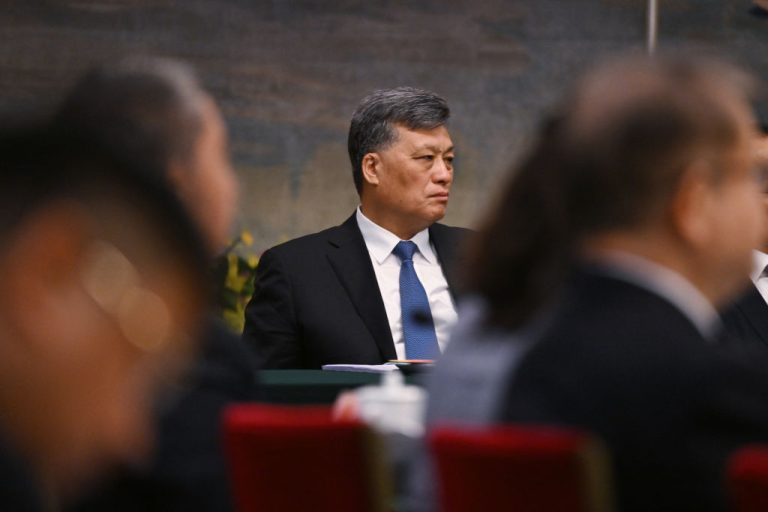
Anti-CCP blogger Jiang Wangzheng claimed in posts on the social media platform X on Dec. 14 and 15 that the CCP plans to convene the Fifth Plenum on Jan. 5, 2026, at which point the downfall of Ma Xingrui would be officially announced.
According to Jiang, the plenum would add five new members to the Politburo: Hu Chunhua, Zhang Shengmin, Chen Xiaojiang, Zhao Yide, and Feng Fei. He further alleged that Cai Qi would nominate Peng Liyuan to become an alternate Politburo member.
Jiang also said that “multiple sources within the system have told him that Hu Chunhua’s entry into the Politburo is a certainty,” adding that Hu is expected to replace Ding Xuexiang and serve as a Politburo Standing Committee member and first vice premier at the 21st Party Congress.
Responding to these claims, former Hong Kong Wen Wei Po senior correspondent Jiang Weiping expressed skepticism. He said that Hu Chunhua, Zhang Shengmin, and Chen Xiaojiang entering the Politburo is “definitely true,” but dismissed Zhao Yide and Feng Fei as implausible candidates. “Zhao Yide cannot get in,” Jiang said. “If he did, would Hu Jintao still have any say? Then the ‘Nine Vajra Kings’ could never have been taken down.”
Jiang also rejected the idea that Peng Liyuan could become an alternate member, arguing that senior military figures strongly oppose women wielding political power. “Xi Jinping trusted his wife,” Jiang said, “and her involvement in military affairs created chaos — that’s why Zhang Youxia turned against him.”
Analysts: Hu’s rise would not be Xi’s choice
Independent commentator Cai Shenjun said on his media channel that if Hu Chunhua enters the Politburo at the Fifth Plenum, “things will get very interesting.” He added, “Hu Chunhua was already a Politburo member before the 20th Party Congress,” noted Cai, “The Politburo used to have 25 members. Now there are only 24 — the one removed was Hu Chunhua.”
Cai argued that Hu’s return would not reflect leniency or compromise by Xi Jinping, but rather pressure from Party elders or the military forcing Xi to accept the outcome.
“At this stage, a reshuffle at the 21st Party Congress becomes possible, though not guaranteed,” Cai said. “It’s also possible that Party elders and the military, in the name of unity and restoring a proper succession mechanism, are pushing Hu Chunhua back into a high-ranking position.”
A political commentator known as “An Ordinary Person Inside the Wall” said he had not heard any confirmation that the Fifth Plenum would be held in January. He noted that before the end of December, the Politburo must still convene its regular meeting to hear discipline reports from CCDI chief Li Xi and set the tone for January’s CCDI plenary session.
He argued that with figures such as Ma Xingrui, Chen Weijun, and Fang Hongwei — key Xi allies — having recently fallen, the disciplinary purge within the Party and government is still underway.
Falling dominoes
“Before the cleanup is finished, there is no condition to convene the Fifth Plenum,” he said. “In principle, the Fifth Plenum should be the meeting at which Xi Jinping formally steps down and Hu Chunhua formally takes over. Before that, the purge must be completed and Hu-Wen allies must be fully in place.” He also dismissed rumors of Peng Liyuan becoming an alternate Politburo member as “absurd.”
“If Peng Liyuan were to become an alternate member, there would be no need to take down Ma Xingrui,” he said. “The fact that Peng hasn’t been sent to Qincheng Prison already means she’s been extremely lucky. This is pure narrative-shaping by overseas voices.”
He further claimed that Peng has effectively been placed under soft house arrest by Hu-Wen forces, noting that she has not traveled abroad for over a year and a half. “They’re afraid she might stay overseas and cause major trouble for the regime,” he said. “In the military system, the Miao Hua–He Weidong group is equivalent to the Peng Liyuan–Ma Xingrui group in the party-state system.”
“Although Peng holds no formal senior Party post, everyone knows she effectively shares power with Xi Jinping,” he added.
‘Breaking Xi down completely’
“An Ordinary Person Inside the Wall” said Zhang Shengmin and Chen Xiaojiang are likely to enter the Politburo, explaining that Hu-Wen forces deliberately avoided placing them there at the Fourth Plenum in order to fully dismantle Xi’s 20th Congress Politburo lineup. “Hu Chunhua’s earliest rise should be at the March Two Sessions,” he said. “He would move from the CPPCC into the government as vice premier in charge of the economy, replacing He Lifeng and gradually taking over Xi’s power base.”
He argued that the outcome of the Fourth Plenum showed Hu-Wen forces are proceeding cautiously and methodically, rather than rushing. “If Hu Jintao decides to launch a full-scale purge,” he said, “then Xi loyalists like Xia Baolong will all be taken down, and only then will Hong Kong and China see a turning point.”
As rumors about Hu Chunhua’s return circulated, People.cn published an article on December 15 titled “Magnificent Tibet Marches Forward.” The piece prominently referenced regions such as Nyingchi and Shannan — areas previously governed by Hu Chunhua.
Jiang Weiping said the lengthy, image-rich article was effectively promoting Hu. “On the surface it praises Tibet and even puts a few flattering hats on Xi,” Jiang said. “But in reality, it’s elevating Hu Chunhua and signaling that his momentum within the Party is unstoppable.”
“These were Hu Chunhua’s territories,” Jiang added. “He spent nine months in Nyingchi and three years in Shannan. This is laying the groundwork for public opinion ahead of Hu’s assumption of top CCP power.”
‘A new historical starting point’
Jiang noted that although Hu Jintao and Xi Jinping are locked in an intense struggle, official messaging still maintains surface-level decorum. “Since Hu Jintao was escorted out of the 20th Party Congress, he has never appeared publicly again,” Jiang said. “The next time we see him will be when Hu Chunhua comes up. Even if he has to crawl, he will show up to applaud. Otherwise, he won’t appear.”
He described Hu Jintao as having “endured humiliation and staged a comeback,” adding: “This is 80 percent victory, but not yet total victory.”
The People.cn article concluded with a passage stating: “Standing at a new historical starting point, Tibet is moving forward with confidence and determination, steadfastly advancing ecological protection and green development, making the plateau’s skies bluer, mountains greener, and waters clearer—so that lucid waters and lush mountains continue to transform into sources of wealth and happiness for all ethnic groups in Tibet.”
Jiang argued the meaning was unmistakable. “They’re afraid people won’t understand,” he said. “That’s why they emphasize ‘a new historical starting point.’ Once Xi is gone, changing people means a new historical era. The message is simple: Tibet prospered under Hu Chunhua, so it’s time to change leadership.”