By Gao Yun
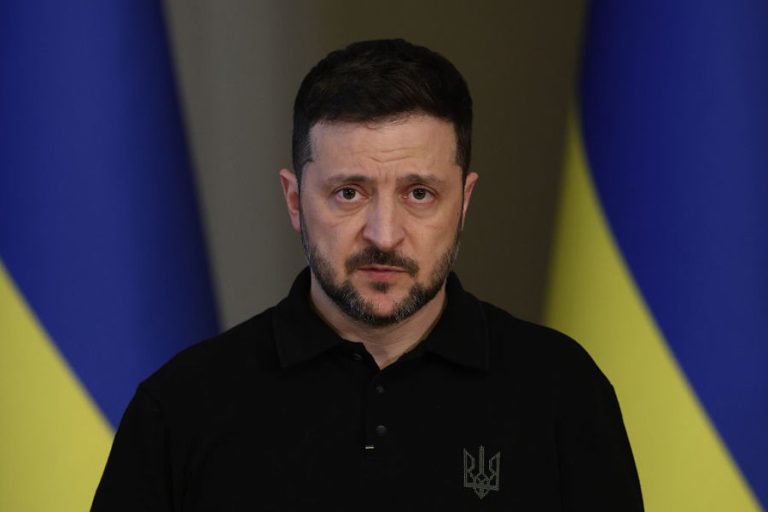
On Tuesday, Dec. 16, Ukrainian President Volodymyr Zelensky said that if Russia rejects Washington’s carefully crafted peace plan to end the war, he believes the United States will impose additional sanctions on Russia and sell more military assistance to Kyiv.
According to the New York Post, Zelensky said, “I believe that if (Putin) rejects everything, the United States will apply sanctions pressure and provide us with more weapons.” He added, “I think this is a fair request for us to make to the Americans.”
On the same day, Zelensky told European leaders that “Plan A” is to advance the peace proposal put forward by Trump, while “Plan B” is to continue resisting Russian aggression.
Zelensky further questioned that if the United States is prepared to provide security guarantees to Ukraine and impose strong enforcement measures if Russian President Vladimir Putin violates an agreement, then logically this is “no different from a situation in which Putin does not want to end the war.” He stressed that this is the key issue that must be confronted at present.
Success
You are now signed up for our newsletter
Success
Check your email to complete sign up
The report noted that U.S. officials have so far largely avoided specifying what concrete actions would be taken if Russia does not accept the American plan, instead focusing on promoting the peace process through intensified, prolonged talks with Ukrainian and Russian negotiators. Trump previously said that Ukraine must either accept the plan “or keep fighting,” but he did not explain how Washington would respond if the Kremlin rejects the U.S. proposal.
Some experts believe the possibility that Russia will reject the plan deserves serious consideration, as even Trump himself has questioned whether Putin is willing to end the war in exchange for Ukraine’s Donbas region.
John Herbst, director of the Eurasia Center at the Atlantic Council and former U.S. ambassador to Ukraine, wrote on Tuesday that as U.S. envoys push Ukraine to accept Russian conditions that were previously rejected, and as the United States and its European allies disagree over the terms of a plan to end the war, Moscow is “watching from the sidelines” and lacks incentive to make concessions for a durable peace.
According to reports, U.S. negotiators are preparing to discuss with Russia the latest draft of a 20-point peace plan. Russian leaders oppose the deployment of international ground forces inside Ukraine, an arrangement senior U.S. officials view as a key component of security guarantees and have described as the “platinum standard.”
Ukrainian security guarantees
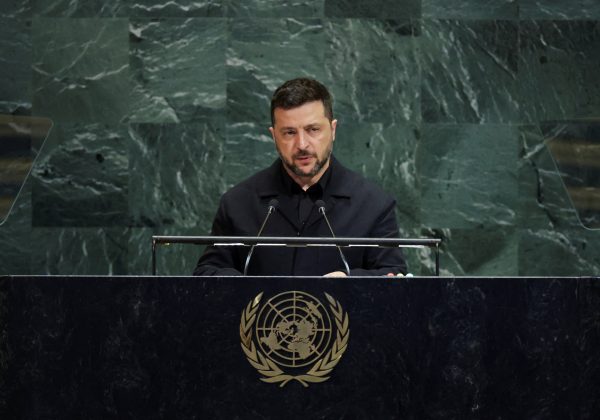
Senior U.S. officials said Monday that the proposed security arrangement would provide Ukraine with “NATO-like” security guarantees to prevent Russia from pushing further west after the conflict ends. Achieving this would require international forces to oversee any future peace arrangements, verify violations, and enforce penalties if violations occur.
A senior U.S. official told reporters that Trump is “very focused” on reaching an agreement that would truly stop Russia from advancing westward, noting that Russia moved westward under former Presidents Bush, Obama, and Biden, and that Trump hopes to “end this completely” through an agreement.
At present, the United Kingdom and France have expressed openness to sending troops to Ukraine as part of an international force. While the United States will not deploy ground troops, Trump said Washington would support countries willing to do so. However, Russian Deputy Foreign Minister Sergey Ryabkov told ABC News on Monday that the Kremlin would not sign any agreement allowing foreign troops to be stationed on Ukrainian territory.
He emphasized that Russia would “never, under any circumstances, recognize, agree to, or be satisfied with any presence of NATO forces on Ukrainian territory,” adding that even if such forces were not deployed under official NATO command but appeared as part of a European “Coalition of the Willing” security arrangement, they would still be unacceptable.
Despite Russia’s hardline stance, senior U.S. officials said Monday that the United States, Ukraine, and Europe are “very close to agreement” on the proposed security guarantees. The official said this is “not a conceptual discussion”; over the past two weeks NATO, Ukraine, and the United States have held “very in-depth” consultations, and relevant documents are “basically agreed” at the working level. He added that this is a security framework in which Ukraine and Europe are “very, very comfortable.”
The process is still moving forward. The report said Zelensky is continuing intensive consultations with European leaders to further clarify what security guarantees Europe can provide. Meanwhile, senior U.S. officials said presidential special envoys Steve Witkoff and Jared Kushner plan to brief Russia on the latest proposal presented to Ukraine and may continue talks with Ukrainian representatives in Miami later this weekend.
International claims commission established
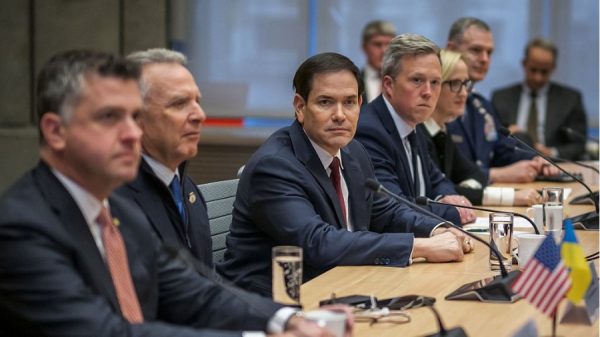
To compensate Ukraine for losses caused by Russia’s full-scale invasion, Zelensky and officials from multiple European countries agreed on Tuesday to establish an “International Claims Commission for Ukraine,” marking the completion of the second step in Ukraine’s war reparations mechanism. The commission, jointly established by 35 countries, will be responsible for assessing and adjudicating various compensation claims and determining specific compensation amounts.
According to Agence France-Presse, the reparations mechanism consists of three steps: the first was the establishment two years ago of a “damage registry,” which has already received more than 80,000 claims from individuals and institutions; the second step is the creation of the international claims commission; and the third step will be the establishment of a formal compensation fund. The entire mechanism is coordinated by the Council of Europe, headquartered in Strasbourg, France, which currently has 46 member states.
Zelensky said he hopes the compensation mechanism will be launched smoothly and receive full international support so that war victims can be genuinely compensated. Dutch Prime Minister Dick Schoof announced that the claims commission will be headquartered in The Hague. EU High Representative for Foreign Affairs and Security Policy Kaja Kallas emphasized that the move is meant to show the Ukrainian people that the international community has not forgotten the suffering they have endured.
However, the key challenge for the reparations mechanism remains the source of funding. The specific means of financing the compensation fund have not yet been determined. Council of Europe Secretary General Alain Berset said the fund is expected to be established within 12 to 18 months. Meanwhile, EU leaders will discuss how to handle approximately €200 billion in frozen Russian assets and explore the possibility of using them as a source of loans to Ukraine and future compensation funds.