By Fu Longshan
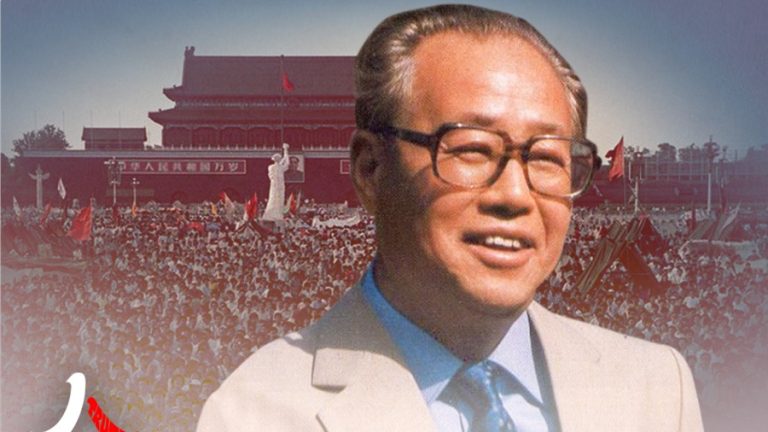
Former Chinese Communist Party (CCP) General Secretary Zhao Ziyang once stood at the pinnacle of the Party hierarchy. Yet in his later years, he reached a stark conclusion: China’s core problems stem from the CCP’s political structure itself. Without political reform, he warned, economic reform would inevitably hit a dead end.
Wen Qiang, former deputy chief of the Chongqing Public Security Bureau, met his end under very different circumstances. Executed by lethal injection on July 7, 2010, during Bo Xilai’s high-profile “anti-crime” campaign, Wen’s final statements circulated widely online after his death. They revealed—in blunt, unvarnished terms—the logic of power, corruption, and political sacrifice inside the Party.
These two men were never meant to be linked in history. One was the Party’s highest reform-minded leader; the other, a mid-level official consumed in a political purge. Yet at the end of their lives, both arrived at the same truth: corruption is not an exception within the CCP system. It is produced by it.

Zhao Ziyang’s analysis of why corruption is inherent in the CCP system
Zhao observed that under a planned economy, information delivered to Beijing was always distorted—delayed by bureaucracy, filtered by political incentives, or manipulated upward to please superiors. As a result, central planning constantly misaligned with real market conditions, policy responses were always late or misguided, and the more Beijing tried to control, the greater the waste and inefficiency.
Success
You are now signed up for our newsletter
Success
Check your email to complete sign up
Zhao increasingly invoked the concept of “dispersed information,” echoing Friedrich Hayek. Markets could regulate themselves; governments attempting to control everything only magnified errors.
Concentrated power inevitably produces corruption
One of Zhao’s clearest statements in Reform Process reads:
“The more power is concentrated, the more resources are concentrated—and the more serious corruption becomes. Corruption is not a matter of individual morality but institutional incentives.”
Under the CCP’s system, whoever controls approvals controls resources. Such a structure naturally creates rent-seeking, patronage, and bribery. It is not a question of bad people, Zhao argued, but of a bad system that rewards bad behavior.
Excessive centralization creates a mismatch between responsibility and capacity
Reflecting on rural reforms, Zhao noted that when the central government attempted to manage too many details, local governments lacked practical autonomy. The result was governance paralysis. As he put it:
“The center cannot manage that many details. When power and capacity do not match, failure is inevitable.”
In his final years, Zhao concluded that the government’s proper role was to set broad rules—not to command economic life. Ultimately, he warned that without political reform, economic reform could not succeed.
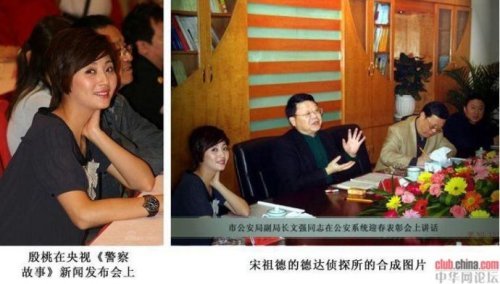
How a Police Chief’s Downfall Illustrates the CCP’s Internal Power Logic
Wen Qiang’s fate unfolded during Bo Xilai’s “anti-crime” campaign in Chongqing, a political spectacle that later proved to be a prelude to Bo’s own downfall. Wen had served as deputy director of the Chongqing Public Security Bureau and later as director of the Justice Bureau. He was accused of protecting criminal gangs, swiftly convicted, and executed.
The speed of his execution made clear that this was not simply a legal matter—it was political discipline inside the Party. At 5:00 a.m. on July 7, 2010, Wen was taken from his cell, informed that the Supreme People’s Court had approved his death sentence, and executed just after 9:00 a.m.
Soon afterward, eleven statements attributed to Wen circulated online. Whether recorded in writing or spoken orally, they were remarkably consistent with what Zhao Ziyang had warned decades earlier: corruption is built into the structure of CCP governance, not merely the behavior of individuals.
Wen’s eleven final statements that expose the internal workings of CCP corruption
Wen Qiang’s statements reveal a grim internal logic:
- “I’ve been involved in too many things… many people want me dead.”
Power creates entanglements; the higher one rises, the more one is implicated. - “They say I took bribes and slept with women… anyone in my position would do the same.”
Corruption is not a personal failing but a requirement of the role. - “If a cadre doesn’t take bribes or women today, no one will trust or promote him.”
Corruption serves as proof of reliability within the system. - “I rose through hard work at first. Corruption came later.”
Advancement pulls officials into corrupt networks; it is a structural progression. - “Who gave me my power? What were my superiors doing?”
Power does not stem from law, but from higher-level protection. - “Those who took my money are now leading the investigation against me.”
Anti-corruption campaigns are political weapons, not legal processes. - “Killing me seals my mouth. But can it seal the source of corruption?”
Eliminating individuals does nothing to fix the system. - “The money went to my superiors… now they must get rid of me.”
Corruption is a chain of mutual protection—until it becomes politically inconvenient. - “They once called me a hero. Now I am a criminal. Did I have a choice?”
The system defines virtue and vice according to political needs. - “Today’s officials are worse than the Kuomintang… the system made me this way.”
A direct indictment of one-party rule. - “Tell my children: do not enter politics. A simple life is the only safe life.”
A final warning about the nature of CCP power.
Together, these statements form an insider’s autopsy of the system—a darker, experiential counterpart to Zhao Ziyang’s theoretical analysis.
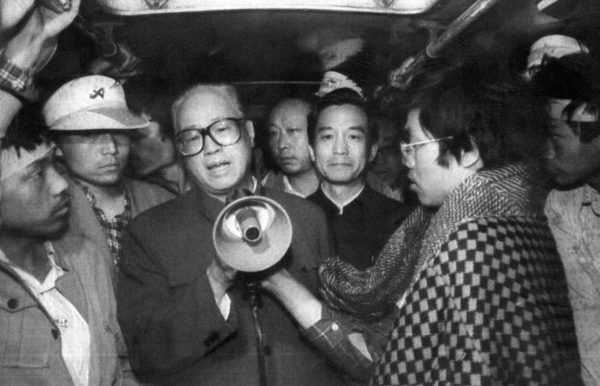
How Zhao Ziyang and Wen Qiang reach the same conclusion about the CCP’s system
Wen Qiang’s last words are the stark confirmation of Zhao Ziyang’s late-life judgment. Zhao described the system that produces corruption; Wen’s career and downfall showed how that system functions day to day.
In a one-party structure, corruption is not about personal morality but about the kinds of people the system selects and what it demands from them. Zhao understood that concentrated power forces officials into compromise and complicity. Wen reached the same conclusion only at the end—that refusing to take part in corruption can be more dangerous than participating in it.
His execution was not unusual. It was the predictable end of an official who rose within the CCP, absorbed its incentives, and was discarded when the political tide shifted.