By Yan Changhai
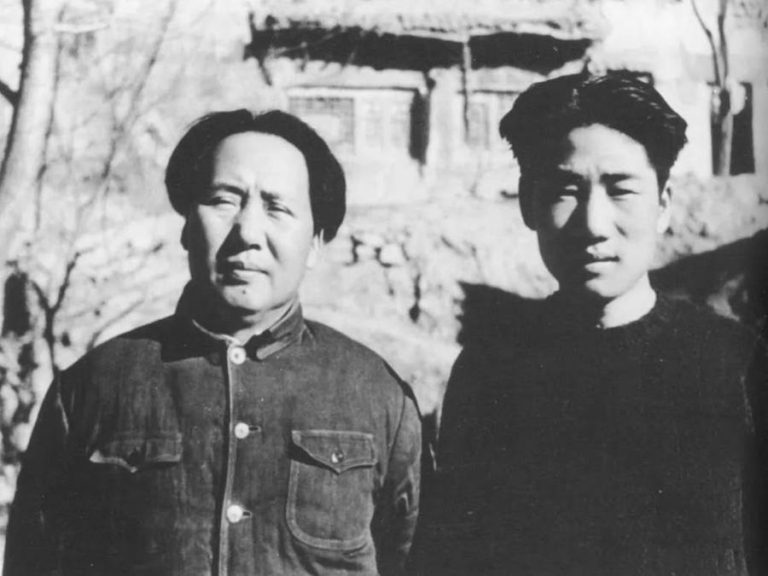
For more than seventy years, the Chinese Communist Party (CCP) has promoted a carefully constructed story about Mao Zedong and the Korean War. According to the official version, Mao—the founding ruler of the People’s Republic of China—voluntarily sent his eldest son, Mao Anying, to the battlefield. The son’s death was then elevated into a symbol of revolutionary virtue: proof that even the supreme leader was willing to sacrifice his own family for the cause.
This story has been repeated so often that it has hardened into political folklore. Yet it collapses under scrutiny.
Historical records and testimony from senior military officials reveal a far less heroic—and far more revealing—reality. Mao Anying was not sent to war by his father’s personal decision. His death was not the result of noble self-sacrifice. Instead, the episode exposes how bureaucratic expediency, elite privilege, and systematic historical distortion operated at the heart of the Chinese Communist state.
What senior officers actually said
Multiple high-ranking officers who served at the Chinese People’s Volunteer Army (CPVA) headquarters have independently described the circumstances of Mao Anying’s death.
Success
You are now signed up for our newsletter
Success
Check your email to complete sign up
Yang Di, a senior operations officer, later stated that Mao Anying was killed during a U.S. airstrike after cooking a meal of fried rice. The smoke reportedly exposed the headquarters’ location, leading to a napalm bombing. Decades later, Ding Ganru, another senior officer, confirmed the account during a private discussion.
There is nothing heroic in these descriptions. Mao Anying died not as a frontline soldier or martyr, but as a staff officer caught in a preventable airstrike under wartime conditions. What followed mattered far more than the manner of his death.
Mao Zedong did not decide to send his son
Contrary to decades of propaganda, Mao Zedong did not personally decide to send Mao Anying to the Korean War. Newly available materials make this clear.
Mao Anying’s assignment resulted from a rushed personnel decision inside the military command system. Mao Zedong was not consulted. There was no symbolic gesture, no moral test, no deliberate sacrifice. Mao Anying was selected because he spoke Russian and was politically reliable—nothing more.
The Party later transformed this administrative accident into a moral parable.
How bureaucratic haste sent Mao Anying to Korea
In early October 1950, as United Nations forces advanced toward China’s border, North Korean leader Kim Il Sung urgently appealed for Chinese intervention. The Chinese leadership decided to enter the war almost overnight.
In the rush, the military command needed a Russian-language interpreter to accompany Peng Dehuai, the commander of Chinese forces in Korea, for coordination with Soviet advisers. An initial candidate was rejected for insufficient political vetting. With no time left, Mao Anying was selected because he met the technical and ideological requirements.
On the evening of October 7, 1950, Mao Anying was summoned, informed of the assignment, and told he would depart the next day. He did not volunteer; he complied. On October 8, he left Beijing. On November 25, he was dead.
The myth of choice was constructed later.
Why Mao Zedong was not told
Mao Anying’s death was reported immediately to the Central Military Commission. When Premier Zhou Enlai read the report, he ordered it sealed.
For more than a month, Mao Zedong was kept in the dark.
This was not a procedural delay. It was a political one. Those around Mao understood that the death of his son was not merely a personal tragedy—it was a political hazard.
When Mao was finally informed in January 1951, panic rippled through the leadership compound. Li Tao, the officer responsible for Mao Anying’s assignment, wrote a self-criticism letter pleading for punishment—not because protocol had been violated, but because Mao had suffered a personal loss.
Such fear was not shown when ordinary soldiers died by the tens of thousands.
What privilege looked like in a ‘classless’ state
Millions of Chinese soldiers died in Korea. Their deaths required no sealed telegrams, no delayed reports, no letters of trembling self-criticism.
Mao Anying’s death was different.
The institutional anxiety it triggered revealed a fundamental truth the Party preferred to conceal: revolutionary equality ended where political bloodlines began. Despite the rhetoric of classlessness, the son of the supreme leader occupied a category of life—and death—entirely his own.
This was privilege, naked and undeniable.
Peng Dehuai’s refusal to play along
Peng Dehuai, the battlefield commander of Chinese forces in Korea, refused to treat Mao Anying as an exception.
He opposed special burial arrangements. He objected to separating Mao Anying’s remains from those of other fallen officers. He insisted that Mao’s son be treated as any other soldier.
Peng’s stance was principled—and dangerous.
Years later, when Peng criticized Mao’s disastrous economic policies during the Great Leap Forward, he was purged, imprisoned, and eventually died under persecution during the Cultural Revolution. While history cannot be reduced to a single cause, Peng’s refusal to accommodate symbolic privilege did not protect him.
Fabricated orders and rewritten blame
After Mao Anying’s death, state media began circulating claims that Mao Zedong had ordered Peng Dehuai to relocate headquarters before the bombing—and that Peng failed to obey.
Veterans and historians who served at CPVA headquarters deny that any such order existed. Archived communications contain no reference to relocation. The alleged telegrams appear nowhere.
If the orders were fabricated, the motive is obvious: responsibility needed to be redirected away from the system, away from Mao, and onto a convenient subordinate.
This is how history is managed under authoritarian rule—not by discovery, but by authorization.
Mao’s silence
When Mao Zedong finally read the report of his son’s death, he did not speak. He did not cry. According to witnesses, his face turned pale.
That silence was later mythologized, just as the assignment itself was mythologized. But silence, too, can conceal power.
Mao Anying’s death was never just a family tragedy. It became a political instrument—reshaped, sanitized, and repurposed to preserve the image of a ruler who demanded sacrifice from millions while remaining insulated from its consequences.