According to Reuters, U.S. President Donald Trump on Thursday signed a sweeping executive order formally establishing the core space objectives of the United States during his second term: returning humans to the Moon by 2028 and strengthening space security to address potential weapons threats. This marks the first major space policy initiative since Trump began his second term.
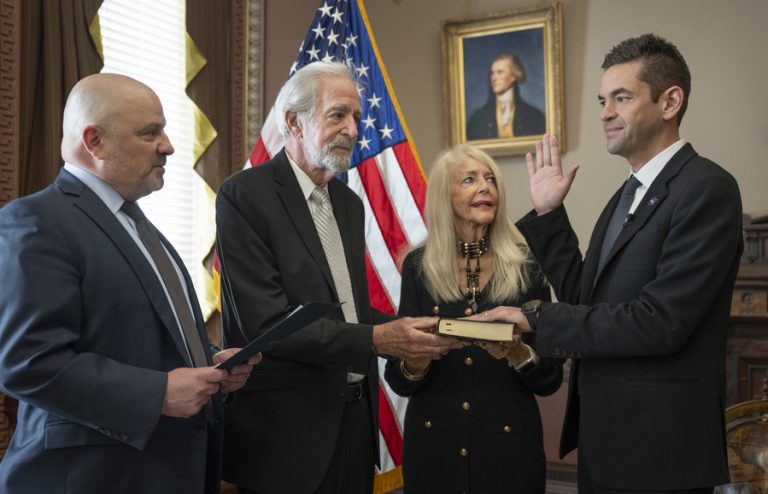
Just hours before the executive order was issued, billionaire private astronaut and former SpaceX customer Jared Isaacman was sworn in as NASA’s 15th administrator. The order also centralizes national space policy coordination under Trump’s chief science adviser, Michael Kratsios.
‘Ensuring American Space Superiority’ focuses on security and efficiency
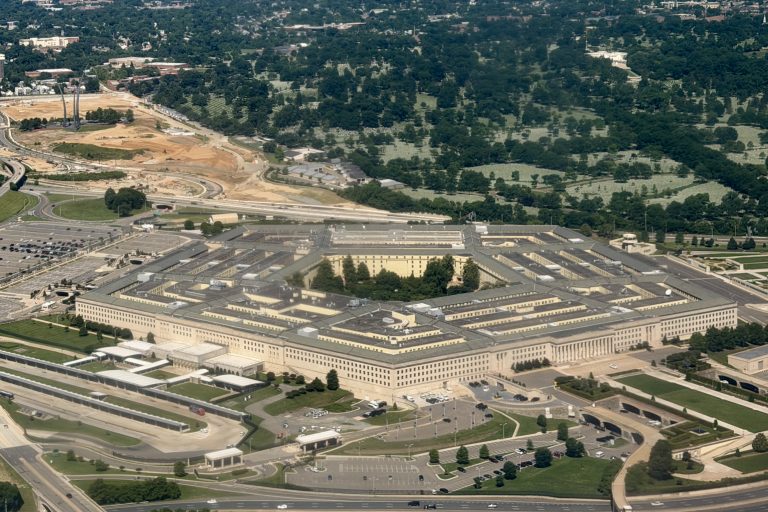
Titled “Ensuring American Space Superiority,” the executive order directs the Pentagon and U.S. intelligence agencies to develop a new space security strategy, urges private contractors to improve efficiency, and promotes technology demonstrations tied to the “Golden Dome” missile defense initiative.
The order was initially interpreted by some as signaling the possible abolition of the White House National Space Council. However, a government official clarified that the council will not be dissolved. Instead, it will continue under a new structure within the White House Office of Science and Technology Policy, chaired by the president rather than the vice president.

Lunar return timeline tightened again
Trump’s 2028 Moon landing target closely mirrors a directive from his first term in 2019 that sought a 2024 landing—an aggressive timeline widely viewed at the time as unrealistic.
Success
You are now signed up for our newsletter
Success
Check your email to complete sign up
Delays in the development and testing of NASA’s Space Launch System (SLS) and SpaceX’s Starship have repeatedly pushed the schedule back. In fact, during the Obama administration, NASA’s official Moon landing target had already been set for 2028.

Permanent lunar outpost seen as direct competition with China
Under the executive order, the U.S. plans to establish initial components of a permanent lunar outpost by 2030, reinforcing NASA’s long-term Artemis program goals, including the use of nuclear power to supply energy for a Moon base.
This effort is widely viewed as a direct competition with China, which has set 2030 as its target year for its first crewed Moon landing.
Early in his second term, Trump frequently discussed Mars missions. At that time, SpaceX founder Elon Musk—an important political donor—briefly served as a key adviser on government efficiency. This year, however, Congress shifted its focus back to the Moon and, during hearings, required Isaacman to commit to continuing the lunar program that has already received tens of billions of dollars in funding.
Budget and technical bottlenecks remain major challenges
As part of government efficiency reforms led by Musk, the White House has reduced NASA’s workforce by about 20 percent and sought to cut the agency’s FY2026 budget by 25 percent from its typical level of roughly $25 billion, putting several space science projects at risk.
Isaacman said NASA should pursue both Moon and Mars goals but prioritize returning to the Moon to gain an edge over China. He acknowledged, however, that a 2028 landing is highly dependent on the progress of SpaceX’s Starship development. A former acting NASA administrator has publicly criticized the program for moving too slowly.
Moon landing tied to national strategic advantage
According to The Hill, Trump signed the executive order on the same day Isaacman was confirmed by the Senate, underscoring its symbolic political significance. NASA plans to launch Artemis II in April 2026 for a crewed lunar flyby mission, while Artemis III is scheduled for mid-2027 to achieve the first Moon landing of the 21st century.
Former NASA Administrator Jim Bridenstine told the Senate last September that the U.S. is very likely to fail to land on the Moon before China, citing the continued reliance on the still-immature Starship architecture for the lunar landing system.
As a result, then–acting NASA administrator and Transportation Secretary Sean Duffy said in October that the Artemis III lunar lander contract would be reopened.
Texas Republican Senator Ted Cruz noted that Trump’s Big Beautiful Bill, signed in July, allocated an additional $10 billion for human spaceflight. “We will return to the Moon, and we will beat China,” Cruz said.
Former House Science and Space Committee Chairman Frank Lucas also emphasized that competitive pressure from China has driven Congress to increase investment in space, arguing that space technology will ultimately benefit society on Earth.
Shortly after taking office, Isaacman wrote on the social platform X that NASA would “lead peaceful space exploration and will never come in second.”