A recent visit by senior U.S. defense officials to a military facility in Alabama has unexpectedly ignited widespread discussion across Chinese social media platforms, after remarks made during the inspection were interpreted by online commentators as revealing new details about U.S. long-range strike capabilities—and, by extension, the vulnerability of the Chinese Communist Party’s top leadership.
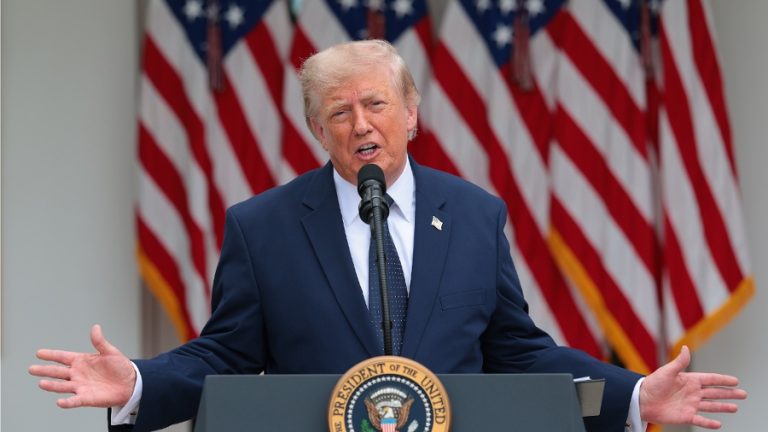
The visit took place at Redstone Arsenal, where U.S. Secretary of Defense Pete Hegseth was accompanied by senior officers overseeing advanced weapons programs. In video footage later circulated online, a U.S. Army lieutenant general is heard explaining that certain systems deployed in Japan and the Philippines have had a strong deterrent effect.
“These systems have frightened the Chinese quite a bit,” the officer said, according to the video.
Chinese-language commentators widely interpreted the reference to “the Chinese” as a shorthand for the CCP leadership rather than the general public. Many extended the interpretation further, framing the remarks as a veiled reference to Xi Jinping himself and the regime’s security concerns.
US long-range strike systems and their strategic implications
According to the footage and related reporting, the briefing was delivered by Lt. Gen. Lozano, the U.S. Army official overseeing hypersonic weapons, directed-energy systems, and space-related programs.
Success
You are now signed up for our newsletter
Success
Check your email to complete sign up
He referenced the “Typhon” missile system, a mobile launcher capable of firing both SM-6 interceptor missiles and Tomahawk cruise missiles. Chinese-language commentators focused on the Tomahawk’s reported range of approximately 1,200 miles (about 1,930 kilometers), noting that forward deployment in Japan or the Philippines would place much of southeastern China, the South China Sea, and the Taiwan Strait within reach.
In the context of a potential cross-strait conflict, some analysts suggested that such systems could theoretically target coastal air defense installations, radar networks, and command-and-control facilities in cities including Guangzhou and Nanjing. These interpretations reflect online commentary rather than official U.S. statements.
Lt. Gen. Lozano also disclosed details about the U.S. Army’s Long-Range Hypersonic Weapon (LRHW), known as “Dark Eagle.” He stated that the system’s operational range reaches approximately 3,500 kilometers—sufficient to strike targets across the Chinese mainland from Guam.
The figure attracted particular attention among Chinese commentators because earlier public descriptions had cited a range of roughly 2,775 kilometers. Some suggested the lower number may have been intentionally conservative.

Hypersonic weapons and the shrinking margin for CCP response
According to U.S. military descriptions, the LRHW travels at speeds exceeding Mach 5 and is capable of maneuvering unpredictably within the atmosphere, making interception extremely difficult. U.S. officials have described the system as suitable for high-priority, time-sensitive targets such as command-and-control nodes, air defense systems, and sensor networks.
Chinese-language commentators extrapolated from these characteristics to estimate that a strike on Beijing could occur within roughly 20 minutes. This figure has circulated widely online but has not been officially stated by the U.S. military.
While the estimate remains speculative, the underlying anxiety it reflects has become a focal point of discussion. Commentators emphasized that hypersonic systems compress decision-making timelines and reduce strategic warning time—factors with direct implications for leadership survivability in a crisis.
Chinese online discourse exposes regime anxiety and suppressed dissent
Discussion of the weapons systems quickly expanded beyond technical analysis into overt political commentary. On Chinese social media platforms, users framed the alleged 20-minute strike window as a direct threat to Xi Jinping’s personal security, often employing sarcasm, ridicule, and coded language to evade censorship.
One widely shared image displayed the slogan: “若有战,请斩首” (“If there is war, strike the head”). Such expressions are presented here as examples of online rhetoric and do not represent organized political movements.
Comment sections beneath related videos filled with messages expressing sympathy for Taiwan and opposition to a cross-strait war. Some users wrote that “Taiwan’s trouble is the Chinese people’s trouble,” while others voiced hypothetical support for Taiwan in the event of conflict. Several such comments received hundreds of likes before being removed or restricted.
Other users warned Taiwan to remain cautious of CCP “united front” tactics, reflecting a growing distrust of Beijing’s political messaging.

An overseas anti-CCP symbol gains renewed visibility
The surge in online discussion coincided with renewed attention to a small restaurant in Tokyo known as Zhonghua Xi Taihou (Chinese Empress Dowager Cixi Restaurant), which has gained notoriety in recent years for its openly anti-CCP décor.
A short video posted on Dec. 15 showed that the restaurant’s interior remains largely unchanged. Prominent displays include posters featuring the emblem of the Republic of China, accompanied by slogans such as “Truth and Justice” and “Heaven’s Will, the People’s Heart,” alongside calls for the rejection of Marxist-Leninist rule and the restoration of the Republic of China.
Inside the restaurant, a large Winnie-the-Pooh plush toy—an internet caricature commonly associated with Xi Jinping—sits holding a box labeled “Xi Weini Dogeza,” referencing the Japanese gesture of full kneeling apology. Videos demonstrating exaggerated versions of the gesture have circulated online, with one clip amassing more than 520,000 views on YouTube despite originating from a small channel.
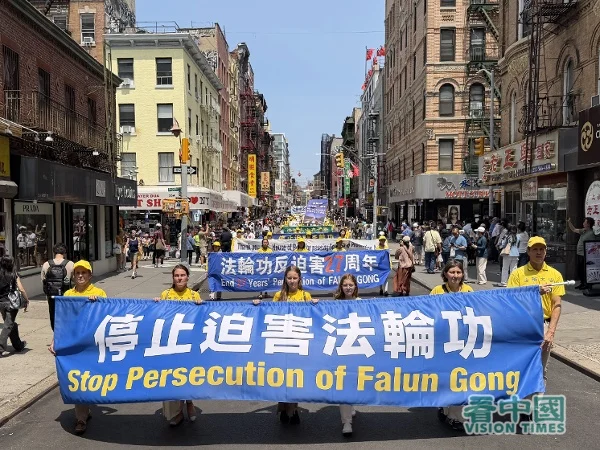
Pamphlets related to Falun Gong are also displayed prominently near the entrance, placed in a highly visible and deliberately protected position.
Sustained attention highlights limits of the CCP’s information control
A one-minute-and-sixteen-second video tour of the restaurant garnered more than 160,000 views within two days of posting, along with thousands of likes and comments. Viewers remarked on the growing number of symbolic items inside the restaurant and joked about their effect on pro-CCP online personalities.
Several users noted that individuals who had previously attempted to harass or provoke the restaurant owner online have since disappeared from public view. Others described the restaurant as having evolved—through repeated online attention—into a recognized anti-CCP landmark.
The continued interest highlights a broader pattern: cultural and political spaces outside China have become focal points for expression that is impossible under domestic censorship. In this context, discussion of U.S. military capabilities has functioned not merely as a security debate, but as a catalyst for suppressed political sentiment—momentarily surfacing anxieties about regime power, leadership vulnerability, and the limits of control.