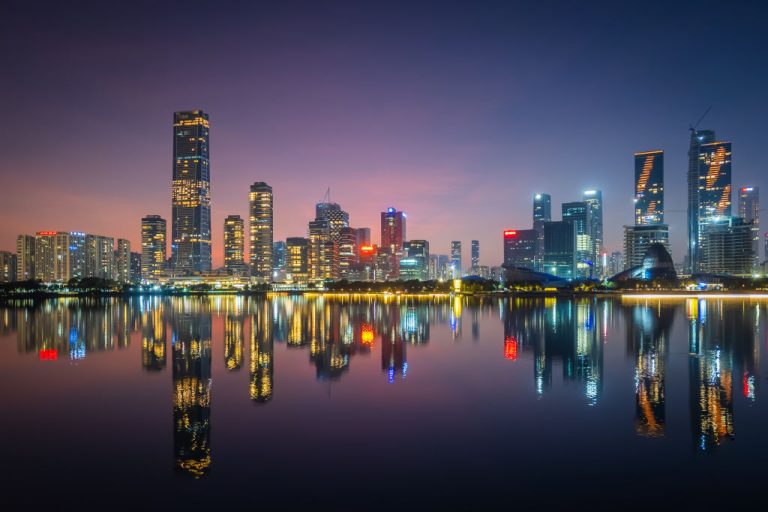
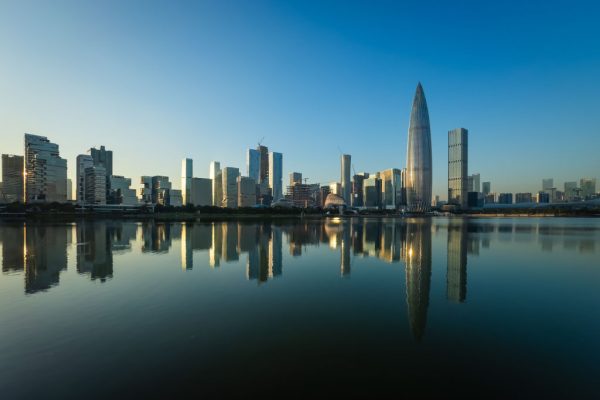
As China’s economic slowdown deepens, signs of contraction are increasingly visible in Guangdong—long regarded as the country’s economic engine. In cities such as Shenzhen and Guangzhou, once-bustling commercial districts are now noticeably quieter, with shuttered shops and thinning crowds becoming a common sight.
Videos circulating widely on Chinese social media platforms show shopping malls, business streets, and areas surrounding major transit hubs that were previously packed with people now appearing largely empty. Many storefronts have closed, while others display “for rent” or “transfer” notices. Job seekers describe growing difficulty finding work, and some residents say they have no choice but to leave the cities and return to their hometowns.
“Are shopping malls in Shenzhen really this deserted now?” one video narrator asks. “You hardly see anyone. It’s getting harder and harder for brick-and-mortar businesses to survive. Is it like this in your city too?”
Vacancies rise as businesses and workers leave
In one widely shared clip, a property manager describes a sharp rise in vacancies. “My entire floor used to be fully rented,” he says. “If a unit became available, it would usually be leased within days, or at most a month. Now I have six units, and four of them are empty.”
Others point to layoffs and wage cuts across both large firms and small companies. “Many big companies in Shenzhen are cutting staff or reducing pay,” one resident says. “Smaller companies can’t even afford to pay wages anymore. Street-level shops are everywhere posting ‘for rent’ signs. Very few people are actually making money here now.”
Success
You are now signed up for our newsletter
Success
Check your email to complete sign up
For ordinary salaried workers, living costs remain high while incomes stagnate. “If you don’t live extremely frugally, you can’t even keep up with mortgage payments,” another interviewee says. “It’s not that people don’t want to spend—it’s that there’s simply no money left in their pockets.”
From growth engine to slowdown
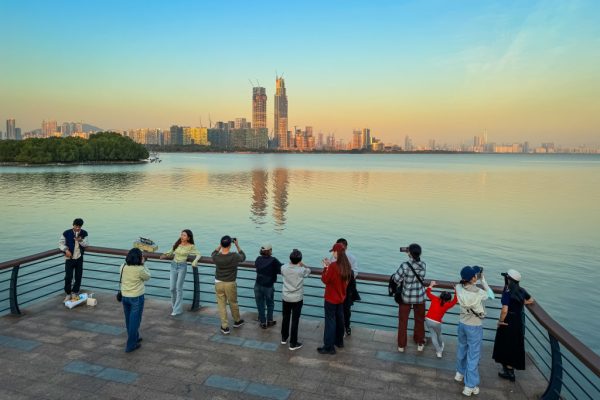
Guangdong was China’s first special economic zone and, between 1978 and 2018, its per capita GDP grew more than 220-fold. The province’s overall economic output eventually surpassed that of South Korea, cementing its reputation as a manufacturing and export powerhouse.
That model, however, has come under increasing strain. With the escalation of the U.S.–China trade war and a broader economic downturn this year, the slowdown has rippled across industries, hitting Guangdong particularly hard.
Online footage shows that areas in central Guangzhou and Shenzhen that were once crowded with shoppers and commuters now see sparse foot traffic. As job losses mount, many workers say they are holding on with little sense of direction, while others have already left the cities altogether.
“I’d say 90 percent of physical stores in Shenzhen won’t survive this winter,” one shop owner says in a video. “Since September, businesses across every sector—fruit sellers, grocery vendors, clothing shops—are barely holding on.”
Shenzhen’s Low wages and high costs
Several residents describe a widening gap between official narratives and lived reality. “People online say the average monthly income in Shenzhen is over 10,000 yuan,” one worker says. “But most people I know earn only 4,000 to 5,000 yuan.”
He recounts his early experience working as an office clerk in Longgang district, earning 2,300 yuan a month with only two days off. “I shared a room in an urban village. Rent plus utilities was 1,600 yuan. There was no sunlight in the room. Even drying clothes was difficult.”
In Guangzhou, similar scenes are being reported. One aspiring shop owner says he spent weeks visiting the city’s busiest districts—including Panyu, Haizhu, and Tianhe—only to find them unexpectedly quiet. “At lunchtime, you barely see anyone eating out,” he says. “Most orders are for delivery. Entire buildings are empty.”
Dongguan’s manufacturing slump
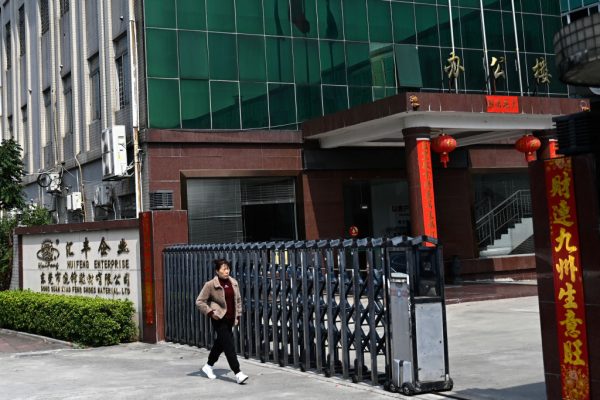
Dongguan, a key manufacturing hub in southern China, has also been hit hard. A local resident told overseas Chinese-language media that many companies have relocated abroad due to trade war pressures, leaving the city far quieter than in previous years.
Factory shutdowns have had a cascading effect, dragging down nearby restaurants and service businesses. Firms that remain are reportedly resorting to indirect layoffs through rotating shifts, extended unpaid leave, or encouraging employees to resign.
“Guangzhou garment factories have no orders now,” one worker says. “People are already heading home for the Lunar New Year, even though it’s still more than two months away. That’s very unusual.”
Another factory owner describes repeated failures. “In five years, five factories have closed here,” he says. “Rent alone is around 15,000 yuan. Every year, one shuts down. You never know who will be next.”
Official data confirm broader slowdown
On Dec. 15, 2025, China’s National Bureau of Statistics released data showing broad deterioration across key economic indicators in November.
Industrial output grew 4.8 percent year-on-year, down from 4.9 percent in October and marking the slowest pace since August 2024. Retail sales—a key measure of consumption—rose just 1.3 percent, the weakest growth since December 2022 and well below both October’s 2.9 percent and market expectations.
Retail sales growth has now slowed for six consecutive months, the longest such stretch since 2020. Fixed-asset investment fell 2.6 percent over the first 11 months of the year, putting it on track for what could be the first annual decline since records began in 1998.
The data coincided with widespread reports on Chinese social media describing shop closures, job losses, and declining foot traffic across major cities in Guangdong.