By Yang Tianzi
U.S. President Donald Trump has appointed a special envoy responsible for Greenland affairs, a decision that has drawn broad international attention and underscored Washington’s growing focus on the world’s largest island.
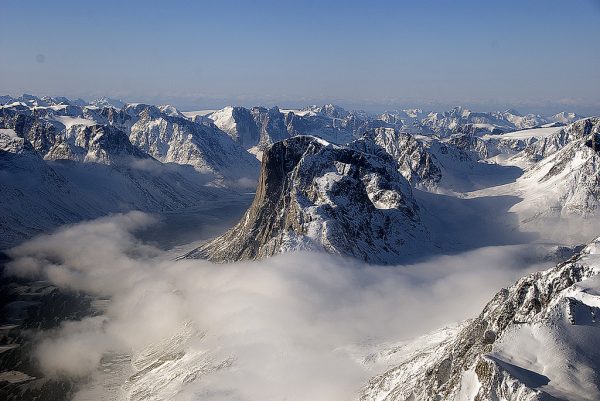
Greenland is an autonomous territory within the Kingdom of Denmark. It covers about 2.16 million square kilometers and has a population of roughly 56,000, most of whom are Inuit. Despite its small population, Greenland’s strategic location and natural resources have made it an increasingly prominent focal point in Arctic competition among major powers.
Trump names a special envoy for Greenland
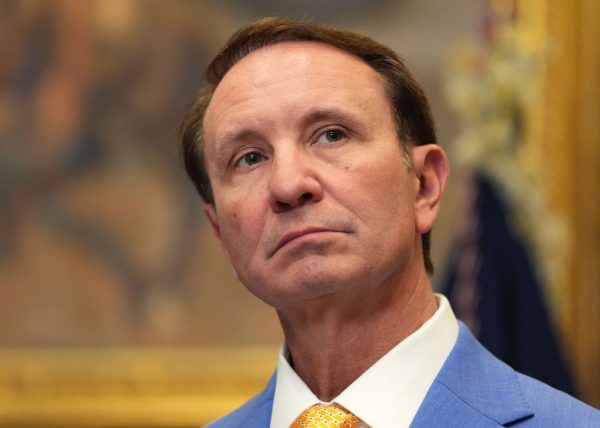
Trump announced on Dec. 21 that Louisiana Governor Jeff Landry would serve as the U.S. special envoy for Greenland.
In a post on social media platform X, Trump wrote that Landry “understands the importance of Greenland to our national security” and will work to safeguard U.S. interests.
Success
You are now signed up for our newsletter
Success
Check your email to complete sign up
At the same time, Trump has repeatedly said the United States needs to “acquire and control” Greenland and has stated that he would not rule out any options—including military measures—if he believes they are necessary to protect U.S. national security interests.
Trump’s interest in Greenland dates back to his first term. In August 2019, he publicly floated the idea of purchasing the island, a proposal that was widely reported by international media and quickly became controversial. Trump described the idea as “a large real estate deal,” arguing that it carried significant strategic value for the United States.
Danish Prime Minister Mette Frederiksen rejected the proposal at the time, saying Greenland was “not for sale” and calling the idea “absurd.” Greenland’s self-governing authorities also responded firmly, saying the island’s future should be decided by its people and that Greenland “is not for sale and will not be sold.” Trump later canceled a planned state visit to Denmark, straining bilateral relations.
US engagement increased after the 2019 dispute
The 2019 controversy did not end Trump’s interest in Greenland. During his first term, the United States increased its diplomatic presence on the island. In 2020, Washington reopened a consulate in Nuuk, Greenland’s capital, marking its first permanent diplomatic mission there since 1953. The U.S. government also pledged economic assistance to Greenland, including support for mineral development and infrastructure projects.
After returning to office in 2025, Trump moved quickly to elevate Greenland’s place in U.S. policy. In his inauguration address, he suggested the United States should consider expanding its territorial reach and specifically mentioned Greenland. In the weeks that followed, he reiterated U.S. interest in the island in public remarks, citing national security, economic interests, and the need to counter the influence of other major powers in the Arctic.
Greenland’s strategic value
Greenland has drawn sustained attention in Washington because of its strategic importance across military, resource, and geopolitical dimensions.
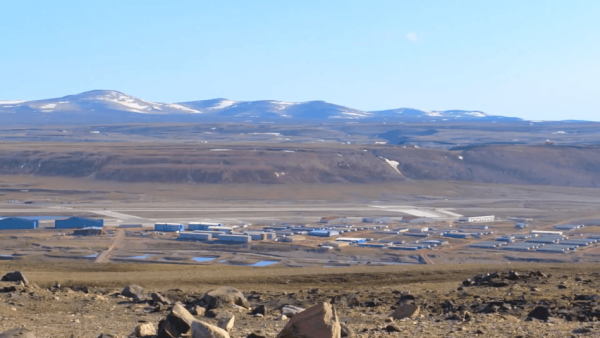
From a military perspective, Greenland occupies a critical position between North America, the North Atlantic, and the Arctic Ocean, along key air and maritime routes linking North America and Europe. Since 1943, the United States has maintained a military presence in northwestern Greenland at Thule Air Base—now known as Pituffik Space Base—its northernmost installation. The base hosts missile-warning radar systems and plays a role in U.S. missile defense and space surveillance. During the Cold War, it served as an outpost for monitoring Soviet ballistic missiles and submarine activity. With Russia increasing military activity in the Arctic and hypersonic weapons technology advancing, Greenland’s role in U.S. homeland defense has remained central.
Greenland is also believed to hold substantial mineral resources, including rare earth elements that are critical for high-tech manufacturing, electric vehicle batteries, and advanced military equipment. As climate change accelerates the melting of Greenland’s ice sheet—an environmental crisis in its own right—it has also made these resources more accessible. Against the backdrop of concentrated global supply chains, the United States has sought alternative sources to secure access to strategic materials. Greenland is also believed to contain oil, natural gas, gold, diamonds, and uranium, further heightening international interest.
Geopolitically, Greenland’s importance has risen as the Arctic re-emerges as a major arena of competition. As sea ice recedes, Arctic shipping routes are becoming more commercially viable, and Greenland’s location could make it a hub linking Asia, Europe, and North America. Influence over Greenland could therefore translate into leverage in future Arctic competition.
Reactions from Denmark, Greenland, and other powers
Denmark has reiterated its longstanding position that Greenland belongs to the Greenlandic people and that Copenhagen fully supports the island’s autonomy and right to self-determination. Frederiksen has said Denmark remains open to cooperation with the United States on shared concerns such as Arctic security, but only on the basis of mutual respect. Trump’s remarks about potentially using force prompted shock and anger among Danish politicians, with several lawmakers condemning the statements as a betrayal of a NATO ally.
Greenland Prime Minister Múte Egede has emphasized that decisions about the island’s future must be made by Greenlanders, not by outside powers.
European Union countries have broadly expressed concern over Trump’s statements, warning that they undermine the foundations of the transatlantic alliance. Leaders in Germany and France have publicly voiced support for Denmark, stressing that the territorial integrity of EU member states must be respected. NATO officials have urged member countries to resolve differences through dialogue and preserve alliance unity, highlighting concerns over the impact of unilateral U.S. actions on Western cohesion.
Russia’s Foreign Ministry criticized what it described as U.S. “hegemonic behavior,” warning that it could accelerate the militarization of the Arctic. China has said the situation should be handled in accordance with international law and the wishes of the parties concerned, opposing what it called power politics. Both Russia and China have expanded their presence in the Arctic through scientific research, resource development, and military deployments.
Historical precedent and possible directions
U.S. interest in Greenland has historical roots. The United States has previously expanded its territory through purchases, including the Louisiana Purchase from France in 1803, Alaska from Russia in 1867, and the Danish West Indies—now the U.S. Virgin Islands—from Denmark in 1917. As early as 1867, the U.S. State Department studied the possibility of acquiring Greenland and Iceland. In 1946, President Harry Truman formally offered Denmark $100 million to buy Greenland, a proposal Denmark rejected.
While Trump’s earlier proposal to purchase Greenland faces major legal and political obstacles, Washington could pursue other approaches. The appointment of a special envoy may be used to strengthen direct ties with Greenland, increase investment and economic assistance, or seek expanded rights related to military facilities, including long-term lease arrangements that could amount to de facto control.
Another possibility discussed by observers is indirect U.S. support for Greenland’s independence from Denmark. An independent Greenland that remains economically dependent on the United States could be more easily drawn into Washington’s sphere of influence than one governed as part of Denmark. Pro-independence political forces exist within Greenland, though they face constraints tied to economic dependence.
If Trump maintains a hardline approach or resorts to military pressure, relations between the United States and Denmark—and with the European Union more broadly—could deteriorate sharply, potentially triggering internal strains within NATO. In such a scenario, European countries could be forced to make difficult choices between alignment with Washington and preserving EU unity.
Arctic competition enters a new phase
Trump’s decision to appoint a Greenland envoy signals that geopolitical competition in the Arctic is entering a new phase. The issue extends beyond territorial questions to encompass resource control, military power, and the rules governing international order. Climate change is reshaping the Arctic’s strategic value, while competition among major powers continues to expand into the region.
For Greenland, the challenge lies in safeguarding its interests and pursuing genuine self-directed development amid competing external pressures. For the international community, a key question is how to balance respect for the sovereignty of smaller polities with the realities of strategic rivalry in the Arctic.
Although Trump’s Greenland strategy faces significant resistance, the United States’ growing interest in Arctic influence—and the reactions it has provoked—suggest the region will play an increasingly important role in global affairs. Greenland has become a lens through which broader shifts in major-power competition and the international order can be observed.