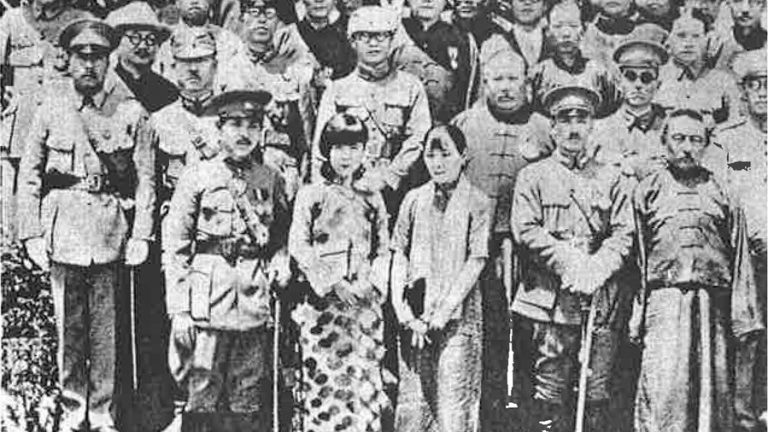
On Dec. 12, 1936, in the 25th year of the Republic of China, Zhang Xueliang—then Deputy Commander-in-Chief of the Northwestern Anti-Communist Campaign—and Yang Hucheng, director of the Xi’an Pacification Office, jointly detained Chiang Kai-shek. The mutiny brought the Communist suppression campaign to an abrupt halt and left consequences that would profoundly shape the future trajectory of the Republic of China.
Eight years earlier, in December 1928, Zhang Xueliang had carried out the “Northeast Flag Replacement,” formally pledging allegiance to the Nationalist government and completing China’s nominal unification. This development alarmed Japan’s military leadership. In September 1931, Japanese forces launched the Mukden Incident and swiftly occupied northeastern China. The aggression stirred nationwide patriotic outrage, but China at the time remained militarily and economically unprepared, beset by deep internal instability and external threats. Bearing responsibility for the state, Chiang adopted the strategy of “pacifying internal disorder before resisting external aggression,” seeking to secure the rear before confronting Japan directly.
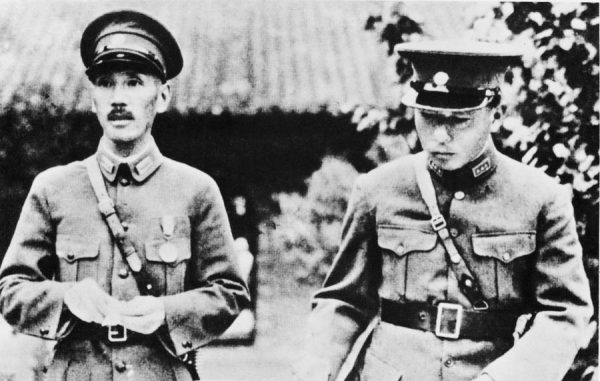
By October 1935, Communist forces had been reduced to only a few tens of thousands and were retreating into northern Shaanxi. Chiang appointed Zhang Xueliang as Deputy Commander-in-Chief in the northwest, entrusting him with the task of delivering the final blow. The Chinese Communist Party, however, advanced what it called a “united front,” promoting slogans such as “Chinese should not fight Chinese,” “turn the guns outward,” and “joint resistance against Japan.” These appeals gradually influenced both Zhang Xueliang and Yang Hucheng. Zhang’s resolve to suppress the Communists weakened accodingly. By September 1936, he went so far as to urge Chiang that “if the nation is to survive and revive, resistance against Japan is the only path.”
Chiang was already aware of the shifting undercurrents. In early December, he personally traveled to the northwest to inspect military affairs. Zhang and Yang repeatedly pressed the case for prioritizing resistance against Japan, but their appeals failed. They then chose an extraordinary course. In the early hours of December 12, mutinous troops surrounded Chiang’s temporary headquarters at Huaqing Pool and placed him under detention.
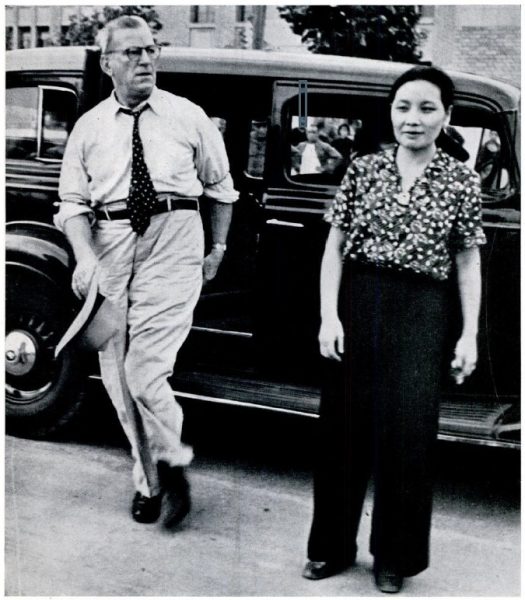
News of the incident shocked the nation. The central government in Nanjing took a firm stance, convening emergency meetings and issuing orders for military suppression. At this critical moment, Soong Mei-ling acted decisively. She entrusted William Donald, an Australian friend, to travel ahead to Xi’an to assess the situation, engage in mediation, and deliver her handwritten letter to Chiang Kai-shek in person.
Success
You are now signed up for our newsletter
Success
Check your email to complete sign up
During the standoff, Zhang Xueliang read Chiang’s personal diaries and key documents. Through them, he came to understand Chiang’s long-term strategy for resisting Japan and the restraint he believed national survival required. Zhang later recognized his own recklessness and the grave consequences of his actions. On December 22, Soong Mei-ling herself arrived in Xi’an. She met Zhang repeatedly, appealing to principle and national interest. On December 25, Zhang agreed to assume responsibility for the incident. He escorted Chiang Kai-shek and Soong Mei-ling back to Nanjing, arriving safely on December 26.
The crisis ended peacefully, but the rule of law was not set aside. On December 30, 1936, a military tribunal ruled that Zhang Xueliang, as the principal conspirator who had used violence and coercion against his superior, be sentenced to ten years’ imprisonment and deprived of civil rights for five years. Chiang subsequently petitioned for clemency, and Zhang was granted a special pardon under strict supervision by the Military Affairs Commission. From January 1937 onward, Zhang lost his freedom and lived the remainder of his life under confinement.
On a personal level, Chiang Kai-shek had long regarded Zhang with affection and high expectations, viewing him as a patriotic and capable officer worthy of protection. That trust, however, was deeply betrayed. Zhang’s actions ran counter to Chiang’s strategic judgment and, in Chiang’s view, undermined the broader national cause.
The relationship between Chiang Kai-shek and Zhang Xueliang was marked by gratitude, expectation, and irreversible rupture. Zhang never returned to mainland China, a decision that reflected his enduring remorse. He later acknowledged in interviews that, as a soldier, he merited execution. Yet in Chiang’s judgment, the Xi’an Incident ultimately altered China’s historical course, paving the way for Communist control of the mainland. In that assessment, Zhang Xueliang bore a responsibility that could not be erased by regret alone.