Through the efforts of Princess Wencheng and others, the Rakshasi sorceress was subdued beneath the snowy lands, restoring peace to the mountains and rivers and allowing Tibetan Buddhism to flourish. Yet only her body and power were sealed; her thoughts and karma remained, quietly initiating the next millennial cycle of reincarnation from the mountains where twelve monasteries had restrained her. Across countless lifetimes, she repeatedly reincarnated as a practitioner, yet true liberation eluded her.
The life of Qiongba
In one such life, she was reborn as a woman named Qiongba. From an early age, Qiongba entered monastic life under her master, dedicating herself to Tantric practices. Her path was arduous, demanding constant trials of mind and desire. During a period of retreat, she was assailed by a lustful spirit and, unable to protect her mind, became possessed.
Her master struggled to exorcise the demon but to no avail. In those days, a failed retreat meant all prior efforts were lost, leaving no opportunity for further cultivation. Reluctantly, her master instructed her to leave the mountain.
Descending into the world, Qiongba’s heart brimmed with resentment. She blamed fate, the hardships of her practice, and even her master’s inability to protect her. Unbeknownst to her, in nurturing these grudges, her inner demon quietly seized control of her mind.
Under the demon’s influence, Qiongba devised a cruel plan for revenge. She visited her master’s nephew, who welcomed her warmly along with his family. Taking advantage of their trust, Qiongba poisoned their food. Shortly after leaving, a wave of guilt surged through her, and she rushed back to save them—but it was too late.
Success
You are now signed up for our newsletter
Success
Check your email to complete sign up
She managed to rescue only one little girl, Fangkan. Qiongba entrusted Fangkan to others and disappeared quietly.
Later, Qiongba studied sorcery under a shaman. Her spells proved highly effective, and soon people came seeking her services. Though she knew her magic could harm, she repeatedly cast spells for profit, rationalizing her actions by using part of the money to secretly support Fangkan, believing this could atone for her sins.
One night, she dreamed of her master gazing at her sternly. Awakening in terror, Qiongba resolved to cease her practices. But the seeds of karma had already been sown—and escape would not come so easily.

The life of Liba
In her next life, Qiongba was reborn in Yunnan as a girl named Liba. Orphaned shortly after birth, she was taken in by a herbalist who lived deep in the mountains. The herbalist was skilled in medicine and versed in exorcism. Liba possessed extraordinary talent—she could find herbs others could not—and quickly earned her master’s favor.
One day, the master dreamt of a steep cliff adorned with rare orchids and red flowers, knowing them to be precious medicinal herbs. Upon waking, he sketched the scene and sent Liba to gather the flowers. After a grueling climb, Liba finally reached the cliff and harvested the plants. Exhausted and frustrated, she muttered complaints: “Why must the master send me for such difficult herbs?” and “Why is this mountain so impossible to climb?”
By chance, the mountain deity patrolling nearby overheard her complaints and grew displeased. In anger, it hurled a walnut at her, knocking her off the cliff.
Miraculously, Liba was caught by a large tree halfway down and fell into a nearby cave. Inside, she found a drunken old fox spirit. The fox had cultivated for years and, abusing its power, often wreaked havoc on the surrounding area. Using the spells taught by her master, Liba killed the fox and extracted its inner elixir—but in doing so, she unknowingly incurred a new karmic debt.
Upon returning, Liba recounted her mountain ordeal to her master. The master crushed the fox’s elixir and, combined with the red and white flowers, made a powerful medicine. Yet over time, Liba noticed her master behaving strangely—muttering to himself, occasionally insisting he must find Liba, haunted by the fox she had slain.
Curious, Liba gave her master plenty of wine one evening and coaxed him to reveal the truth. The master explained: “The fox spirit died too violently and never had a chance to reincarnate properly. Its lingering karma continues to haunt me, forcing me to drive you down the mountain so it might settle its score.” He warned Liba never to leave his side, for only a future incarnation under a highly skilled master could evade the fox spirit’s karmic curse.
Liba obeyed her master faithfully. Though he often tried to drive her away, she remained respectful and devoted, eventually causing the fox spirit to abandon its vendetta. On his deathbed, her master taught her protective spells and encouraged her to continue cultivating diligently.
Rebirth as Tsangyang Gyatso
Alone, Liba traveled to the snowy highlands, witnessing the magnificent travels of living Buddhas and even the miraculous rainbow body of a revered monk. Inspired, she remained in Tibet and began her study of Buddhism.
After several lifetimes of practice, Liba was finally reborn as a living Buddha—the Sixth Dalai Lama, Tsangyang Gyatso. Not born Tibetan or Mongol, he belonged to the Monpa ethnic group. Recognized as a reincarnated child at a young age, political struggles delayed his formal enthronement. Growing up in the secular world, he became sensitive and romantic.
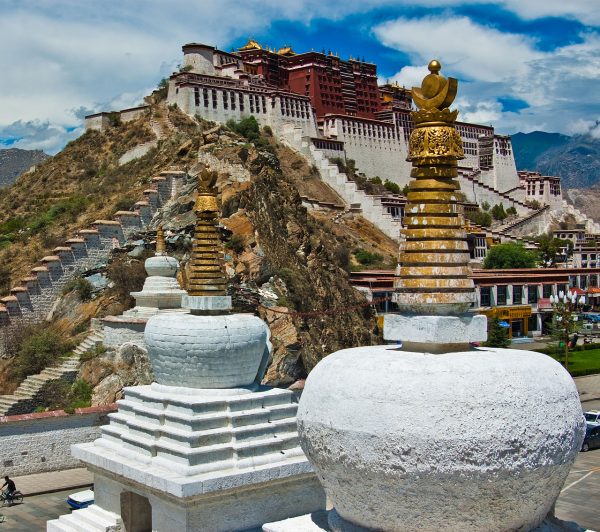
At fourteen, upon entering the Potala Palace, he refused ordination and strict monastic rules. The tension between spiritual practice and worldly desires raged within him. Disguising himself to wander the city, drinking and seeking pleasure, he risked everything just to see his beloved—Zhuma, the reincarnation of Fangkan. In this life, she sought to unravel his Buddhist practice through love, drawing him into worldly desire and seduction to settle karmic debts from their previous lives.
Immersed, Tsangyang Gyatso composed love poems that would endure for centuries:
“Residing in the Potala Palace,
I am the greatest king of the snowy lands;
Wandering the streets of Lhasa,
I am the most beautiful lover in the world.”
These poems earned him fame, but also became political leverage. Opponents presented them to the Qing court, accusing him of being a false reincarnation. Though the court ordered him to Beijing, he had been recognized as the Fifth Dalai Lama—a supreme spiritual ruler of Tibet. Monks loyal to him secured his residence in Drepung Monastery, guarded by warrior monks, prepared to face the advancing Qing forces. A bloody conflict seemed imminent.
The awakening
On the third night of the standoff, an elderly monk, long in retreat, emerged and requested an audience with Tsangyang Gyatso. Approaching him without bowing, the monk gently touched his forehead and asked: “Liba, do you remember me?”
In an instant, memories of past lives flooded Tsangyang Gyatso—Qiongba, Liba, the fox spirit, Fangkan, Zhuma… the full tapestry of karma and consequence revealed itself. He realized that his indulgence, suffering, and worldly downfall were the results of debts accumulated over lifetimes.
The old monk sighed: “The forces behind this calamity are too complex. Your master can no longer free you. But trust in the Dharma, face your fate with equanimity, and rely on its power—only then can your life find the chance for liberation.”
With this clarity, Tsangyang Gyatso slept peacefully that night. At dawn, he demanded the warrior monks open the monastery gates and walked out alone, averting bloodshed that had been imminent. Afterward, he disappeared from historical records at the age of twenty-four.
Official chronicles state that he died while traveling through the wilderness. Yet folklore tells another story: he reached an agreement with the Qing court, renounced the Dalai title, and roamed as a mortal. He traveled across India, Nepal, Tibet, and Mongolia, teaching and helping others, ultimately completing his life journey on the steppes.