From “buttering up” to “beating around the bush” the English language has a surprising number of strange sayings. Even if we have a good grasp of their meaning and use them every day in our ordinary speech, most of us have no idea where they came from.
Gary Martin, a UK-based writer and researcher turned his love for words and computers into an authoritative archive on such phrases. Thanks to Martin, the meanings and origins for at least 2,500 English expressions can be found on Phrase Finder, a website that he has been contributing to for 26 years. Here we will just look at the “tip of the ice berg.”
To butter someone up

The phrase “to butter someone up” suggests one is seeking to gain preference through flattery, be it sincere or otherwise. “Curry favor” would be another way to put it, and this idiom gives us a clue to one possibility for the other idiomatic expression’s origin.
Ghee (clarified butter) holds a sacred place in Indian culture. As a pure substance, it is believed to connect the physical and spiritual realms. Since ancient times, ghee was offered to deities in pooja rituals to secure blessings of all sorts. The tradition continues to this day.
The British first arrived in India for the purpose of trade in 1608, so even though it does not appear in texts until the early 19th century, it is conceivable that the English saying “to butter someone up” was adopted from Indian culture.
Success
You are now signed up for our newsletter
Success
Check your email to complete sign up
Another possibility is that it simply began as a metaphor. Just like butter makes most foods more palatable, applying a smooth and agreeable manner will make you a favorite among your peers.
To hold a candle to
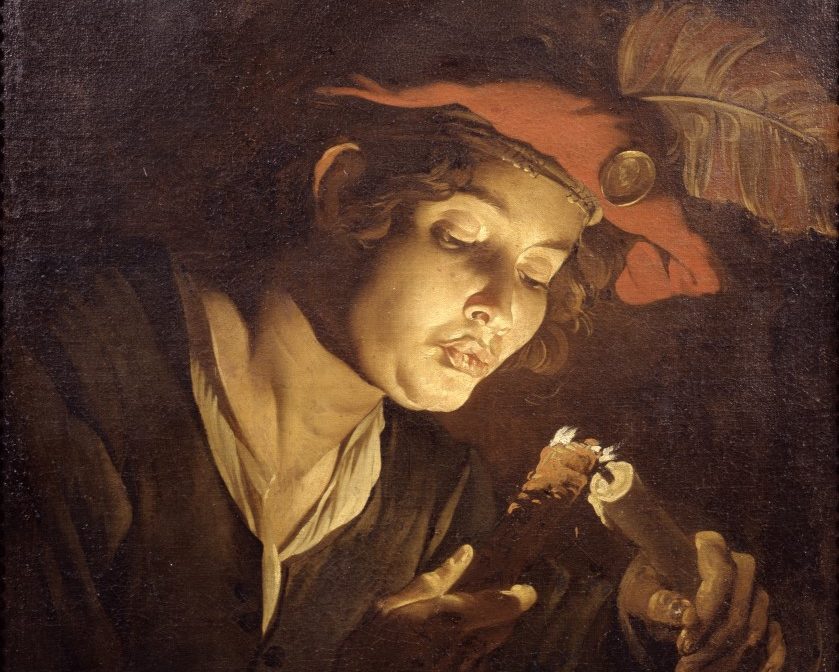
Commonly used to mean “compare favorably with,” this phrase originated with the practice of apprentices assisting more skilled craftsmen by holding a candle to provide light for working. One who “couldn’t hold a candle to” someone was not even qualified to be their assistant.
According to Martin, the first recorded use of the phrase “to hold a candle to” appeared in William Norri’s 1883 novel No New Thing:
“Edith is pretty, very pretty; but she can’t hold a candle to Nellie.”
A similar phrase was used as early as 1641, in English antiquery and politician Sir Edward Dering’s The fower cardinal-vertues of a Carmelite fryar:
“Though I be not worthy to hold the candle to Aristotle.”
To the nines
“To the nines” is an English idiom meaning “to perfection” or “to the highest degree.” Today it is commonly used to describe how one is dressed, although it could be used in other creative ways to express a superlative state.
The number nine is considered to have special powers in many cultures, and is often seen in significant groupings. With nine planets orbiting the sun, and humans having a nine-month gestation period, the number seems to signify completion.
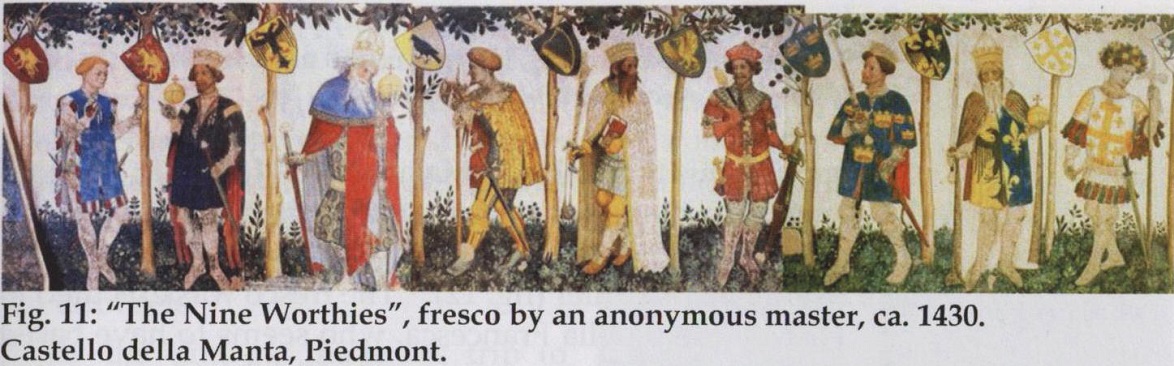
The Nine Worthies (Hector of Troy, Alexander the Great, Julius Caesar, Joshua, King David, Judas Maccabaeus, King Arthur, Charlemagne, and Godfrey of Bouillon) were well-known for their legendary chivalry. They personified all that was noble and heroic through the middle ages.
There are also the Nine Muses of Arts and Learning, to which the poet John Rawlett referred in his 1687 Poetick Mescellenies, the earliest written example of the phrase found by Martin:
The learned tribe whose works the World do bless,
Finish those works in some recess;
Both the Philosopher and Divine,
And Poets most who still make their address
In private to the Nine.
Beat around the bush
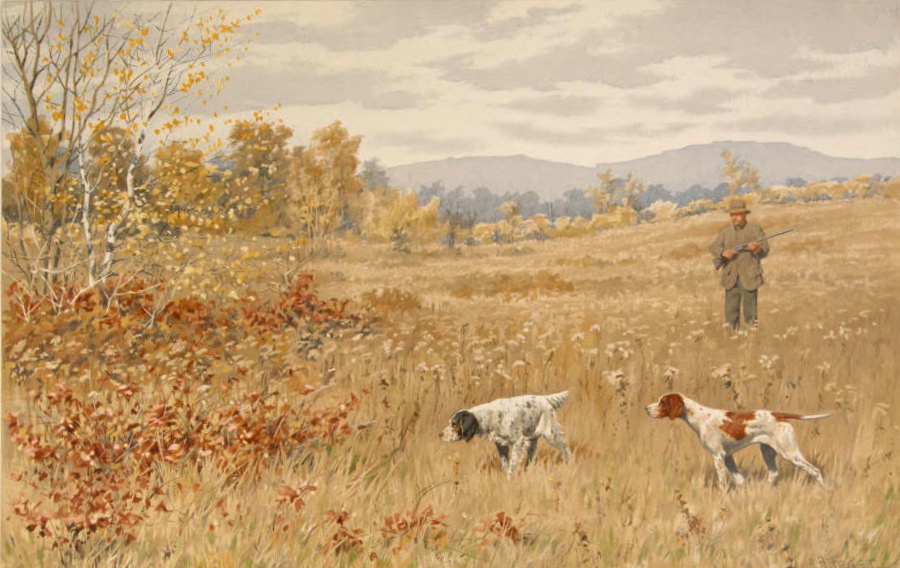
“Beating around the bush” is a phrase that describes someone who is not getting to the point, and it has an interesting history in hunting. According to the medieval poem Generydes, circa 1440:
Butt as it hath be sayde full long agoo,
Some bete the bussh and some the byrdes take.
In other words, ancient hunters worked as a team, with some scaring the targeted birds out of the shrubbery, while the others prepared to catch them. This method of hunting is still in use today, but since the beating is simply a preamble to the more conclusive hunting, the phrase has evolved to mean prevarication.
Steal one’s thunder
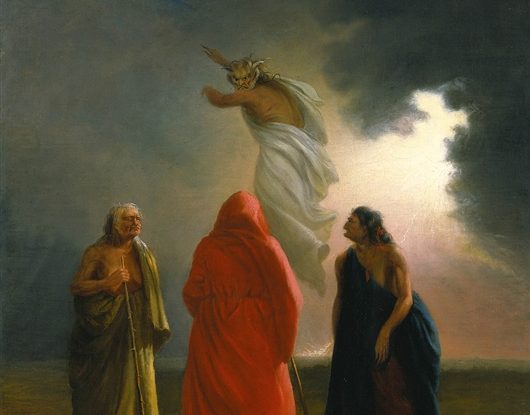
If someone gets credit for something you were about to (or wanted to) do but they beat you to it, they could be said to have stolen your thunder. This phrase revolves around the theatrical device used for creating the sound of thunder. It has a dramatic history, with an element of both tragedy and comedy.
There was a literary critic and playwright named John Dennis, who invented a new device to create thunder on stage for his production of Appius and Virginia in 1704. The play was quickly closed as a failure, but the device was a success. Not much later, it was used in a production of Shakespeare’s timeless classic Macbeth.
Literary scholar Joseph Spence recorded the affronted playwright’s response:
“Damn them! They will not let my play run, but they steal my thunder.”
…thus coining the curious phrase.
Bury the hatchet

To bury the hatchet is to make a commitment towards peace. This phrase comes from a Native American tradition that probably pre-dated the European settling of America. When warring tribes of Indigenous peoples came to a peace agreement, the chiefs would actually bury their hatchets to signify an end to hostilities.
A passage from Thwaites’ The Jesuit Relations, 1644, captures the profound nature of this gesture:
“Proclaim that they wish to unite all the nations of the earth and to hurl the hatchet so far into the depths of the earth that it shall never again be seen in the future.”
With that, we would like to wish you all a peaceful New Year, and a bright future.